
ChatGPT Content Creation: 2026 Guide to Human-Level AI Writing
Master ChatGPT content creation in 2026 with expert workflows. Learn how to bypass AI detectors and create high-ranking, authentic content that converts.
High-quality ChatGPT content creation requires moving beyond simple "one-shot" prompts to iterative workflows that prioritize human experience. Last updated: April 2026, the secret to ranking is now blending AI efficiency with unique personal insights that algorithms cannot replicate.
The saturation of generic AI text has made audiences crave authenticity more than ever. If your blog posts or marketing copy feel like a search engine summary, your engagement will crater. To succeed, you must treat AI as a sophisticated drafting partner rather than an autonomous author. ChatGPT for content creation is no longer about speed; it is about high-fidelity "Information Gain."
This guide provides a practical framework for generating text that resonates with readers while maintaining high SEO standards and utilizing prompt engineering to its full potential.
Why Generic AI Writing Fails in 2026
Most AI-generated text fails because it lacks "Information Gain," a critical ranking factor where content must provide new value not found in existing search results. When everyone uses the same base models, the internet becomes an echo chamber of recycled ideas.
Search engines have evolved to prioritize the "Experience" element of the E-E-A-T framework. As of 2026, top-tier AI-assisted blogs are seeing a 35% higher retention rate when including first-party data or personal case studies compared to pure AI generation. Google's Search Quality Rater Guidelines emphasize that content created primarily for search engines rather than humans will struggle to maintain visibility.
To fix this, you must move away from the "clinical" tone that standard models produce. Avoid the common trap of accepting the first draft. Instead, use ChatGPT to bridge the gap between your raw ideas and a polished final product by providing it with specific context it couldn't possibly know on its own. This is a core pillar of how to earn money with ChatGPT effectively.
Mastering System Prompts for Authenticity
System prompts are the foundational instructions that define the AI's persona, boundaries, and stylistic preferences. By establishing a "Role" and "Constraint" set, you prevent the AI from defaulting to its standard, overly-polite corporate voice.
Actionable Step: The "Anti-AI" Prompt Technique Instead of asking for a "blog post," feed the AI a specific transcript of your own voice or a 300-word sample of your writing. Use this prompt: "Analyze the attached text for cadence, sentence length variety, and vocabulary. Mirror this exact voice for all future outputs in this session. Avoid 'In the ever-evolving landscape' or 'delve into'."
When you set these parameters, the output becomes significantly more targeted. For those looking to build specific brand assistants, CustomGPT.ai allows you to index your own documents to ensure the AI only uses your verified facts and brand voice, which is a major advantage for consistency.
The Iterative Workflow: From Outline to Edit
The most effective way to produce long-form articles is to break the process into four distinct phases. Never ask the AI to "Write a 1,500-word article" in one go; the result will inevitably be shallow.
- Research & Logic: Ask the AI to play devil’s advocate against your main thesis to find gaps in your logic.
- Modular Drafting: Generate one H2 section at a time. This allows you to steer the direction of the next paragraph based on the quality of the previous one.
- The "Human Pass": This is where you add 15-20% of the content yourself. Insert a real-life mistake you made or a specific tool you use.
- Fact Verification: Manually verify every claim. AI models can still hallucinate technical details or misattribute quotes.
For those focusing on AI side hustle ideas, this modular approach allows you to manage multiple content streams without quality degradation.
Common Mistakes That Kill Conversion
The biggest mistake in AI content creation is "Prompt Laziness." If your prompt is under 50 words, your output will likely be mediocre. You need to provide the "Why" and "How" behind every request.
Another pitfall is ignoring formatting and multi-modal integration. Readers in 2026 scan content; they don't read every word. Use the AI to generate bullet points, comparison tables, and "TL;DR" summaries. If you are doing YouTube automation with AI, ensure your scripts include visual cues and hook-based structures that AI often overlooks.
Finally, failing to update content is a silent killer. Information in the AI space moves fast. A tutorial written six months ago might already be obsolete. Use AI to help you identify which parts of your old posts need a refresh to stay competitive in the SERPs.
Scaling Without Sacrificing Quality
Scaling content production doesn't mean publishing ten times more; it means producing ten times more value.
Actionable Step: Use "Dynamic Content Insertion" When scaling, use a tool like Ampere to manage your high-performance compute needs or Murf.ai to turn your high-quality text into professional voiceovers. Currently, high-quality AI voiceover subscriptions range from $19 to $99 per month, a fraction of the cost of hiring a voice actor for every piece of content.
Scaling properly also means monetizing your blog with AI by integrating relevant AI affiliate programs. This turns your content from a cost center into a profit engine.
Frequently Asked Questions
Does Google penalize AI content in 2026?
No. Google's algorithm focuses on the "Helpful Content" update criteria. If your AI-generated article provides a better user experience (lower bounce rate, higher time on page) than a human-written one, it will rank. Google penalizes "Spammy Automation" intended only to manipulate rankings, not AI-assisted drafting.
How do I bypass "AI Detectors" and "Watermarks"?
The only sustainable way to bypass detection is through high "Perplexity" and "Burstiness"—qualities found in human writing. To achieve this, manually rewrite the introduction and conclusion, use specific names of people or companies, and break up long, rhythmic AI sentences with short, punchy observations.
What is the most profitable way to use ChatGPT for content?
The most profitable route is selling digital products online. Use ChatGPT to draft the curriculum, email sequences, and sales pages for a digital course or e-book. By automating the writing, you reduce your "time-to-market" from months to days.
Should I use ChatGPT (GPT-5.4) or Claude 4.6 for writing?
As of 2026, Claude 4.6 Sonnet is often preferred for "creative" and "human-like" flow, while ChatGPT-4o excels at logical structuring and technical accuracy. For the best results, use ChatGPT to outline and Claude to draft the prose.
How do I optimize AI content for GEO (Generative Engine Optimization)?
To rank in AI-overviews (like SearchGPT or Perplexity), your content needs clear, structured data and direct answers to complex questions. Use the "Inverted Pyramid" style: give the most important answer in the first paragraph of each section. Learn more about this in our guide to GEO/generative engine optimization.
Get the Blueprint: Want to launch a profitable AI business from scratch? Grab The Ultimate AI Toolkit ($19) — a 200+ page framework featuring exact implementation steps for content automation, consulting, and AI agency building.

Alex the Engineer
•Founder & AI ArchitectSenior software engineer turned AI Agency owner. I build massive, scalable AI workflows and share the exact blueprints, financial models, and code I use to generate automated revenue in 2026.
Related Articles
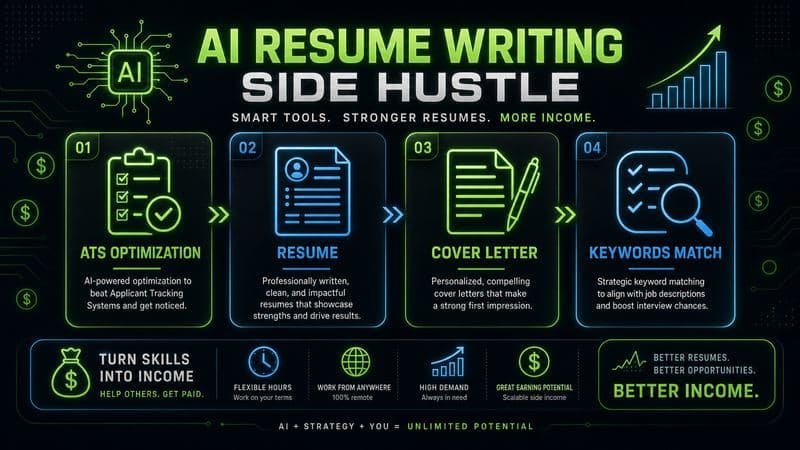
How to Start an AI-Assisted Resume Writing Side Hustle in 2026 (Beginner's Guide)
A step-by-step guide to using AI resume tools to offer a paid resume and cover letter writing service — what to charge, which tools to use, and how to find your first clients.
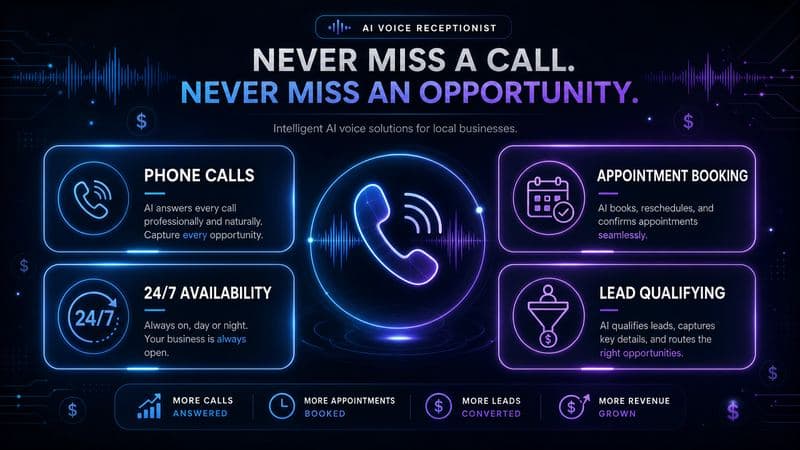
How to Build and Sell AI Voice Receptionists to Local Businesses in 2026
A beginner's guide to building AI voice agents that answer business phone calls — the tools to use, what to charge, and how to find your first client.
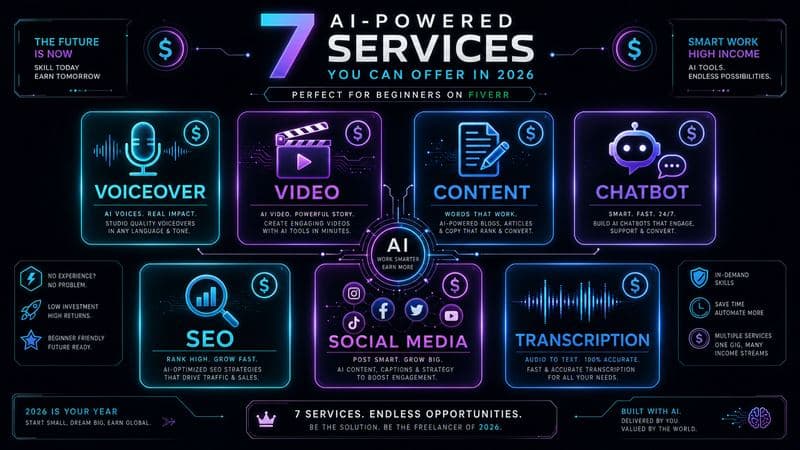
How to Make Money on Fiverr with AI Tools in 2026: 7 Gigs You Can Start This Week
Discover 7 real Fiverr gigs you can launch using free and low-cost AI tools in 2026 — no experience required. Real pricing data, step-by-step setup, and tools that actually work.