
GEO 2026 Guide: Ranking in AI Search and Overviews
Stop losing clicks to AI. Learn Generative Engine Optimization (GEO) strategies to rank in ChatGPT, Perplexity, and Google AI Overviews.

If your blog traffic is dropping despite high rankings, you are likely losing clicks to AI Overviews. Generative Engine Optimization (GEO) is the practice of structuring content so AI models cite your website as their primary source. By moving beyond traditional keywords and focusing on data density, you can recapture visibility in an era of zero-click searches.
Why Traditional SEO is Failing in 2026
Traditional search engine optimization relies on "blue links," but modern AI engines summarize those links before a user ever clicks. When a user asks a question, tools like Gemini or Perplexity perform Retrieval-Augmented Generation (RAG). This process scrapes the web, converts text into mathematical vectors, and synthesizes a direct answer.
If your content consists of long, fluffy introductions and generic advice, the RAG pipeline will likely skip your site. AI models prioritize high-density information that is easy to parse. According to research from Princeton University, adding technical terms and statistics to content can improve visibility in generative engine responses by up to 40%. To survive, you must provide the specific data points that LLMs crave.
Pillar 1: High-Density Formatting for RAG
AI models process structured data much more efficiently than narrative prose. To increase your citation rate, you must feed the engine facts in a format it natively understands.
- Use Markdown Tables: Instead of listing software features in a paragraph, use a table. When a user asks for a comparison, the AI will pull from your table because it represents the highest information density.
- Direct Answer Headers: Structure your H2 tags as specific questions. Immediately follow the header with a one-sentence factual answer. For example, under the header "How much does Midjourney cost?", start with: "Midjourney subscription tiers range from $10 to $120 per month as of 2026."
- Unique Statistics: AI engines prioritize "new" information. If you conduct a survey or share internal revenue data, the AI is forced to cite you because that specific fact doesn't exist elsewhere.
Pillar 2: Building Semantic Topic Clusters
Answer engines no longer rank isolated pages; they rank topical authorities. You must prove to the engine that your entire domain is the definitive source for a specific "entity" or concept.
Instead of writing dozens of disconnected posts, create a hub-and-spoke model. Start with a comprehensive pillar post, such as a guide to AI side hustles. Then, link to hyper-specific technical dives, such as how to fix specific errors in a tool or a review of a niche platform like CustomGPT.ai. This interlinked web tells the AI's crawler that you have covered every semantic angle of the topic, making you a safer source to cite.
Pillar 3: Emphasizing Lived Experience (E-E-A-T)
AI can summarize existing information, but it cannot replicate human experience. To win citations in 2026, your content must include elements that a machine cannot fabricate:
- Personal Case Studies: Share specific dollar amounts, timelines, and failures.
- Original Imagery: Use screenshots of your own dashboards or custom workflow diagrams.
- Opinionated Analysis: Take a stand on which tool is better and explain the specific "edge case" where one fails.
When you write, "In my testing of this Python script, I found it crashed at 10,000 rows," you are providing a "failure state" observation that an AI cannot invent. This makes your content essential for the AI to provide a complete answer to the user.
Optimizing for Perplexity vs. ChatGPT vs. Google
Each generative engine has different priorities. Perplexity AI functions like a researcher; it favors academic-style sourcing and hyper-recent data. Ensure your articles have clear "Last Updated" dates and link to authoritative outbound sources like Gartner to show you are in a "trusted neighborhood."
Google AI Overviews still rely heavily on traditional domain authority and fast load times. Even with the best GEO strategy, you must maintain clean code and a strong backlink profile. Meanwhile, ChatGPT's search mode favors long-form, conversational tutorials that provide end-to-end workflows. If you are teaching a process, use step-by-step formatting to help the model synthesize the instructions for the user.
Tracking Success Without Organic Clicks
In the GEO era, your total visitor count in Google Analytics may decrease, but the quality of your traffic should increase. You are no longer chasing "window shoppers" who want a quick definition; you are chasing users who saw your brand cited by an AI and clicked through to see your expert evidence.
Focus on tracking branded searches (people searching for your specific site name) and referral traffic from AI domains. If your conversion rate stays high while total volume dips, your GEO strategy is working. You are reaching the "deep-funnel" audience that is ready to buy or sign up.
Frequently Asked Questions
What is Generative Engine Optimization (GEO)?
GEO is the process of optimizing website content to appear as a cited source in AI-generated answers, such as Google AI Overviews, ChatGPT, and Perplexity. It focuses on data density, structured formatting, and topical authority rather than just keyword frequency.
How do I rank in ChatGPT Search?
To rank in ChatGPT, provide comprehensive, long-form guides with clear step-by-step instructions. Use Markdown formatting, include unique personal insights, and ensure your site is easily crawlable. ChatGPT favors content that explains "how" to complete complex tasks.
Are keywords still relevant for GEO?
Keywords still help engines identify your topic, but they are no longer the primary ranking factor. AI models look for "entities" and the relationship between facts. Instead of repeating a phrase, focus on including related technical terms and data-rich tables.
Will AI search replace blogging?
AI search will replace "thin" content and basic factual summaries. However, it increases the value of original research, personal experience, and expert analysis. Bloggers who provide unique data and human perspective will continue to thrive as primary sources for AI.
How does structured data affect AI citations?
Structured data (Schema markup) and Markdown tables help AI models extract facts quickly. When a model can easily "grab" a price or a feature list from a table, it is significantly more likely to use that data and provide a citation link to your site.

Alex the Engineer
•Founder & AI ArchitectSenior software engineer turned AI Agency owner. I build massive, scalable AI workflows and share the exact blueprints, financial models, and code I use to generate automated revenue in 2026.
Related Articles
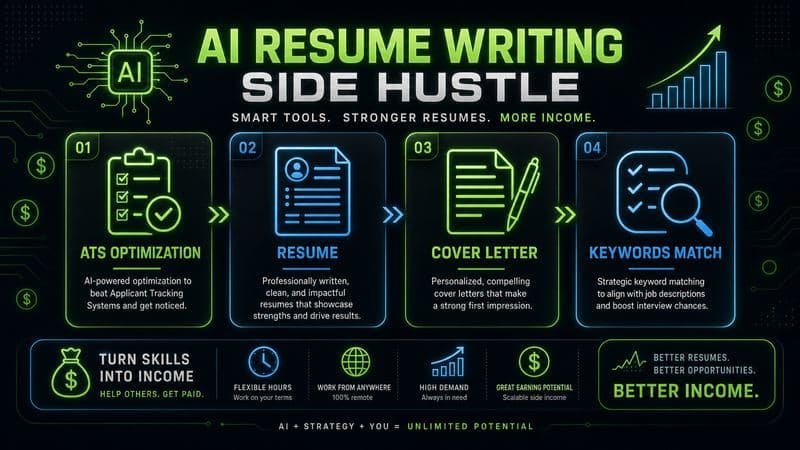
How to Start an AI-Assisted Resume Writing Side Hustle in 2026 (Beginner's Guide)
A step-by-step guide to using AI resume tools to offer a paid resume and cover letter writing service — what to charge, which tools to use, and how to find your first clients.

How to Build and Sell AI Voice Receptionists to Local Businesses in 2026
A beginner's guide to building AI voice agents that answer business phone calls — the tools to use, what to charge, and how to find your first client.
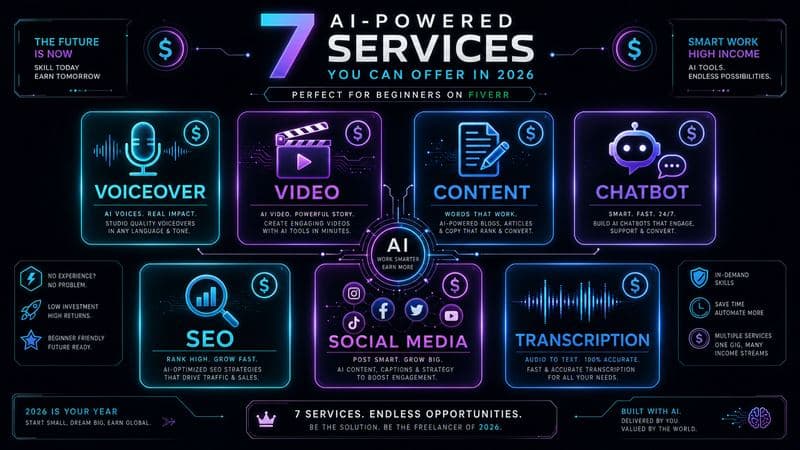
How to Make Money on Fiverr with AI Tools in 2026: 7 Gigs You Can Start This Week
Discover 7 real Fiverr gigs you can launch using free and low-cost AI tools in 2026 — no experience required. Real pricing data, step-by-step setup, and tools that actually work.