
How to Build a Profitable Blog Side Hustle in 2026
Start a blog side hustle that actually pays. Learn the 6-step system for niche selection, AI content automation, and monetization in 2026.
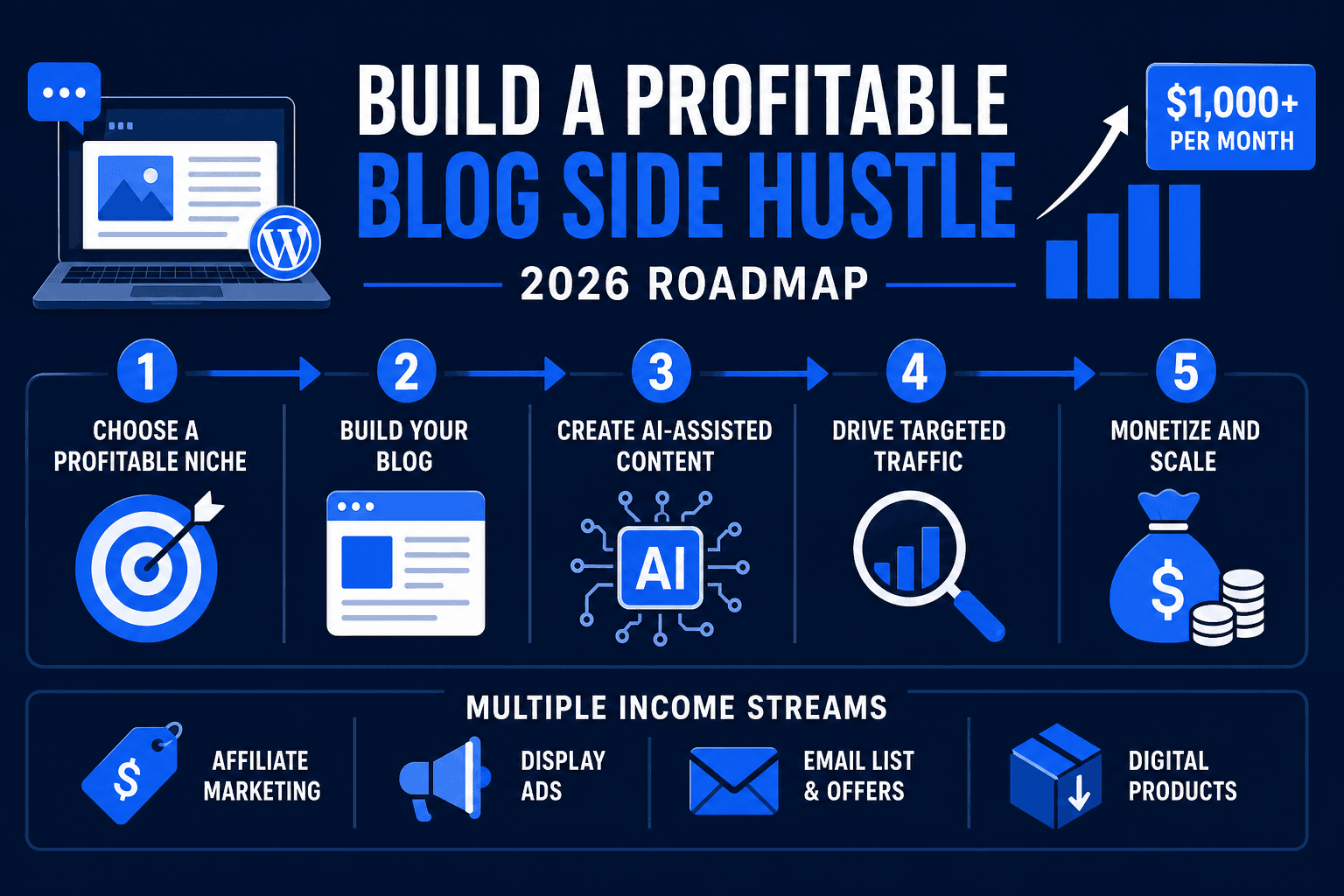
A blog side hustle is a digital business that generates income through content creation, affiliate marketing, and advertising. By using AI tools to handle research and formatting, you can now build a profitable site in under five hours per week. This guide provides a direct roadmap to launching your blog and reaching your first $1,000 month. Last updated: April 2026 to reflect the latest search engine shifts toward "Information Gain" and AI-assisted content workflows.
Why Blogging remains a Top Side Hustle in 2026
Blogging has shifted from a digital diary format to a data-driven asset class. The primary advantage of a blog is ownership; unlike social media followers, your email list and domain traffic are assets you control entirely. This stability makes it an ideal path for anyone learning how to make money with AI because it provides a permanent home for your automated workflows.
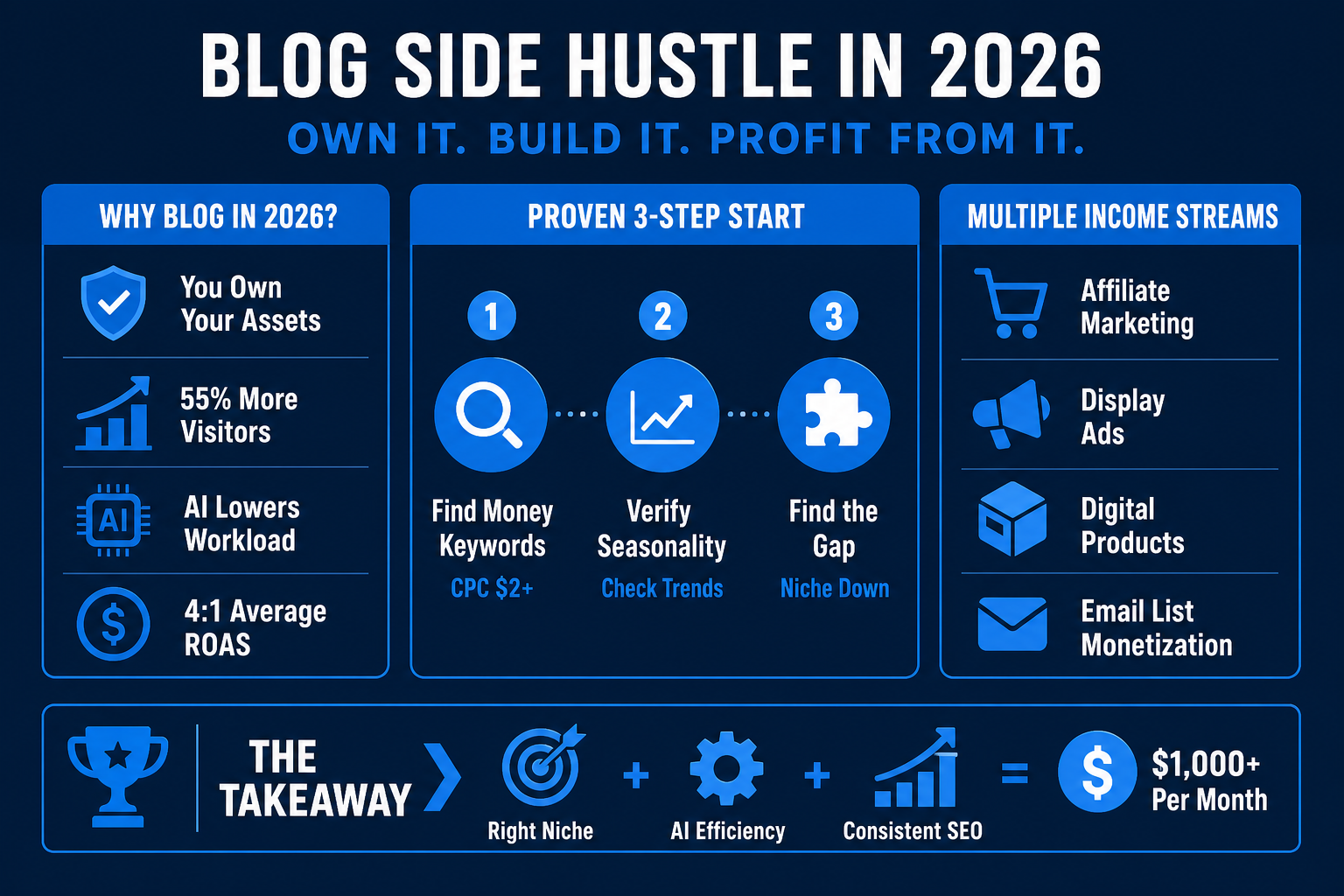
The barrier to entry is lower than ever due to generative AI. While human creativity remains the heart of a great blog, tools now handle the technical heavy lifting—from keyword mapping to SEO meta-tagging. According to recent 2025-2026 industry benchmarks, niche blogs focusing on "Helpful Content" see an average ROAS (Return on Ad Spend) of 4:1 when using AI to lower production costs. Furthermore, data from HubSpot confirms that companies and creators who blog receive 55% more visitors than those who don't, a trend that is accelerating as users seek out human-vetted information in an AI-saturated web.
Identifying a Profitable Niche and Audience
A profitable niche exists at the intersection of high search volume, low competition, and strong "commercial intent." Instead of guessing, look for niches where the average Affiliate Commission is at least $20 per sale.
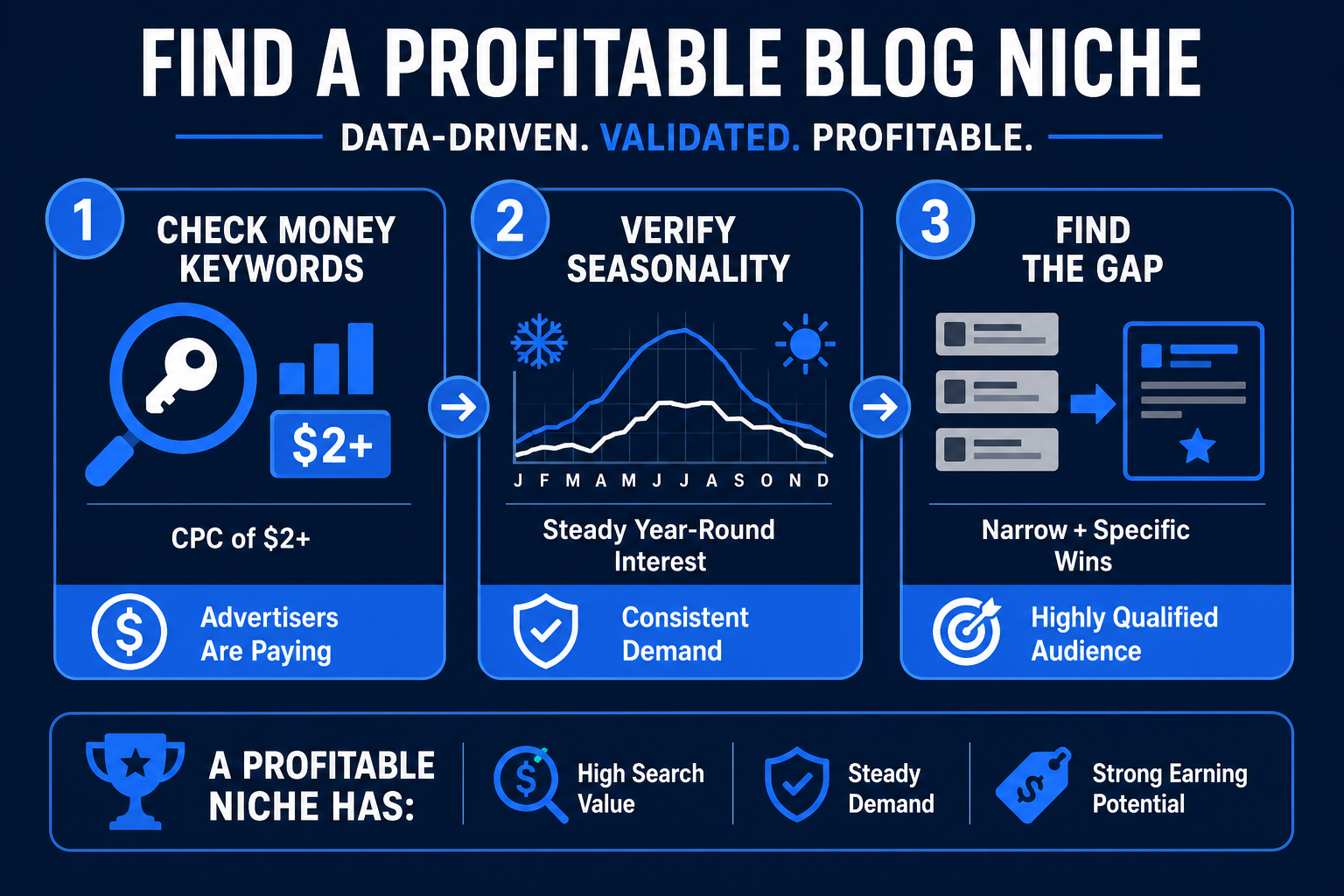
To validate your idea, follow these specific steps:
- Check the "Money Keywords": Use Ahrefs or Semrush to find keywords with a Cost-Per-Click (CPC) of $2.00 or higher. This proves advertisers are willing to pay for this traffic.
- Verify Seasonality: Use Google Trends to ensure your topic doesn't drop to zero in the winter (unless you are specifically in a seasonal niche like skiing).
- Find the Gap: Avoid broad topics like "fitness." Instead, target "AI-assisted marathon training for 40+ professionals." This specificity is the key to how to sell digital products online later, as your audience will be highly qualified.
Setting Up Your Technical Foundation
Your blog needs a fast, secure foundation to rank well in 2026 search results. Start with a self-hosted WordPress.org site for maximum control over monetization.
- Domain & Hosting: Choose a short, ".com" domain name and use a reputable host like SiteGround or Hostinger. In 2026, ensure your host supports PHP 8.3+ for maximum speed.
- Theme: Select a lightweight, mobile-responsive theme (like GeneratePress or Astra). Speed is a confirmed ranking factor, and your "Largest Contentful Paint" (LCP) should be under 1.2 seconds.
- Essential Plugins: Install Rank Math for SEO, Wordfence for security, and Ampere.sh for performance monitoring.
Using AI to Automate Content Production
AI is a tool for efficiency, not a replacement for your unique perspective. In a blog side hustle, you can use AI to generate 50-70% of your initial drafts, which you then edit for tone, accuracy, and personal anecdotes. This is a core pillar of ChatGPT for content creation.
I use CustomGPT.ai to index my own research and previous articles, ensuring the AI writes in my specific brand voice. For multimedia, Murf.ai can transform your written posts into high-quality audio versions. Adding an audio player to your posts can increase "dwell time" by up to 40%, a massive signal to Google that your site is high quality.
Proven Monetization Strategies for 2026
You should plan your monetization before you write your first post. Most blogs earn through a mix of three primary streams:
- Affiliate Marketing: This is the most beginner-friendly method. Focus on AI affiliate programs which often offer recurring commissions of 20% to 40% monthly.
- Display Ads: Once you reach 10,000–50,000 monthly sessions, skip AdSense and apply for premium networks like Mediavine. In 2026, top-tier blogs are seeing RPMs (Revenue per 1,000 sessions) ranging from $25 to $45.
- Digital Products: Selling your own eBooks or prompt engineering templates usually offers the highest profit margins. Use Gumroad to handle the checkout process effortlessly.
Driving Traffic and Scaling Growth
Traffic doesn't happen by accident; it requires a mix of SEO and social distribution. Focus on "Long-Tail Keywords"—phrases that are 4+ words long—because they are easier to rank for and attract users who are ready to take action.
Don't just post and pray. Use the "1-to-5 Scale Method":
- Write one high-quality long-form blog post.
- Extract 5 key insights for X (Twitter).
- Use those insights to fuel your strategy for growing on X/Twitter.
- Convert the main points into a 60-second script for TikTok/Reels.
- Reinvest $50/month into an AI social scheduler to automate the posting.
Frequently Asked Questions
What is the realistic monthly cost to run a blog in 2026?
Expect to pay approximately $15–$30 per month for a professional setup. This includes managed WordPress hosting ($10-$15), a domain renewal reserve ($1.50/mo), and a basic subscription to a tool like CustomGPT.ai or a premium SEO plugin. While you can start for less, these tools provide the automation needed to keep this a "side hustle" rather than a full-time job.
How many articles do I need to start earning $500/month?
On average, niche blogs require 40 to 60 high-quality, SEO-optimized articles to reach the $500/month threshold. This assumes a mix of affiliate-heavy "Best [Tool] for [Task]" articles and high-traffic "How-to" guides. If you use AI side hustle ideas to choose a high-ticket niche (like SaaS or Finance), you can reach this goal with fewer posts.
How has "GEO" (Generative Engine Optimization) changed blogging?
GEO or Generative Engine Optimization is the practice of optimizing content to be cited by AI search engines like Perplexity and ChatGPT Search. In 2026, you must use clear schema markup and "citable facts" (like specific percentages and dates) so AI models can easily parse and credit your blog as a primary source.
Can I use 100% AI-generated content?
No. Google’s 2024 and 2025 core updates heavily penalize "mass-produced unedited AI spam." To rank, you must apply the E-E-A-T principle (Experience, Expertise, Authoritativeness, Trustworthiness). Use AI to outline and draft, but manually add your own screenshots, personal results, and unique conclusions to ensure your content is indexed.
What is the best way to scale a blog to a full-time income?
Once your blog hits $1,000/month, the most effective scaling strategy is launching an AI automation agency or a newsletter. This allows you to monetize your existing traffic twice—once through the blog and again through high-ticket services or sponsored email placements.

Alex the Engineer
•Founder & AI ArchitectSenior software engineer turned AI Agency owner. I build massive, scalable AI workflows and share the exact blueprints, financial models, and code I use to generate automated revenue in 2026.
Related Articles
How to Start an AI-Assisted Resume Writing Side Hustle in 2026 (Beginner's Guide)
A step-by-step guide to using AI resume tools to offer a paid resume and cover letter writing service — what to charge, which tools to use, and how to find your first clients.
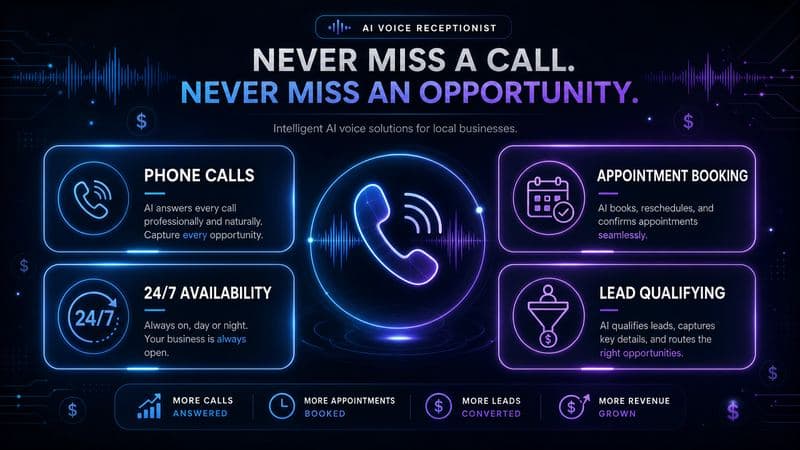
How to Build and Sell AI Voice Receptionists to Local Businesses in 2026
A beginner's guide to building AI voice agents that answer business phone calls — the tools to use, what to charge, and how to find your first client.
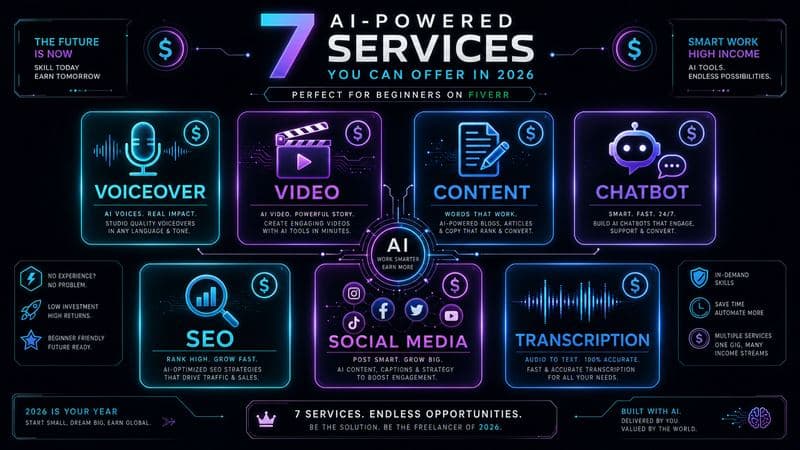
How to Make Money on Fiverr with AI Tools in 2026: 7 Gigs You Can Start This Week
Discover 7 real Fiverr gigs you can launch using free and low-cost AI tools in 2026 — no experience required. Real pricing data, step-by-step setup, and tools that actually work.