
What is OpenRouter? The Beginner's Guide to One API for Every AI Model (2026)
OpenRouter explained for beginners — one API key to access 400+ AI models including GPT, Claude, Gemini, DeepSeek, and Llama 4. Free tier, pricing, and how to start without coding.
If you've ever felt overwhelmed trying to keep up with which AI model is best right now — GPT-5.5, Claude 4.6, Gemini 3.1, DeepSeek V4 — you're not alone. The AI landscape in 2026 has 400+ models and the leaderboard flips every few weeks.
OpenRouter solves this problem in a surprisingly elegant way: one API key, one endpoint, every major AI model. This guide explains what it is, who it's for, how to start for free, and how to actually use it — no coding required to understand the concept.
What is OpenRouter?
OpenRouter is a unified API platform that routes your requests to 400+ AI models from 70+ providers — OpenAI, Anthropic, Google, DeepSeek, Meta, Mistral, and dozens more — through a single endpoint.
Instead of signing up separately for OpenAI, getting a separate Claude API key from Anthropic, managing a different Gemini credential from Google, and keeping track of each provider's pricing, rate limits, and deprecation notices — you connect once to OpenRouter and access all of them.
The URL is always the same. The format is always the same. Only the model name changes.
Think of it like a universal power adapter for AI.
Why Does OpenRouter Exist?
In 2024, if you wanted to test five different language models, you needed five different accounts, five API keys, and five different billing setups. That made serious model comparison expensive and annoying.
OpenRouter built a routing layer on top of all the major providers. It:
- Normalizes the API format — OpenRouter uses the same request/response format as OpenAI, so any tool that works with ChatGPT API works with OpenRouter automatically
- Handles provider switching — If one provider is down or slow, OpenRouter can automatically reroute to another
- Unifies billing — One account, one payment method, one dashboard showing all your usage across all models
- Enables cost comparison — You can try GPT-5.4 and Claude 4.6 on the same query and compare quality vs. cost side-by-side
For beginners building their first AI project, it dramatically lowers the setup barrier. For power users managing multiple AI workflows, it's a single control panel for everything.
What Models Are Available on OpenRouter?
As of June 2026, OpenRouter hosts 400+ models across every major category:
Closed / Frontier Models:
- OpenAI: GPT-5.4, GPT-5.1, o3, o4-mini
- Anthropic: Claude 4.6, Claude 4.5 Sonnet, Claude 4.5 Haiku
- Google: Gemini 3.1, Gemini 3.1 Flash, Gemini 3.5 Flash
- xAI: Grok 4.2, Grok 4.2 Mini
- Meta: Llama 4 (via hosted providers)
Open Source / Free Models:
- DeepSeek V4, DeepSeek R2
- Mistral models
- Qwen 3 series
- 25+ free models accessible with no credit card
Specialized Models:
- Vision models (image understanding)
- Code models (optimized for programming tasks)
- Embedding models (for search and retrieval)
The free tier gives you access to the free models — which in 2026 are genuinely capable for many tasks. The paid tier (pay-as-you-go) unlocks everything.
OpenRouter Pricing: What Does It Actually Cost?
OpenRouter has three tiers:
Free Tier
- 50 requests per day, 20 per minute
- 25+ free models available
- No credit card required
- Best for: testing, learning, demo projects
Pay-as-You-Go
- 5.5% platform fee on top of the underlying model cost
- Add $10 credit → you get 1,000 free model requests per day plus unlimited paid model access
- No minimum spend, no lock-in
- Best for: active projects, developers, builders
Enterprise
- Custom rate limits and discounted platform fees
- 5M free requests per month
- Dedicated support and SLA
- Best for: companies with high-volume API usage
Example costs (mid-2026):
- Gemini 3.1 Flash: ~$0.075/M input tokens (incredibly cheap)
- DeepSeek V4: ~$0.27/M input tokens
- Claude 4.5 Haiku: ~$0.80/M input tokens
- GPT-5.4: ~$10/M input tokens (premium)
For context: 1 million tokens is roughly 750,000 words of text — a typical chatbot conversation uses 2,000–5,000 tokens. Even the "expensive" models cost fractions of a cent per message.
How to Get Started with OpenRouter (No Coding Required)
You don't need to be a developer to set up OpenRouter and start using it through the playground.
Step 1: Sign Up Go to openrouter.ai and create a free account. No credit card required for the free tier.
Step 2: Get Your API Key In your dashboard, find the "API Keys" section and create a new key. Copy it somewhere safe — you'll use it to authenticate.
Step 3: Try the Playground OpenRouter has a built-in chat interface (similar to ChatGPT) where you can test any model without writing code. Switch between models in the same conversation to compare their outputs directly.
Step 4: Pick Your Model Browse the model catalog at openrouter.ai/models. Filter by:
- Free (no cost)
- Speed (fastest response)
- Context length (how much text it can handle)
- Capability score (general quality)
Good beginner recommendations:
- Free tier:
deepseek/deepseek-v4or theopenrouter/freeauto-router - Paid — best value:
google/gemini-3.1-flash - Paid — best quality:
anthropic/claude-4.5-sonnetoropenai/gpt-5.4
Step 5: Connect to Tools If you use tools like Continue, Cursor, or n8n for automation, they usually have an "OpenAI-compatible" API option — just point it at OpenRouter's base URL and enter your API key.
The openrouter/free Auto-Router: A Hidden Gem
One of OpenRouter's most useful features for beginners is the openrouter/free model.
When you select this as your model, OpenRouter automatically routes your request to one of its available free models at random. It's designed as a zero-cost way to get AI responses without thinking about which specific free model to use.
When to use it: Prototyping, testing integrations, non-critical automations where "any capable model" is good enough.
When not to use it: When you need consistent behavior, a specific model's capabilities, or reliable uptime for production workloads.
OpenRouter for Non-Developers: Real Use Cases
You don't have to write code to benefit from OpenRouter. Here's how non-developers are using it:
Workflow Automation (n8n / Make / Zapier) These automation platforms support OpenAI-compatible APIs. Point them at OpenRouter and you can use Claude, Gemini, or DeepSeek in your no-code workflows — without paying ChatGPT Plus rates for every AI step in your workflow.
AI-Powered Chatbots for Your Website Tools like CustomGPT.ai let you build custom chatbots trained on your own content. Once you have an OpenRouter API key, you can swap in more capable (or cheaper) models as they get released, without rebuilding your chatbot from scratch.
Cost Optimization Experiments Load the OpenRouter playground, type the same prompt into GPT-5.4 and then into DeepSeek V4 (which costs roughly 40x less), and compare the responses. For many tasks — summarization, classification, drafting — the cheaper model is 90% as good.
Staying Current Without Chasing Credentials When Google releases Gemini 3.5 Pro (expected any day now in June 2026), it'll appear in OpenRouter within hours. You won't need a new API key or account update — just change one model name.
OpenRouter vs. Direct Provider APIs: Which Should You Use?
| OpenRouter | Direct Provider API | |
|---|---|---|
| Setup | One account, one key | Separate account per provider |
| Model access | 400+ from one place | One provider's models only |
| Pricing | Provider cost + 5.5% fee | Direct provider pricing |
| Fallback routing | Built-in | You build it yourself |
| Billing | Unified dashboard | Separate invoices |
| Best for | Multi-model projects, comparison | Single-model production workloads at scale |
The tradeoff: OpenRouter's 5.5% fee means if you're running extremely high volumes on a single model, going direct to that provider is slightly cheaper. But for exploration, comparison, and multi-model workflows — OpenRouter wins easily.
Making Money with OpenRouter: 3 Real Approaches
1. Build Custom AI Tools for Local Businesses Small businesses want AI chatbots, document analyzers, and email responders — but they don't know what "API" means. You can build these tools using OpenRouter (cheap access to powerful models) and CustomGPT.ai, then charge a monthly retainer. OpenRouter makes it easy to keep costs low while delivering premium model quality.
2. Start an AI Automation Agency Most agencies use a single AI provider. Offering clients access to the "best model for each task" (Claude for writing, Gemini Flash for speed, DeepSeek for cost) is a real competitive differentiator — and only practical if you're routing through OpenRouter.
Read our full guide on how to start an AI automation agency in 2026 for the full business model.
3. Reduce AI Tool Costs and Keep the Margin If you're reselling AI services to clients (reports, content, analysis), swapping from GPT-5.4 to Gemini 3.1 Flash via OpenRouter can cut your per-request cost by 90% on suitable tasks — while your client rate stays the same. That margin goes in your pocket.
Bottom Line
OpenRouter is the answer to "I want to try multiple AI models without managing five different accounts." For beginners, it lowers the barrier to AI experimentation to near-zero. For builders, it's a unified control plane for cost optimization and model switching as the landscape evolves.
The free tier is genuinely useful. And at $10 to unlock 1,000 free requests per day plus all 400+ models, the paid tier is one of the best value-per-dollar deals in AI tooling right now.
If you're just getting started, use the playground. If you're building something, the API is a copy-paste integration from any OpenAI-compatible tool.
The AI model you need may change next month — but your OpenRouter key stays the same.
Also worth reading: our Claude API tutorial for beginners and MCP (Model Context Protocol) beginner guide — both work seamlessly with OpenRouter.
Frequently Asked Questions
Is OpenRouter free to use? Yes, OpenRouter has a free tier with 50 requests per day and access to 25+ free models — no credit card required. For more usage or access to premium models like GPT-5.4 and Claude 4.6, you add credits and pay as you go. The platform adds a 5.5% fee on top of underlying model costs.
Is OpenRouter safe? Can it read my prompts? OpenRouter is a pass-through router — your prompt is forwarded to the underlying provider (OpenAI, Anthropic, etc.) on their infrastructure. OpenRouter does log metadata for billing and abuse prevention. For sensitive business data, check OpenRouter's privacy policy and consider using enterprise-grade providers directly.
Can I use OpenRouter without coding? Yes. OpenRouter has a built-in playground (chat interface) you can use directly in the browser with no code. For tool integrations like n8n, Make, or Zapier — you enter your API key in an "OpenAI-compatible" field; no coding needed.
What's the difference between OpenRouter and OpenAI? OpenAI is one AI provider — it makes GPT models. OpenRouter is a routing platform that gives you access to OpenAI plus 70+ other providers (Anthropic, Google, Meta, DeepSeek, etc.) through one API. If you want only GPT models, use OpenAI directly. If you want to switch between models or compare providers, use OpenRouter.
How many models are on OpenRouter? As of June 2026, OpenRouter hosts 400+ models. This includes frontier closed-source models (GPT-5.4, Claude 4.6, Gemini 3.1), open-source models (Llama 4, Mistral, Qwen), and specialized models for vision, code, and embeddings. The catalog grows regularly as new models are released.
Does OpenRouter work with Cursor and VS Code?
Yes. Cursor, VS Code Copilot, and most AI coding tools support OpenAI-compatible APIs. You point the base URL at OpenRouter's endpoint (https://openrouter.ai/api/v1) and enter your API key. This lets you use Claude or DeepSeek inside your IDE without paying Cursor's subscription for every model query.
Is OpenRouter better than using each AI directly? For most beginners and builders: yes. The 5.5% platform fee is worth the convenience of one account, one dashboard, and instant access to new models as they launch. The only case where going direct is better is very high-volume production use of a single model where that 5.5% becomes significant at scale.

Alex the Engineer
•Founder & AI ArchitectSenior software engineer turned AI Agency owner. I build massive, scalable AI workflows and share the exact blueprints, financial models, and code I use to generate automated revenue in 2026.
Related Articles
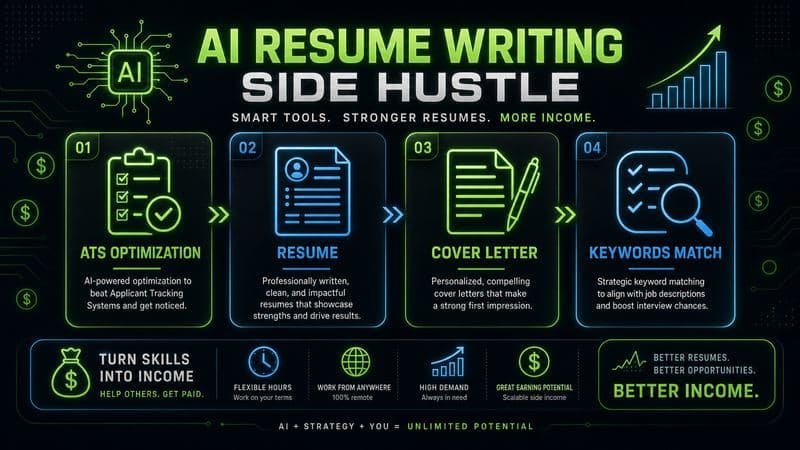
How to Start an AI-Assisted Resume Writing Side Hustle in 2026 (Beginner's Guide)
A step-by-step guide to using AI resume tools to offer a paid resume and cover letter writing service — what to charge, which tools to use, and how to find your first clients.
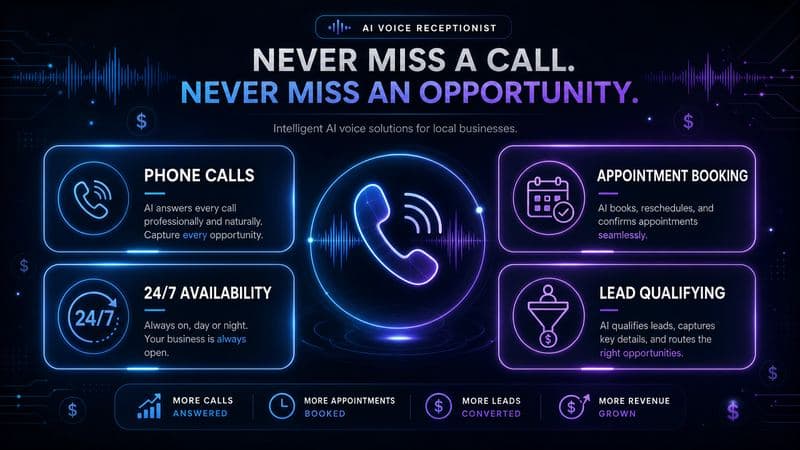
How to Build and Sell AI Voice Receptionists to Local Businesses in 2026
A beginner's guide to building AI voice agents that answer business phone calls — the tools to use, what to charge, and how to find your first client.
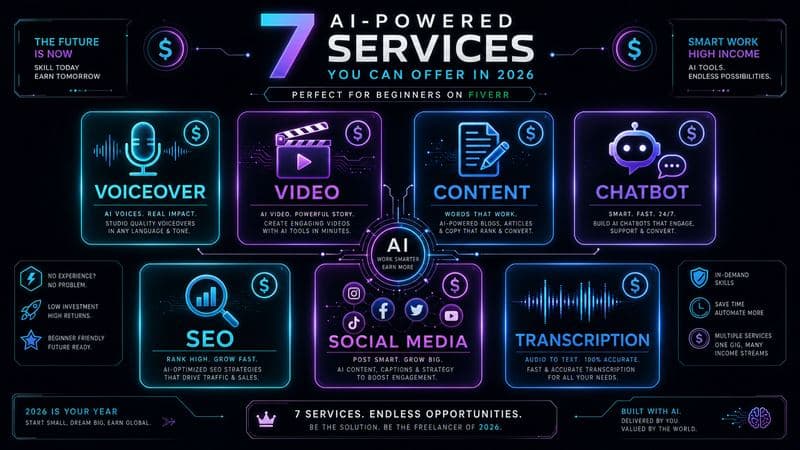
How to Make Money on Fiverr with AI Tools in 2026: 7 Gigs You Can Start This Week
Discover 7 real Fiverr gigs you can launch using free and low-cost AI tools in 2026 — no experience required. Real pricing data, step-by-step setup, and tools that actually work.