
What is MCP (Model Context Protocol)? A Beginner's Guide for 2026
MCP (Model Context Protocol) explained for beginners — what it is, how it works, why every AI tool is adding it, and how to use it without writing code.
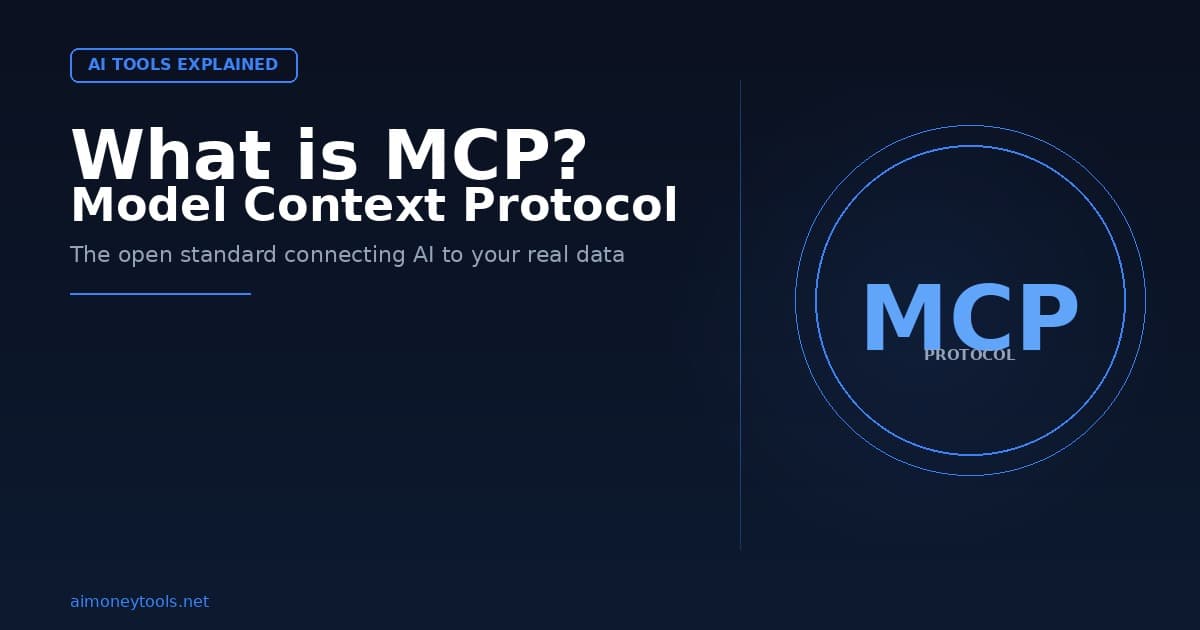
If you've been following AI news lately, you've probably seen "MCP" mentioned everywhere — in Claude, Cursor, VS Code, and dozens of new tools. But what actually is Model Context Protocol, and why does it matter to someone who just wants to use AI to save time or make money?
This guide breaks it down in plain English. No coding required to understand it.
What is MCP (Model Context Protocol)?
MCP (Model Context Protocol) is an open standard that lets AI assistants connect to external tools and data sources in a standardized way.
Think of it like a universal charger for AI. Before MCP, every AI tool had to build its own custom "bridge" to connect with databases, files, APIs, and apps. That was slow, fragile, and expensive. MCP creates one common language that all these connections can use.
Anthropic (the company behind Claude) created and open-sourced MCP in late 2024. Since then, hundreds of tools have adopted it — from Cursor and VS Code to GitHub and Notion.
Why Does MCP Matter?
Before MCP, here's what happened when you asked Claude to "check my latest GitHub issues":
- Claude couldn't do it — it had no connection to GitHub
- A developer would have to write custom code to bridge Claude → GitHub API
- That custom bridge only worked for Claude, not ChatGPT or any other model
- Every time GitHub updated their API, the bridge might break
With MCP, GitHub publishes one official MCP server. Any MCP-compatible AI assistant can connect to it instantly — Claude, Cursor, VS Code Copilot, or any future model. No custom bridges. No repeated work.
The result: AI assistants that can actually do things with your real data, not just chat about it.
How Does MCP Work? (Simple Version)
MCP uses a client-server architecture. Here's the non-technical explanation:
MCP Server = a connector that wraps a tool or data source (like GitHub, Notion, your file system, a database). It "speaks MCP."
MCP Client = the AI assistant or app that wants to use that tool (like Claude Desktop, Cursor, or VS Code). It also "speaks MCP."
When you ask Claude to "summarize my Notion notes from this week," here's what happens:
- Your Claude Desktop app (MCP Client) asks the Notion MCP Server: "give me recent pages"
- The Notion MCP Server fetches your actual Notion data
- That data is passed back to Claude as context
- Claude summarizes it for you
The AI never sees your Notion password or API keys directly — the MCP server handles all that securely.
MCP vs API: What's the Difference?
You might wonder: isn't this just using an API? Not exactly.
| Feature | Traditional API | MCP |
|---|---|---|
| Setup | Custom code required | Plug-and-play |
| Works with | One specific AI | Any MCP-compatible AI |
| Discoverability | Manual documentation | Auto-discovery |
| Security model | Varies | Standardized |
| Maintainability | Developer-specific | Community-maintained |
APIs are the underlying technology that MCP often uses. MCP is the standardized protocol on top of APIs that makes them universally accessible to AI assistants.
What Tools Already Support MCP?
As of mid-2026, MCP has been adopted by a huge range of tools:
AI Assistants:
- Claude (Desktop and API) — the original MCP platform
- Cursor — built MCP support directly into the IDE
- VS Code (via GitHub Copilot)
- Windsurf, Zed, and most modern AI coding tools
Productivity & Data Tools:
- Notion, Obsidian, Google Drive
- GitHub, GitLab, Linear
- PostgreSQL, SQLite, MySQL databases
- Slack, Discord
- Brave Search, web scraping tools
Developer Tools:
- Docker, Kubernetes
- AWS, Cloudflare Workers
- Sentry (error tracking)
The official MCP server registry lists 500+ community-built servers at modelcontextprotocol.io.
How Do I Use MCP Without Coding?
If you're a non-developer using Claude Desktop, getting started with MCP is surprisingly simple.
Step 1: Download Claude Desktop Get it free from claude.ai. This is the desktop app — not the browser version.
Step 2: Find an MCP Server Browse the official list at modelcontextprotocol.io or search for "[tool name] MCP server" on GitHub.
Popular beginner-friendly ones:
- Filesystem — lets Claude read your local files and folders
- GitHub — lets Claude browse your repos and issues
- Brave Search — gives Claude live web search ability
- Notion — connects Claude to your Notion workspace
Step 3: Add It to Claude's Config
Claude Desktop uses a claude_desktop_config.json file. Most MCP servers provide a copy-paste config snippet in their README. You drop it in, restart Claude, and you're connected.
Step 4: Ask Claude to Use It Once connected, just chat normally: "What files are in my Downloads folder?" or "Summarize my open GitHub issues."
No programming. No API keys to manage yourself (the MCP server handles that). Just connect and talk.
MCP and Making Money Online
MCP is becoming the backbone of serious AI automation setups — and that means real opportunities:
Building MCP Servers — Developers are charging $500–$5,000 to build custom MCP servers for businesses. If your company has internal tools (CRM, custom database, proprietary software), an MCP server means AI assistants can finally interact with them.
AI Automation Agencies — Agencies that set up Claude + MCP workflows for small businesses are charging $1,000–$3,000/month retainers. Common use cases: customer support that can actually pull order data, sales assistants that read the CRM, and internal knowledge bots connected to company wikis.
Prompt Engineering Consulting — With MCP-connected AI assistants, prompt engineering becomes more complex and more valuable. Understanding how to structure MCP contexts is a skill gap most businesses aren't filling internally yet.
Check out our guide to starting an AI automation agency if this angle interests you.
Common MCP Misconceptions
"MCP is only for developers" — Not true. Claude Desktop, Cursor, and other end-user tools implement MCP behind the scenes. You use it every time you have Claude read your local files.
"MCP replaces APIs" — MCP uses APIs; it doesn't replace them. It's a layer on top that standardizes how AI models talk to those APIs.
"Only Claude supports MCP" — While Anthropic created MCP, it's open-source and adopted by OpenAI, Google (via integrations), Microsoft (VS Code), and many others.
"MCP is risky for my data" — MCP servers can be configured with strict permission scopes. You can allow Claude to read files but not write them, or access one database table but not others.
The Bottom Line
MCP is the behind-the-scenes reason why AI assistants are suddenly getting genuinely useful for real work tasks — not just answering questions, but actually connecting to your data, tools, and workflows.
For beginners, the practical takeaway is simple: if you want Claude to do useful work with your actual files, apps, and data — not just generic knowledge — MCP is the feature that makes it possible.
Start with Claude Desktop + the filesystem MCP server. You'll immediately feel the difference between an AI that "knows about files" and one that can actually read your files.
Want to go deeper? Read our Claude API tutorial for beginners and the Cursor AI beginner guide to see MCP in real coding workflows.
Frequently Asked Questions
What does MCP stand for? MCP stands for Model Context Protocol. It's an open standard developed by Anthropic and released in late 2024 to help AI assistants securely connect to external tools, files, and data sources.
Is MCP free to use? Yes. MCP is an open-source specification. The protocol itself is free, and most MCP servers are free and community-maintained. You may pay for the AI assistant (like Claude Pro) or for the tools you're connecting (like Notion), but MCP itself has no cost.
Do I need to know coding to use MCP? Not for basic use. Claude Desktop, Cursor, and most AI tools handle MCP connections through a configuration file — you copy-paste a few lines, not write code. Developers need coding skills to build custom MCP servers, but end users don't.
What's the difference between MCP and a plugin? Plugins (like ChatGPT plugins) are closed, proprietary extensions that only work with one AI. MCP is an open standard — build one MCP server and any MCP-compatible AI can use it. It's the difference between a proprietary charging cable and USB-C.
Is MCP the same as tool calling or function calling? They're related but different. Function calling / tool calling is an AI model's ability to call external functions mid-conversation. MCP is a protocol that standardizes how those external functions are described, discovered, and called. MCP makes tool calling much more scalable and portable.
Which AI assistants support MCP? As of 2026: Claude (all versions via Desktop and API), Cursor, VS Code Copilot, Windsurf, Zed editor, and many others. The list is growing fast — any new AI assistant that wants to be taken seriously is adding MCP support.
Can MCP access my private data without permission? No. MCP servers require explicit configuration by you. They don't self-install or auto-connect. Every MCP server you add is one you chose to add. You can also scope permissions — for example, read-only access to specific folders or databases.

Alex the Engineer
•Founder & AI ArchitectSenior software engineer turned AI Agency owner. I build massive, scalable AI workflows and share the exact blueprints, financial models, and code I use to generate automated revenue in 2026.
Related Articles
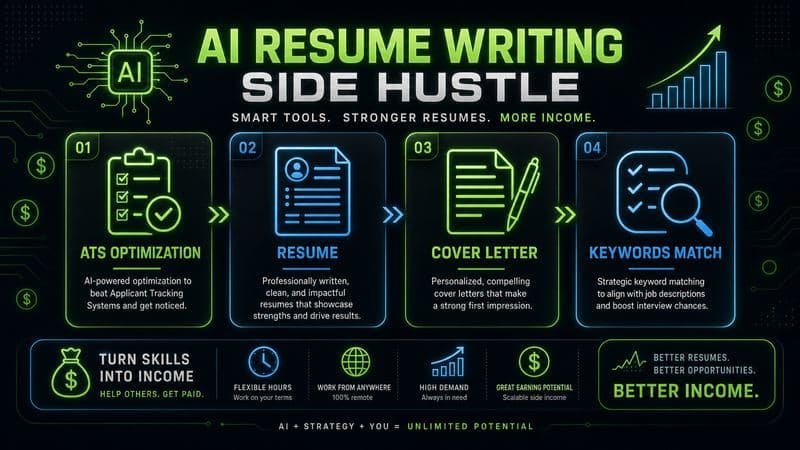
How to Start an AI-Assisted Resume Writing Side Hustle in 2026 (Beginner's Guide)
A step-by-step guide to using AI resume tools to offer a paid resume and cover letter writing service — what to charge, which tools to use, and how to find your first clients.
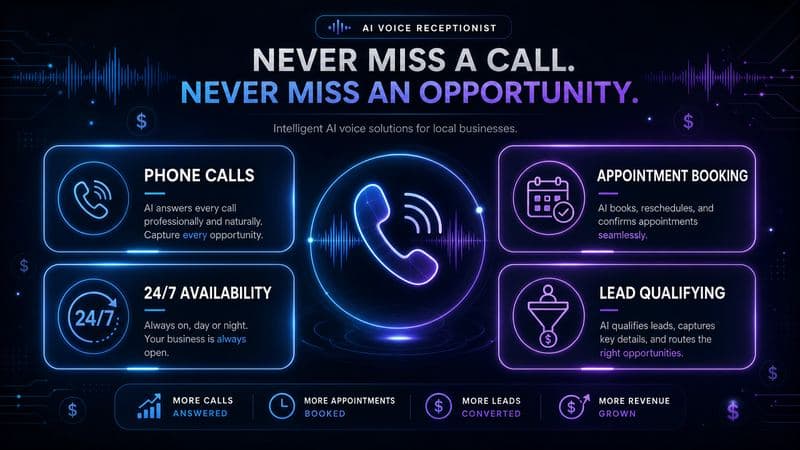
How to Build and Sell AI Voice Receptionists to Local Businesses in 2026
A beginner's guide to building AI voice agents that answer business phone calls — the tools to use, what to charge, and how to find your first client.
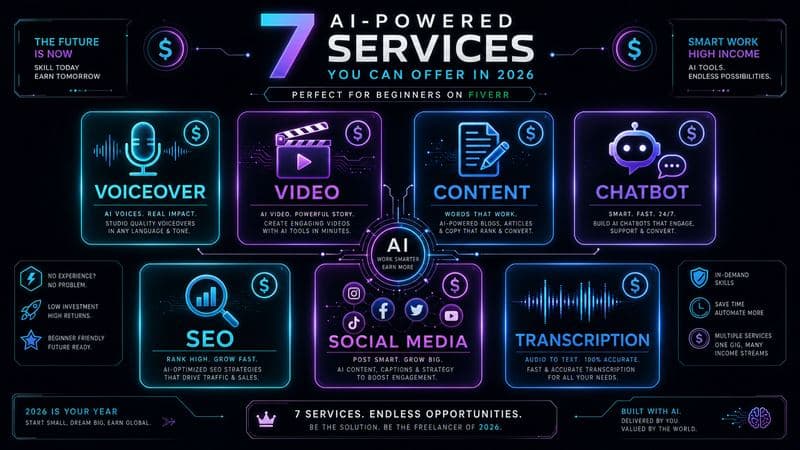
How to Make Money on Fiverr with AI Tools in 2026: 7 Gigs You Can Start This Week
Discover 7 real Fiverr gigs you can launch using free and low-cost AI tools in 2026 — no experience required. Real pricing data, step-by-step setup, and tools that actually work.