
How to Use the Claude API: A Complete Beginner's Guide (2026)
Learn how to use the Claude API step by step — get your API key, make your first call, understand models and pricing, and build your first AI app. No coding experience required.
Affiliate disclosure: This article contains affiliate links. If you make a purchase, we may earn a commission at no extra cost to you.
The Claude API is one of the best AI APIs available in 2026. It gives you direct access to Claude's intelligence — the same model powering claude.ai — but from your own code, apps, or automation workflows.
This guide walks you through everything from getting your first API key to making your first real call. No deep coding experience needed.
What is the Claude API?
The Claude API is a programming interface built by Anthropic that lets you send messages to Claude and receive responses in your own applications.
Instead of going to claude.ai and chatting manually, you write code (or use a no-code tool) that sends a request to Claude and gets an answer back automatically.
Common uses:
- Building chatbots for your website or product
- Automating email replies, summaries, or content drafts
- Creating internal tools (document Q&A, data extraction, classification)
- Adding AI to your existing workflows via tools like n8n
If you want to offer Claude-powered features inside your own product without coding from scratch, CustomGPT is a no-code option that lets you deploy Claude-backed agents in minutes.
Step 1: Create an Anthropic Account
Go to console.anthropic.com and sign up for a free account.
You will be asked to verify your email address and set up basic account information. The process takes about two minutes.
Once inside, you will see the Anthropic Console — this is where you manage API keys, monitor usage, and set billing limits.
Step 2: Get Your API Key
In the Anthropic Console, click API Keys in the left sidebar.
Click Create Key, give it a name (something like "my-first-project"), and click Create API Key.
You will see a long string starting with sk-ant-api.... Copy this immediately — you will not be able to see it again after you close the window.
Store your key in a secure place. Do not paste it into public code or share it with anyone. Treat it like a password.
Important: New accounts start with a small free credit (usually $5). After that, you pay per token (input + output). Pricing is on the Anthropic pricing page.
Step 3: Make Your First API Call
The simplest way to test the API is with a direct HTTP call. You do not need Python or Node.js to try this — you can use any language or tool that can make HTTP requests.
Here is a basic curl command you can run in your terminal:
curl https://api.anthropic.com/v1/messages \
  --header "x-api-key: YOUR_API_KEY_HERE" \
  --header "anthropic-version: 2023-06-01" \
  --header "content-type: application/json" \
  --data '{
    "model": "claude-opus-4-8-20260528",
    "max_tokens": 1024,
    "messages": [
      {"role": "user", "content": "Explain what the Claude API does in one sentence."}
    ]
  }'
Replace YOUR_API_KEY_HERE with the key you copied in Step 2.
If everything works, you will get a JSON response back with Claude's answer. If you see a 401 error, double-check your API key.
If you need help with the terminal, check out our Terminal Beginners Guide first.
Step 4: Use the Python SDK (Recommended)
For real projects, most developers use the official Python or JavaScript SDK. Python is the most common choice.
Install the SDK:
pip install anthropic
Basic Python example:
import anthropic

client = anthropic.Anthropic(api_key="YOUR_API_KEY_HERE")

message = client.messages.create(
    model="claude-opus-4-8-20260528",
    max_tokens=1024,
    messages=[
        {"role": "user", "content": "What are the top 3 ways to make money with AI in 2026?"}
    ]
)

print(message.content[0].text)
This is the complete pattern for most Claude API use cases: create a client, pass a model and message list, read the response.
For production code, store your API key in an environment variable instead of hardcoding it:
import os
import anthropic

client = anthropic.Anthropic(api_key=os.environ["ANTHROPIC_API_KEY"])
Understanding Claude Models in 2026
Anthropic offers three main Claude model tiers. Which one you use depends on the task and your budget:
| Model | Best For | Speed | Cost |
|---|---|---|---|
| Claude Haiku | Fast, cheap, simple tasks | Fastest | Lowest |
| Claude Sonnet | Everyday tasks, balanced | Medium | Medium |
| Claude Opus 4.8 | Complex reasoning, agents | Standard / 2.5× fast mode | Higher |
For most beginner projects, Sonnet is the right starting point. It handles most tasks well without the higher cost of Opus.
If you are building an agent that needs to complete multi-step tasks reliably, use Claude Opus 4.8 — it is the only model to pass every case on Anthropic's Super-Agent benchmark.
Key API Concepts for Beginners
Messages
The Claude API uses a messages format. You send an array of messages with a role (user or assistant) and content. Claude responds as the assistant.
messages=[
    {"role": "user", "content": "Who are you?"},
    {"role": "assistant", "content": "I'm Claude, an AI assistant made by Anthropic."},
    {"role": "user", "content": "What can you help me with today?"}
]
You can include multiple turns of conversation history in a single request. This is how you build a chatbot that remembers context.
System Prompt
A system prompt sets the behavior, tone, and instructions for Claude before the conversation starts.
message = client.messages.create(
    model="claude-sonnet-4-5",
    max_tokens=1024,
    system="You are a helpful assistant for a pet care website. Answer only questions about dogs and cats.",
    messages=[{"role": "user", "content": "What should I feed my golden retriever?"}]
)
System prompts are one of the most powerful tools in the API. They let you create specialized assistants without fine-tuning the model.
Tokens and Cost
Claude charges by the token — roughly 1 token per 0.75 words. A 1,000-word article is approximately 1,333 tokens.
You are charged separately for input tokens (what you send) and output tokens (what Claude generates). Output tokens cost more.
Use max_tokens to cap how long Claude's response can be. This prevents unexpected large bills on development runs.
Streaming
For a chatbot or real-time interface, you want Claude to stream its response word by word instead of waiting until it finishes.
with client.messages.stream(
    model="claude-sonnet-4-5",
    max_tokens=1024,
    messages=[{"role": "user", "content": "Tell me a short story."}]
) as stream:
    for text in stream.text_stream:
        print(text, end="", flush=True)
Streaming makes your interface feel much more responsive and natural.
Build Your First Mini Project: Article Summarizer
Here is a complete beginner script that summarizes any article you paste into it:
import anthropic

client = anthropic.Anthropic(api_key="YOUR_API_KEY_HERE")

print("Paste your article text below. Press Enter twice when done:")
lines = []
while True:
    line = input()
    if line == "":
        break
    lines.append(line)

article_text = "\n".join(lines)

message = client.messages.create(
    model="claude-haiku-4-5",
    max_tokens=300,
    system="You summarize articles in 3 bullet points. Be concise.",
    messages=[
        {"role": "user", "content": f"Summarize this article:\n\n{article_text}"}
    ]
)

print("\n=== SUMMARY ===")
print(message.content[0].text)
This uses Claude Haiku (cheapest model) since summarization is a simple task. Run it with python summarizer.py.
No-Code Option: CustomGPT
If Python feels like too much, CustomGPT lets you deploy Claude-powered AI agents with no code. You upload your content, configure behavior via a visual interface, and embed the agent on any website.
It is a strong option if you want to offer Claude features in a client's website or your own product without building from scratch.
Related Reading
- Claude Opus 4.8 Is Out: Everything That Changed
- How to Use n8n for Beginners: Automate Without Code
- How to Start an AI Automation Agency in 2026
- Terminal Beginners Guide
Frequently Asked Questions
Is the Claude API free?
New Anthropic accounts get a small free credit (approximately $5) to test the API. After that, you pay per token. There is no ongoing free tier for API usage, though costs are low for small projects.
What programming languages does the Claude API support?
Anthropic provides official SDKs for Python and TypeScript/Node.js. Any language that can make HTTP requests (curl, PHP, Ruby, Go, etc.) can also call the API directly.
What is the difference between the Claude API and claude.ai?
Claude.ai is the web interface for chatting with Claude directly. The Claude API lets your code or applications talk to Claude programmatically — it is for building tools and automations, not for manual chatting.
How much does the Claude API cost?
Pricing depends on the model and token count. As of 2026, Claude Haiku is the cheapest (fractions of a cent per 1,000 tokens). Claude Opus is significantly more expensive but much more capable. Check anthropic.com/pricing for current rates.
Can I use the Claude API without coding?
Not directly — the API requires code or an integration platform. For a no-code path, tools like CustomGPT or n8n can connect to Claude without writing raw API calls.
What is max_tokens in the Claude API?
max_tokens is the maximum number of tokens Claude will generate in its response. Setting it too low cuts off the response mid-sentence. Setting it too high increases potential cost. A value of 1,024 is a safe default for most tasks.
Is the Claude API safe to use?
Yes. Anthropic has extensive safety guidelines built into Claude. You can also add your own restrictions via system prompts to control what Claude will and will not answer in your application.
How do I handle errors in the Claude API?
The most common errors are 401 (invalid API key), 429 (rate limit exceeded), and 500 (server error). Wrap your API calls in try/except blocks and add basic retry logic for 429 errors with a short wait.

Alex the Engineer
•Founder & AI ArchitectSenior software engineer turned AI Agency owner. I build massive, scalable AI workflows and share the exact blueprints, financial models, and code I use to generate automated revenue in 2026.
Related Articles

How to Start an AI-Assisted Resume Writing Side Hustle in 2026 (Beginner's Guide)
A step-by-step guide to using AI resume tools to offer a paid resume and cover letter writing service — what to charge, which tools to use, and how to find your first clients.
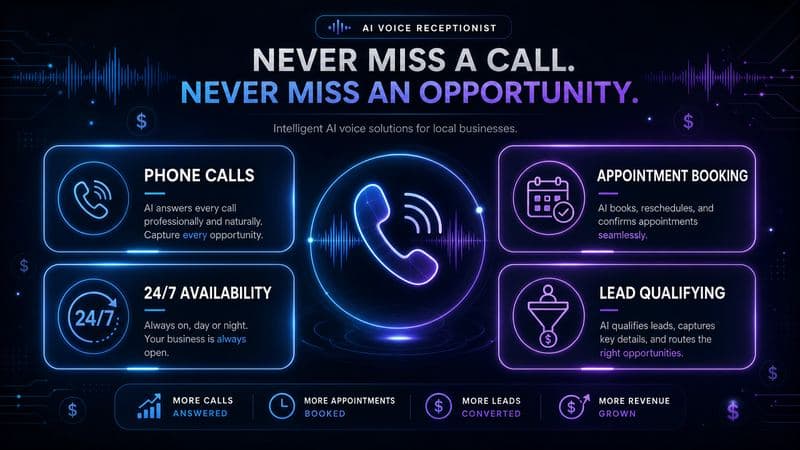
How to Build and Sell AI Voice Receptionists to Local Businesses in 2026
A beginner's guide to building AI voice agents that answer business phone calls — the tools to use, what to charge, and how to find your first client.
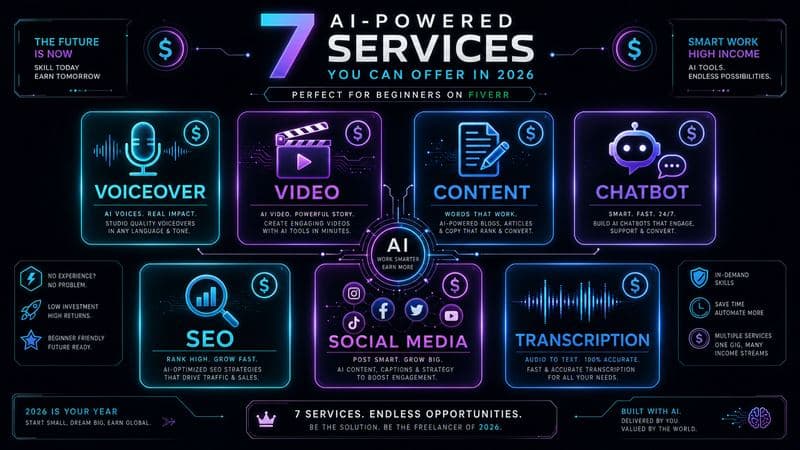
How to Make Money on Fiverr with AI Tools in 2026: 7 Gigs You Can Start This Week
Discover 7 real Fiverr gigs you can launch using free and low-cost AI tools in 2026 — no experience required. Real pricing data, step-by-step setup, and tools that actually work.