
GPT-5.5 Pricing in 2026: What It Actually Costs and Is It Worth It?
GPT-5.5 doubled API prices over GPT-5.4. Here's the full breakdown: ChatGPT Plus, Pro, and API costs in 2026 — and whether cheaper alternatives can replace it.
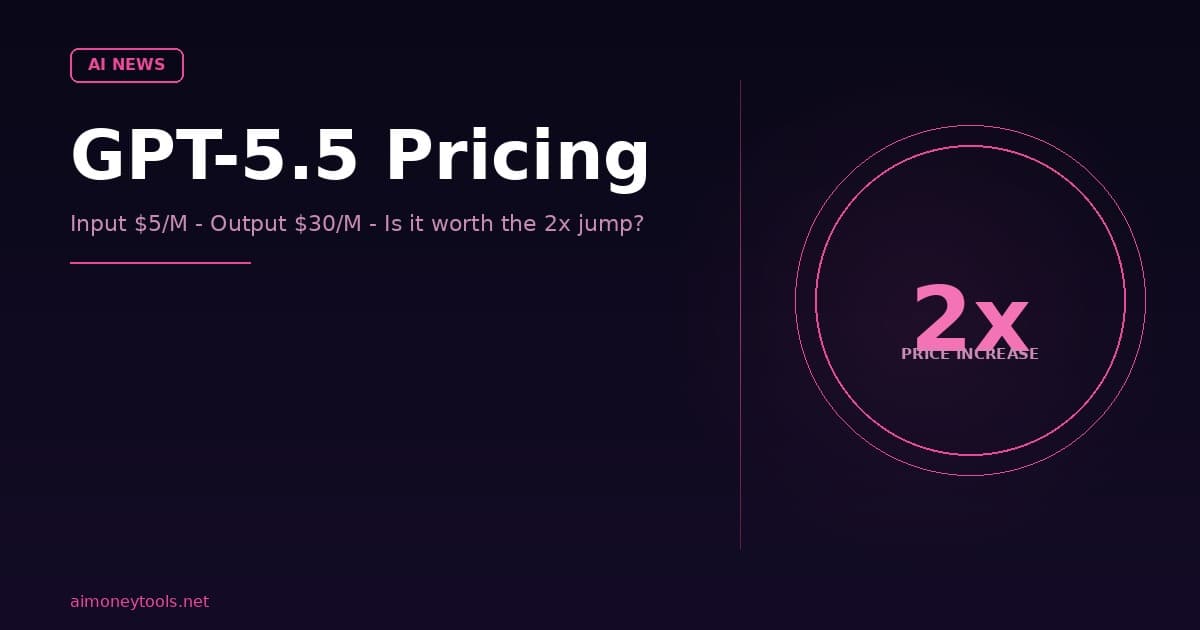
OpenAI just doubled GPT-5.5's API price. Input tokens went from $2.50 per million to $5.00 per million. Output tokens jumped from $15.00 to $30.00 per million. For developers with any real volume, that's a 49–92% increase in real-world bill size.
This post breaks down exactly what GPT-5.5 costs at every tier — API, consumer subscriptions, and the Pro plan — and helps you figure out whether those higher prices are justified for your use case.
The Full GPT-5.5 Price Breakdown
Consumer Plans (ChatGPT)
| Plan | Monthly Cost | Access to GPT-5.5? |
|---|---|---|
| Free | $0 | Limited (GPT-5.5 Instant) |
| Plus | $20/month | Yes — GPT-5.5 standard |
| Pro | $200/month | Yes — GPT-5.5 and GPT-5.5 Pro, extended limits |
ChatGPT Plus at $20/month hasn't changed in price. The subscription still gives you access to GPT-5.5 in the chat interface with standard usage limits. For most casual users, this is still fine — the price hike primarily hits API users.
API Pricing
| Model | Input (per 1M tokens) | Cached Input | Output (per 1M tokens) |
|---|---|---|---|
| GPT-5.4 | $2.50 | $1.25 | $15.00 |
| GPT-5.5 | $5.00 | $0.50 | $30.00 |
| GPT-5.5 Pro | $30.00 | $1.00 | $45.00 |
This data is sourced directly from OpenAI's pricing page. GPT-5.5 is exactly 2x the input cost of GPT-5.4, and 2x the output cost. The cached input actually dropped slightly (from $1.25 to $0.50), which benefits apps that reuse large system prompts.
Real-World Cost Example
A typical chatbot conversation uses about 500 input tokens and 250 output tokens per exchange.
On GPT-5.4:
- 500 input: $0.00125
- 250 output: $0.00375
- Per message: ~$0.005
On GPT-5.5:
- 500 input: $0.0025
- 250 output: $0.0075
- Per message: ~$0.01
If your app handles 10,000 conversations per month, you'd go from $50/month to $100/month on the same workload. At 100,000 conversations: $500 → $1,000.
Why Did OpenAI Raise Prices?
OpenAI hasn't given a detailed public explanation, but the pattern is consistent with what happens when a model becomes the new standard and the previous model (GPT-5.4) handles the budget tier:
- GPT-5.5 targets the premium tier — it's positioned as the model for "coding and professional work." The price reflects that positioning.
- GPT-5.4 becomes the affordable option — at $2.50/M input, GPT-5.4 is still available and substantially cheaper for everyday tasks.
- Efficiency gains offset some of the cost — OpenRouter's analysis found that GPT-5.5 can do the same work with 20–30% fewer tokens in some cases, partially offsetting the 2x price jump.
The analyst consensus: at low-complexity tasks, GPT-5.4 is still better value. At high-complexity coding and reasoning tasks, GPT-5.5 can justify the premium.
Is GPT-5.5 Worth the Premium?
It depends what you're doing with it.
When GPT-5.5 is worth it:
- Complex multi-step code generation — GPT-5.5 produces substantially better code than 5.4 for large refactors, debugging across multiple files, and architectural decisions
- Long-context document analysis — it maintains coherence better over 32K+ token contexts
- Professional writing and reasoning — noticeably sharper on nuanced business writing tasks
- High-stakes outputs — if a mistake means rework time, the quality upgrade pays for itself
When you should stick with GPT-5.4 (or switch):
- Summarization and simple Q&A — GPT-5.4 handles this just as well at half the price
- High-volume automation — classification, tagging, extraction pipelines that run millions of calls per month
- Chat interfaces for non-technical users — the quality gap is invisible to most users in casual conversation
- Any task where Claude, Gemini, or Groq match the quality — see alternatives below
Cheaper Alternatives to GPT-5.5
The AI market in 2026 is competitive. Here are the best GPT-5.5 alternatives at lower price points:
Claude (Anthropic)
Anthropic's Claude line is GPT-5.5's closest competitor for writing, analysis, and coding. Claude 4.6 is available via the Anthropic API and through Claude.ai's subscription (roughly equivalent pricing to ChatGPT Plus/Pro). For long documents and nuanced writing tasks, Claude regularly matches or beats GPT-5.5 in independent benchmarks.
Gemini 3.1 (Google)
Google's Gemini 3.1 is deeply integrated with Google Workspace. If you use Google Docs, Sheets, or Drive, Gemini is effectively already available through your existing workspace subscription. For structured data tasks and anything involving Google's suite of tools, it's the practical first choice before paying for GPT-5.5.
Groq (Ultra-Fast Inference)
If speed matters more than absolute quality, Groq's LPU inference hardware runs open-weight models (Llama, Qwen, Mixtral) at 500+ tokens/second — far faster than OpenAI's API. Pricing is dramatically lower. For customer support bots, real-time applications, and development/testing environments, Groq is worth trying. See our Groq API tutorial for a setup walkthrough.
Local Models via LM Studio (Free)
If your use case allows offline processing — personal projects, internal tools, document analysis on your own files — running a local model costs $0 after setup. LM Studio makes this accessible without any command line knowledge. Qwen2.5 7B and Llama 3.1 8B, running locally, handle 80% of everyday AI tasks at competitive quality.
See our LM Studio tutorial to get set up in under 30 minutes.
How to Reduce Your GPT-5.5 API Bill
If you're committed to using GPT-5.5 and want to keep costs manageable:
1. Use prompt caching aggressively GPT-5.5's cached input price is just $0.50/M — 10x cheaper than uncached. If you have a long system prompt that repeats across calls (instructions, context, reference documents), caching it cuts your input cost dramatically.
2. Route by task complexity Use GPT-5.5 only for hard tasks. Run a routing layer: if the query is simple (summarize, classify, yes/no), send it to GPT-5.4. Reserve GPT-5.5 for reasoning-heavy requests. OpenRouter's LLM routing tools can automate this.
3. Reduce output verbosity Output tokens cost 6x more than input tokens. Tell the model to be concise: "Answer in 2–3 sentences." "Return JSON only, no explanation." This is the single fastest way to cut your bill without touching model selection.
4. Batch non-real-time tasks OpenAI's Batch API processes requests asynchronously at 50% off list price. For overnight processing, bulk analysis, or non-urgent automation, the batch endpoint cuts GPT-5.5 costs in half.
5. Monitor with OpenRouter OpenRouter tracks your cost per call, lets you set spend limits, and shows cost-per-model comparisons in real time. It's the fastest way to find where your budget is actually going.
GPT-5.5 vs GPT-5.4: Should You Upgrade?
If you're currently using GPT-5.4 via the API, here's a simple decision framework:
Upgrade to GPT-5.5 if:
- You're doing production-grade code generation or complex reasoning
- Output quality directly impacts customer experience or business outcomes
- You can absorb 50–100% higher API costs in your budget
- You need the extended context window or improved long-document coherence
Stay on GPT-5.4 if:
- Your use case is classification, extraction, or conversational text
- You're running high-volume automation
- You're price-sensitive and the quality difference isn't visible to end users
- You're in development/testing (use GPT-5.4 until ready to optimize for production)
Switch to an alternative if:
- You're doing document Q&A → try Groq + Llama for speed, or Claude for depth
- You're doing creative writing → Claude 4.6 is the preferred model for many writers
- You're building internal tools → local models via LM Studio or Ollama are free
FAQ
Q: Did ChatGPT Plus (the $20/month subscription) get more expensive?
A: No. ChatGPT Plus is still $20/month. The price increase applies to the API — pay-per-token usage by developers. Consumer subscriptions include GPT-5.5 access at the flat monthly price.
Q: Is GPT-5.5 Pro the same as ChatGPT Pro?
A: Different things. ChatGPT Pro ($200/month) is the consumer subscription that includes extended GPT-5.5 access. GPT-5.5 Pro is an API model tier with higher capabilities and higher per-token pricing ($30/M input, $45/M output). The Pro API model is for enterprise applications requiring the highest quality.
Q: What happened to GPT-5.4 — is it being retired?
A: GPT-5.4 is still available. It remains the more affordable option in OpenAI's lineup at $2.50/M input and $15/M output. OpenAI typically keeps previous models available for 12+ months after a successor launches.
Q: How does this compare to Claude's API pricing?
A: Anthropic's Claude 4 API sits at roughly comparable pricing to GPT-5.4 for standard tasks, and is often cheaper for high-quality creative and analytical work. For most budget-conscious developers, Claude is the strongest direct alternative to GPT-5.5.
Q: Can I use the Batch API to save on GPT-5.5?
A: Yes. OpenAI's Batch API offers 50% off for asynchronous processing. On GPT-5.5, that brings input cost from $5.00/M to $2.50/M — essentially GPT-5.4 prices for tasks that don't need real-time responses.
Q: Is it worth switching from GPT-5.5 to a local model?
A: For consumer-facing apps, no — local models still lag on complex reasoning. For internal tools, personal projects, and development/testing, local models via LM Studio are absolutely worth trying. The quality gap on everyday tasks (summarization, Q&A, simple code) is smaller than most people expect. See our LM Studio setup guide to evaluate it for your use case.
Q: What's the cheapest way to use GPT-5.5 right now?
A: ChatGPT Plus at $20/month is the most economical access point for users. For API users, using the Batch API for non-real-time tasks ($2.50/M effective input) and aggressive prompt caching (only $0.50/M for cached input) can keep costs close to GPT-5.4 levels for well-optimized workloads.
GPT-5.5 is the new quality ceiling in OpenAI's lineup, and the 2x price hike reflects that positioning. For high-stakes coding and reasoning work, the quality jump may justify the cost. For everything else, GPT-5.4 still exists, Claude is competitive, and local models are better than most people realize.
The right answer depends on your workload — but now you have the numbers to make that call.

Alex the Engineer
•Founder & AI ArchitectSenior software engineer turned AI Agency owner. I build massive, scalable AI workflows and share the exact blueprints, financial models, and code I use to generate automated revenue in 2026.
Related Articles

How to Start an AI-Assisted Resume Writing Side Hustle in 2026 (Beginner's Guide)
A step-by-step guide to using AI resume tools to offer a paid resume and cover letter writing service — what to charge, which tools to use, and how to find your first clients.
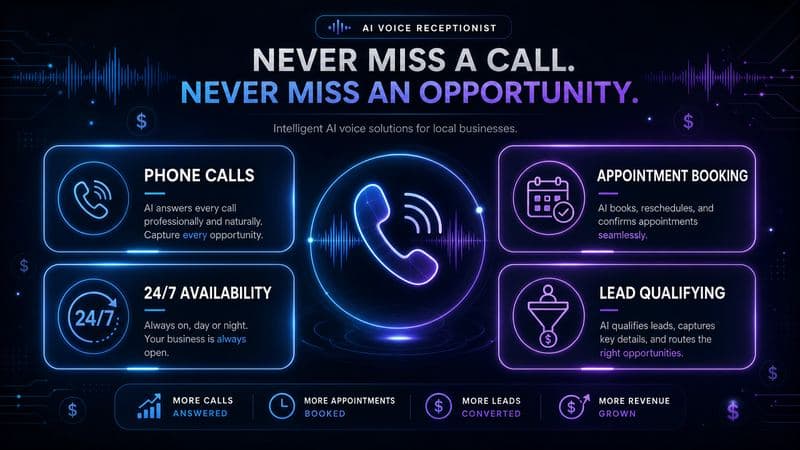
How to Build and Sell AI Voice Receptionists to Local Businesses in 2026
A beginner's guide to building AI voice agents that answer business phone calls — the tools to use, what to charge, and how to find your first client.
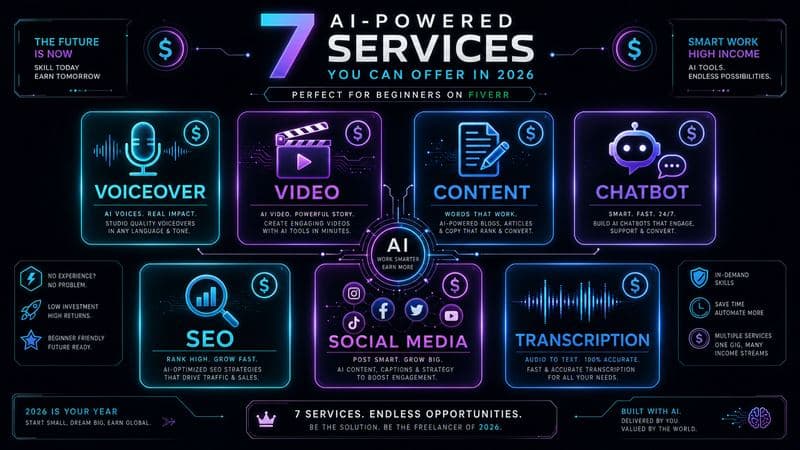
How to Make Money on Fiverr with AI Tools in 2026: 7 Gigs You Can Start This Week
Discover 7 real Fiverr gigs you can launch using free and low-cost AI tools in 2026 — no experience required. Real pricing data, step-by-step setup, and tools that actually work.