
How to Sell Chatbots to Local Businesses: Step-by-Step Guide for 2026
Learn how to sell AI chatbots to local businesses — from picking the right tool to closing your first client. No coding required. Includes real pricing, scripts, and a beginner roadmap.
Selling chatbots to local businesses is one of the cleanest AI side hustles right now.
Local businesses — dentists, gyms, restaurants, plumbers, real estate agents — all have the same problem: they miss leads after hours. A customer calls, nobody answers, the lead goes to a competitor.
A chatbot fixes that. And you can build one in under 30 minutes with no coding, charge $300–$800 upfront, and $100–$200/month to maintain it.
This guide covers everything you need: what to build, where to find clients, how to pitch, what to charge, and how to deliver.
Why Local Businesses Need Chatbots
Most local businesses aren't looking for AI. They're looking for customers.
When you show up and say "I can help you stop missing leads," you're speaking their language.
Here's what a chatbot actually does for them:
- Answers questions 24/7 — "What are your hours? Do you take walk-ins? What does a cleaning cost?"
- Qualifies leads automatically — collects name, phone, service needed, before a human has to call
- Books appointments — integrates with scheduling tools like Calendly
- Handles FAQ — "Is parking available? What payment do you accept?"
The business owner still runs their business. The chatbot handles first contact.
The gap you're filling: A dental office might get 40 website visitors on a Saturday. Without a chatbot, all 40 leave without contacting anyone. With one, 8–10 might start a conversation, and 2–3 become bookings.
That's real, measurable value. That's why clients pay.
What Tool to Use (And Why It Matters)
You don't need to code a chatbot from scratch. You need a platform that lets you build, customize, and deploy without engineering.
The best tool for this business model is CustomGPT.
Here's why CustomGPT works for this exact use case:
- Train on any content — upload PDFs, paste website URL, add text. The chatbot learns the business's services, pricing, and policies.
- No-code embed — generates a widget snippet the business owner (or you) pastes into their website in 60 seconds
- White-label ready — you can brand it with the client's logo and name
- Conversation logs — you can review what customers are asking, which gives you data to improve the bot
- API access — for more advanced clients, you can integrate with their booking or CRM systems
You create one CustomGPT project per client, upload their business content, configure the chatbot's tone and scope, then generate the embed code.
Cost to you: CustomGPT plans start at around $49/month. If you have 5–6 clients paying $150/month, you're already profitable.
Picking the Right Niche
Not every local business is equally easy to sell to. Focus on businesses where:
- Leads are worth money (not just foot traffic)
- Owners are stretched thin
- The website already exists but doesn't convert
Best niches to start:
| Business | Why It Works | What the Bot Does |
|---|---|---|
| Dental offices | Missed calls = lost $500+ procedures | Books consults, answers FAQ |
| Real estate agents | After-hours inquiries are high value | Qualifies buyers/sellers, books viewings |
| Gyms/fitness studios | High inquiry volume, staff can't always answer | Trial signup, class schedule, pricing |
| HVAC/plumbing | Emergency leads need fast response | Collects contact + issue details |
| Law firms (injury, family) | One client = $2,000+ fee | Pre-screens cases, books consults |
| Restaurants | Reservations, private events, catering inquiries | Instant answers, reservation capture |
| Med spas / aesthetics | High-ticket services | Books consultations, explains treatments |
Start with one niche. Build your first chatbot for a dentist or real estate agent. Get a testimonial. Replicate.
How to Find Your First Client
You don't need a website, a company, or a sales team. You need one conversation with one local business owner.
Method 1: Google Maps Search
- Search "[niche] near [your city]" in Google Maps
- Click on a business → look for their website
- Go to the website → does it have a live chat or chatbot?
- If no → you have a prospect
Script to find their contact:
- Look for a "Contact Us" page, booking form, or email in the footer
- Or find their Google My Business listing with a phone number
Method 2: Facebook Groups
Many local business owners post in community Facebook groups. Look for groups like "[City] Small Business Owners" or "[City] Entrepreneurs."
You're not spamming — you're solving a real problem they've probably already thought about.
Method 3: Your Personal Network
Think about every small business you already use. Your dentist, gym, hairdresser, mechanic. You have a relationship. Start there.
A simple text: "Hey [name], I'm starting an AI side project and want to build you a free chatbot for your website. Mind if I show you what it would look like?"
The Pitch (What to Say)
You're not selling "AI" or "automation." You're selling fewer missed leads.
1-Minute Cold Pitch (Phone or In-Person)
"Hi, I noticed your website doesn't have a live chat. I build AI chatbots for [niche] businesses — it's basically a 24/7 assistant that answers questions and collects contact info even when you're closed. Most clients see 5–10 extra leads per month. I can show you a demo specifically for your business. It would take about 10 minutes — are you free this week?"
Key elements:
- Name the problem they already have (missed leads after hours)
- Describe the outcome (not the technology)
- Reference their specific business type
- Ask for a demo meeting, not a sale
Email Outreach Template
Subject: I built a quick chatbot demo for [Business Name]
Hi [Name],
I was on your website and noticed there's no live chat. I build AI chatbots for [niche] businesses — the kind that automatically answers questions and collects lead info after hours.
I put together a quick demo based on your website. Would you be open to a 10-minute call to see it?
Either way, no pressure — I just thought it could be useful.
[Your name]
Building the Chatbot (30-Minute Process)
Once a client says yes to a demo, build a prototype before the call.
Step 1: Gather content
- Copy their homepage and services pages into a Google Doc
- Download any PDFs they have (menus, service lists, pricing pages)
- Note their hours, address, phone, email
Step 2: Create a CustomGPT project
- Sign up at customgpt.ai/?fpr=alex65
- Click "New Project" → name it "[Business Name] Assistant"
- Paste their website URL (CustomGPT will crawl it automatically)
- Upload any PDFs
- Set persona: name it something like "Sarah, the [Business Name] Assistant"
- Set initial message: "Hi! How can I help you today?"
Step 3: Test the chatbot Ask it 10 questions a real customer would ask:
- "What are your hours?"
- "How much does a [service] cost?"
- "Do you take insurance / credit cards?"
- "How do I book an appointment?"
- "Where are you located?"
If it answers correctly → ready for demo. If not → add more content to the project.
Step 4: Generate embed code
- In CustomGPT dashboard → "Deploy" → "Embed Widget"
- Copy the snippet
- This is what you'll paste into the client's website (or email to their web developer)
Total build time: 20–30 minutes for a solid demo.
Pricing Your Service
There's no universal pricing, but here's a framework that works:
Setup fee: $300–$800 (one-time)
- Includes building the chatbot, loading their content, testing, and embedding
- Higher end for businesses with complex services or multiple locations
Monthly retainer: $100–$200/month
- Includes hosting on your CustomGPT plan, monitoring conversation logs, and updating content as services change
- Pitch this as "I manage it so you never have to think about it"
Sample packages:
| Package | What's Included | Price |
|---|---|---|
| Starter | 1 chatbot, setup + 1 month free | $400 |
| Professional | 1 chatbot, setup + 3 months support | $700 |
| Monthly care | Ongoing management + monthly updates | $150/mo |
Pricing psychology: Don't undersell. The average missed lead for a dental office is worth $400–$800 in procedures. If your chatbot books 2 extra patients a month, you've paid for itself 4× over.
Delivering the Work
After the client says yes:
- Get content from them — ask for pricing PDFs, FAQs, service list (a Google Form works)
- Build in CustomGPT (your existing prototype, refined)
- Test thoroughly — 20+ questions across every service they offer
- Send embed code with instructions — or offer to have their developer paste it (keep a template email for this)
- Walk them through it on a 15-min call — show them how to read the conversation logs in your dashboard
- Set up a monthly check-in — "I'll review conversations monthly and update the bot if anything changes"
This is the full service. It takes 2–3 hours per client to deliver properly.
Scaling to $1,000–$3,000/Month
With 5–10 clients, this becomes real income:
- 5 clients × $150/month retainer = $750/month passive
- Add 2 new setup fees/month × $500 = $1,000 one-time
- Total month: $1,750 for 10–15 hours of work
To get there:
- Close your first client (free or discounted)
- Get a testimonial and screenshot of the chatbot working
- Use that proof to close the next 2–3 clients
- Raise your prices after 5 paying clients ($500+ setup, $175/month)
- Specialize in one niche — referrals follow
Common Objections (And What to Say)
"We already have a contact form."
"A form is one-way. The chatbot answers their questions instantly and qualifies the lead before it gets to you. Customers who get instant answers are 3× more likely to book."
"Our staff handles inquiries."
"Great — this handles the ones that come in after hours or when your staff is busy. It's not replacing anyone."
"We don't have budget."
"I can offer a free 30-day trial. If you don't see any difference in inquiries, there's no cost to you."
"We'll think about it."
"Totally fine. Can I follow up in two weeks? I'll also send you the conversation stats from your demo so you can see how it performs."
Related Guides
- How to Build and Sell AI Plugins to Local Businesses for $2k Each — upgrade path once you have clients
- CustomGPT Review: Is It Worth It for Building AI Chatbots? — full breakdown of the tool
FAQ
Q: Do I need to know coding to sell chatbots?
A: No. CustomGPT is completely no-code. You configure it through a dashboard, upload content, and copy-paste an embed snippet.
Q: How many clients can I handle at once?
A: Realistically 10–15 with one CustomGPT plan. Each client's bot runs independently. Monthly maintenance is 1–2 hours per client if you're reviewing logs and updating content.
Q: What if the chatbot gives a wrong answer?
A: Add the correct information to the project. CustomGPT learns from whatever content you feed it. Always test thoroughly before going live, and review conversation logs in the first few weeks.
Q: Can I white-label it? (Brand it as my own?)
A: Yes. CustomGPT supports custom branding. The client sees "[Business Name] Assistant" — not a CustomGPT logo.
Q: What's the best niche to start in?
A: Dental offices or real estate. Both have high lead values and a real after-hours problem. They're also used to paying for marketing services, so the concept isn't foreign.
Q: Do I need to cold call?
A: Not necessarily. Email outreach, Facebook groups, and your personal network all work. Cold calling has higher close rates if you're comfortable with it.
Q: Can I do this part-time?
A: Yes. The setup is front-loaded (30 minutes to build, 2–3 hours total per client). Monthly maintenance is passive. 2–3 clients fit into a few hours per week.
Q: What if a client wants their chatbot to book appointments directly?
A: That requires an integration (Calendly, Acuity, etc.). CustomGPT supports API connections for paid plans. You can also just have the chatbot collect contact info and let the business follow up manually — simpler and still very effective.
Q: How do I handle the monthly retainer practically?
A: Invoice monthly via PayPal, Stripe, or Wise. Keep it simple — most clients are fine with auto-pay once they trust you. Your cost is the CustomGPT plan split across clients.
You don't need 100 clients. You need 5–10 local businesses who value not missing leads. That's this side hustle.

Alex the Engineer
•Founder & AI ArchitectSenior software engineer turned AI Agency owner. I build massive, scalable AI workflows and share the exact blueprints, financial models, and code I use to generate automated revenue in 2026.
Related Articles
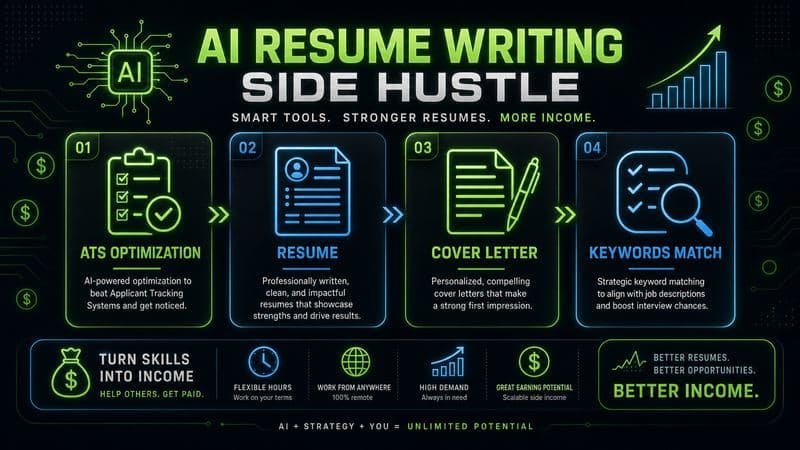
How to Start an AI-Assisted Resume Writing Side Hustle in 2026 (Beginner's Guide)
A step-by-step guide to using AI resume tools to offer a paid resume and cover letter writing service — what to charge, which tools to use, and how to find your first clients.
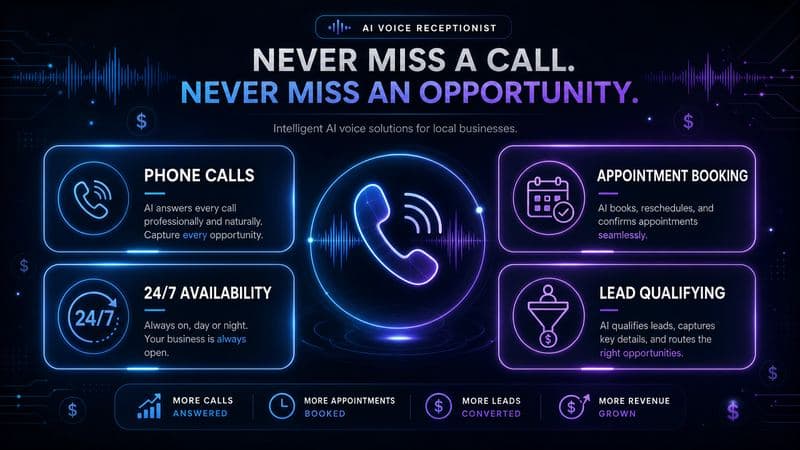
How to Build and Sell AI Voice Receptionists to Local Businesses in 2026
A beginner's guide to building AI voice agents that answer business phone calls — the tools to use, what to charge, and how to find your first client.
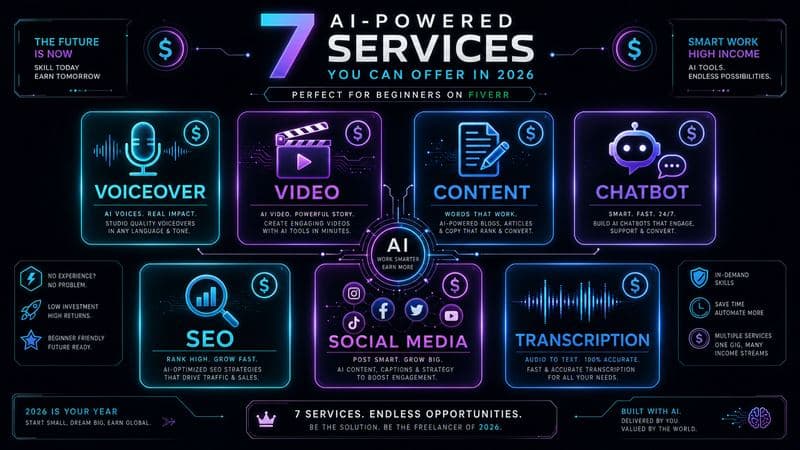
How to Make Money on Fiverr with AI Tools in 2026: 7 Gigs You Can Start This Week
Discover 7 real Fiverr gigs you can launch using free and low-cost AI tools in 2026 — no experience required. Real pricing data, step-by-step setup, and tools that actually work.