
Google I/O 2026: Every AI Announcement Coming Tomorrow (Beginner's Guide)
Google I/O 2026 starts tomorrow, May 19. Here's everything beginners need to know about Gemini 4.0, Android 17, Android XR glasses, Veo 4, and more — explained in plain English before the keynote drops.
Google I/O 2026 is tomorrow. If you've been loosely following AI news, you've probably heard people say this year's conference is a big deal. They're right — and not just for developers. This one has real implications for anyone using AI tools, Android phones, or Google Search.
Here's everything that's expected to drop at the keynote, explained for people who aren't deep in the tech world.
When and Where to Watch
Date: Tuesday, May 19, 2026 (with sessions continuing May 20) Time: 10:00 AM Pacific Time (1:00 PM Eastern, 12:00 PM Central) Where: Live-streamed on YouTube at youtube.com/Google
The keynote is delivered by Alphabet CEO Sundar Pichai at Shoreline Amphitheatre in Mountain View, California. Analysts are calling this the most important Google developer conference in over a decade — comparable to 2014 when Google launched Android Lollipop and Material Design and reset the trajectory of Android.
The core message Google has been signaling ahead of I/O: they're done adding AI features on top of existing products. They're rebuilding products around AI as the foundation.
1. Gemini 4.0 — Google's Next AI Model
The headline announcement. Google hasn't officially confirmed the "Gemini 4.0" name, but I/O 2026 session titles reference "next-generation Gemini models," and pre-conference reporting points to a major upgrade.
What's expected:
- 10 million token context window — the current Gemini 3.1 already handles 1 million tokens (roughly 750,000 words). Ten million would be the largest context window of any commercially available model, allowing it to process entire codebases, hundreds of research papers, or large datasets in a single session
- Agentic capabilities — Google is expected to unveil Gemini as an autonomous agent, not just a chatbot. This means Gemini could execute multi-step tasks (book a flight, fill out a form, summarize and respond to emails) without step-by-step prompting
- Deeper Google product integration — Docs, Sheets, Gmail, Drive, Chrome, Maps — Gemini is expected to be woven into all of them as a background layer, not just a chat box
What this means for beginners: If you've been using ChatGPT or Claude and haven't tried Gemini, the post-I/O version will likely be worth a look — especially if you live in Google's ecosystem (Docs, Gmail, Android). We'll have a full guide as soon as the model is live.
For AI tools that work right now without waiting for any announcement, CustomGPT lets you build a custom AI assistant trained on your own documents and embed it anywhere.
2. Android 17 — AI Built Into Your Phone
Android 17 is rolling out alongside I/O, and its standout feature set is focused on AI assistance at the OS level — things your phone does automatically, not apps you have to open.
Rambler — smarter speech-to-text: Google's new transcription system removes filler words ("um," "uh," "like") automatically and handles mid-sentence language switching. If you speak two languages or draft notes by voice while moving around, this is genuinely useful. No app required — it's system-level.
App Bubbles: Floating windows for any app that can be dragged around the screen and dismissed with a swipe. Similar to how Facebook Messenger's chat heads worked, but for any app. Keeps you from losing context when multitasking.
Create My Widget: Voice commands to build custom home screen widgets. Say "show me my next meeting, current battery, and today's weather in one widget" — Android 17 will generate it without opening a settings menu.
Pause Point: When you try to open a distracting app (social media, gaming), the phone pauses for 10 seconds and suggests something more productive. This is an opt-in focus feature — not forced — but it reflects Google's push into digital wellbeing at the OS level.
Nano Banana — image generation in Chrome: Built-in text-to-image generation directly in the Chrome browser on Android. Type a prompt in Chrome and generate images without leaving the browser or downloading a third-party app.
3. Android XR Smart Glasses
Google has been quietly partnering with fashion brands and hardware manufacturers on a new generation of Android XR smart glasses. I/O 2026 is expected to bring the product into sharper focus — potentially with pricing and partner announcements.
What Android XR glasses are expected to do:
- Heads-up notifications — text messages, navigation prompts, and alerts in your field of view
- Live translation — real-time translation of conversations displayed on the lens
- Gemini Live integration — ask Gemini questions out loud and get answers in the glasses without taking out your phone
- Navigation overlay — walking directions shown as a line in your field of view rather than on a phone screen
Multiple price points are anticipated, depending on the manufacturing partner. Google is positioning this as the first wave of a longer XR product roadmap.
4. Googlebook — New Laptop Category
We covered this when it was announced in mid-May: Google launched a new laptop line running AluminumOS, a unified operating system that merges Android and ChromeOS. I/O will likely feature more detail on developer support and availability.
The signature feature is Magic Pointer — an AI cursor that watches what you're doing and suggests contextual actions. For example, if you hover over a date in an email, it offers to create a calendar event. If you highlight a phone number, it offers to call or save it.
Googlebooks also run Android apps natively without the touch-interface workarounds that plagued ChromeOS. For beginners who want Android app access on a laptop, this is significant.
See our full Googlebook breakdown for more on how AluminumOS works.
5. Veo 4 and Lyria — Video and Music Generation
Veo 4 is Google's video generation model, expected to be announced at I/O. Based on session titles and pre-conference reporting, expect improvements in realism, motion consistency, and prompt response accuracy compared to Veo 3.1.
Lyria is Google's AI music generation system. It creates original music from text prompts — specify a genre, tempo, mood, and instruments, and Lyria generates a track. I/O is expected to include updates on Lyria's integration with YouTube Shorts and Android video tools.
Screen Reactions is a smaller but creator-focused feature: simultaneous face recording and screen recording, designed for reaction-style content without needing editing software to stitch the feeds together.
6. AI in Google Search — Mode Changes
Google is continuing to roll out AI Mode in Search, which replaces the traditional blue-link results with an AI-generated answer when Google detects a complex question. I/O will likely include updates on how AI Mode is expanding and what it means for how information is surfaced.
Google is also expected to announce a new resource for creators and SEO professionals around optimizing content for AI-generated search results — how to ensure your content gets cited in AI Overviews rather than just ranked in links.
If you use Google Sheets with AI, our Google Sheets AI guide covers what's already available — Gemini's integration will likely expand post-I/O.
What Beginners Should Actually Do Right Now
-
Watch the keynote tomorrow — set a reminder for 10 AM PT / 12 PM Central. It'll be on YouTube. Even if you skim it at 1.5x speed afterward, the product demos are worth seeing.
-
Wait 24-48 hours before making decisions based on announcements. Every I/O has products that look great on stage but have a 6-month waitlist or limited country availability.
-
Check your Gemini app after the keynote — model updates typically roll out within 48 hours of announcement. Go to gemini.google.com and look for any "new model" prompt in the top left.
-
Android 17 — if you're on a Pixel device, you'll get the update first. Check Settings → System → Software Update the day after the keynote.
Our Predictions
Before the keynote: a few things we'd expect to see confirmed:
| Announcement | Confidence |
|---|---|
| Gemini 4.0 / next-gen Gemini model | Very High |
| Android 17 feature showcase | Very High |
| Android XR glasses update | High |
| Veo 4 video generation | High |
| Gemini in Workspace expansion | High |
| Googlebook detailed availability | Medium |
| Consumer Gemini pricing changes | Medium |
| OpenAI-competing coding agent | Medium |
We'll update this article — and publish a same-day recap — as announcements come in tomorrow.
Check our Google I/O 2026 preview for the broader context on what led up to this moment, and our Android Show I/O Edition recap for what Google already previewed last week.
FAQ
Q: What time is the Google I/O 2026 keynote? A: 10:00 AM Pacific Time on Tuesday, May 19, 2026. That's 1:00 PM Eastern, 12:00 PM Central, and 6:00 PM UK time. It will be live-streamed free on YouTube.
Q: What is Gemini 4.0 and when is it coming? A: Gemini 4.0 is expected to be Google's next-generation AI model, with reports suggesting a 10 million token context window and stronger agentic (multi-step task) capabilities. Google has not officially confirmed the name; I/O 2026 is where the announcement is expected. Release timing will depend on the keynote.
Q: What is the difference between Gemini 3.1 and Gemini 4? A: Gemini 3.1 is Google's current top-tier model, with a 1 million token context window and strong performance on coding, math, and reasoning. Gemini 4 (unconfirmed name) is expected to expand context to 10 million tokens and add more autonomous agent behavior — the ability to execute multi-step tasks rather than just answer questions.
Q: Will Android 17 be available for my phone? A: Android 17 typically launches on Google Pixel devices first, within days of I/O, then rolls out to other Android manufacturers over 6–12 months. If you have a recent Pixel (6 or newer), expect it soon. Samsung, OnePlus, and other brands will follow on their own update schedules.
Q: What are Android XR glasses? A: Smart glasses built on Google's Android XR platform. They're expected to display notifications in your field of view, offer real-time language translation, show walking navigation directions, and integrate with Gemini AI for voice questions. They're a different product from AR/VR headsets — glasses form factor, not a headset.
Q: Is Google I/O free to attend? A: The keynote and most sessions are free to watch via the YouTube livestream. In-person tickets are not publicly available — it's a developer-focused event with limited invite/registration access. Everything that matters will be on YouTube within hours.

Alex the Engineer
•Founder & AI ArchitectSenior software engineer turned AI Agency owner. I build massive, scalable AI workflows and share the exact blueprints, financial models, and code I use to generate automated revenue in 2026.
Related Articles
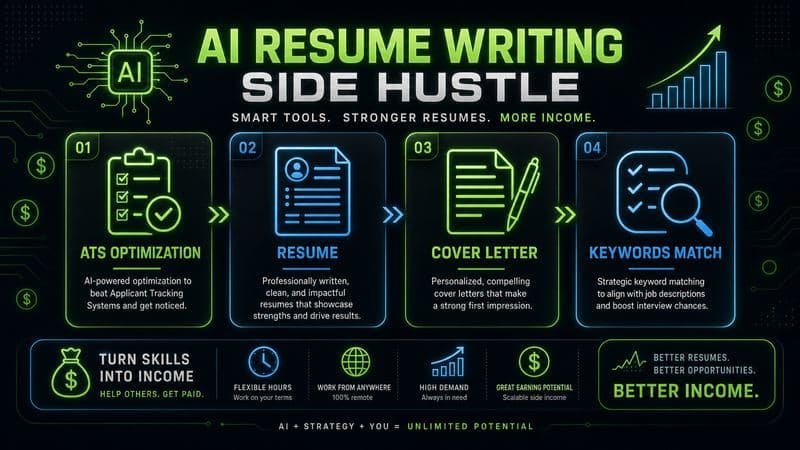
How to Start an AI-Assisted Resume Writing Side Hustle in 2026 (Beginner's Guide)
A step-by-step guide to using AI resume tools to offer a paid resume and cover letter writing service — what to charge, which tools to use, and how to find your first clients.
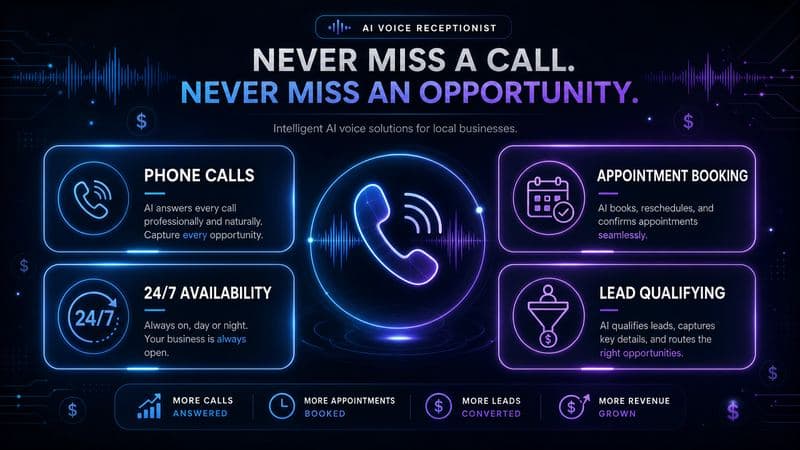
How to Build and Sell AI Voice Receptionists to Local Businesses in 2026
A beginner's guide to building AI voice agents that answer business phone calls — the tools to use, what to charge, and how to find your first client.
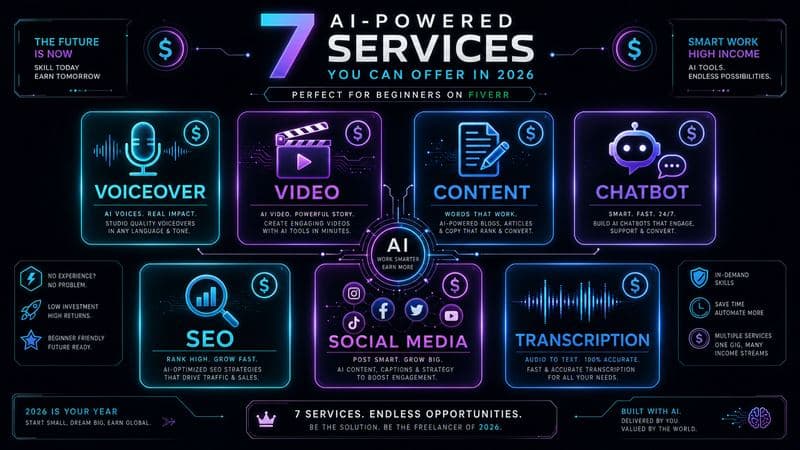
How to Make Money on Fiverr with AI Tools in 2026: 7 Gigs You Can Start This Week
Discover 7 real Fiverr gigs you can launch using free and low-cost AI tools in 2026 — no experience required. Real pricing data, step-by-step setup, and tools that actually work.