
How to Use AI in Google Sheets: 4 Methods That Actually Work (2026)
Learn how to use AI in Google Sheets in 2026 — from built-in Gemini to Apps Script API calls. Step-by-step guide for beginners, no coding experience needed.
Google Sheets is the spreadsheet most people already use. AI is the tool most people want to use more. Getting the two to work together is easier than you think — and in 2026, you have more options than ever, including one that requires zero setup.
This guide covers four methods for adding AI to Google Sheets, ranked from easiest to most powerful. You'll know which one fits your situation by the time you finish reading.
Why Use AI in Google Sheets?
The honest pitch for beginners: spreadsheets are full of repetitive tasks that AI is very good at.
Instead of writing the same formula logic for 500 rows, or manually categorizing a list of customer feedback, or spending 20 minutes drafting email copy for each row in a contact list — you can call an AI model once and get it done in seconds.
Common things people automate with AI in Sheets:
- Auto-categorize a list (support tickets, product reviews, expenses)
- Generate text from data (email subject lines, product descriptions, summaries)
- Extract information from messy text (pull city from an address, brand from a URL)
- Write and explain formulas without knowing the syntax
- Translate rows of text into another language
Every method below can handle these use cases. The right choice depends on whether you want to stay inside Google's interface or get more control.
Method 1: Gemini Built-In (No Setup Required)
If you have a Google Workspace account (paid Google account), Gemini is already in your Sheets. No API key, no setup, no code.
How to access it:
Open any Google Sheet. Look for the Gemini icon in the top-right corner of the toolbar — it looks like a small sparkle/star. Click it to open the Gemini panel on the right side of your sheet.
From there, you can type plain English requests like:
- "Summarize the data in column B"
- "Create a formula to find the top 5 values in column C"
- "Build a pivot table showing totals by category"
What Gemini in Sheets can do:
- Build new spreadsheet structures from scratch ("Create a budget template for a freelancer")
- Suggest and write complex formulas without you knowing the syntax
- Analyze a column of data and describe trends
- Auto-fill patterns across rows based on examples you provide
Limitations:
Gemini in Sheets works best for formula help and structural tasks. For row-by-row processing of large datasets (like categorizing 500 customer reviews one at a time), it's slower and less reliable than the API methods below. Google is actively expanding its capabilities — through July 15, 2026, Workspace customers have access to higher usage limits as part of a promotional window.
Best for: Anyone with a Google Workspace account who wants a no-setup AI assistant for formula writing and data analysis.
Method 2: Apps Script + OpenAI or Claude API (Free to Start)
This is the method that unlocks real row-by-row automation. You write a short script once, and then you can call AI from any cell with a formula like =ASK_AI(A2).
What you need:
- A Google account (free works)
- An API key from OpenAI or Anthropic (both have free tiers)
Step 1: Get an API key
Go to platform.openai.com and create an account. Navigate to API Keys and create a new key. Copy it — you'll need it in the next step.
(For Claude instead, go to console.anthropic.com and do the same. Both work with the script below.)
Step 2: Open Apps Script
In your Google Sheet, click Extensions → Apps Script. This opens Google's built-in code editor.
Step 3: Paste the script
Delete any default code and paste this:
const OPENAI_KEY = "your-api-key-here"; // paste your key

function ASK_AI(prompt) {
  const url = "https://api.openai.com/v1/chat/completions";
  const payload = {
    model: "gpt-4o-mini",
    messages: [{ role: "user", content: prompt }],
    temperature: 0.3
  };
  const options = {
    method: "post",
    contentType: "application/json",
    headers: { Authorization: "Bearer " + OPENAI_KEY },
    payload: JSON.stringify(payload)
  };
  const response = UrlFetchApp.fetch(url, options);
  const json = JSON.parse(response.getContentText());
  return json.choices[0].message.content.trim();
}
Click Save (Ctrl+S), then close the Apps Script tab.
Step 4: Use the function in your sheet
Back in your sheet, you can now type in any cell:
=ASK_AI("Categorize this review as Positive, Negative, or Neutral: " & A2)
Or for bulk email subject lines:
=ASK_AI("Write a short email subject line for this product: " & B2)
It calls the API for each row. For a column of 50 cells it takes about 30 seconds. For 500 cells, run it in batches to avoid timeout limits.
Cost: GPT-4o-mini is roughly $0.001–0.003 per cell call depending on text length. A 500-row batch typically costs under $0.50.
Best for: Beginners comfortable copying code who want real row-by-row AI automation without a paid tool subscription.
Method 3: AI Add-Ons from the Google Workspace Marketplace
If you want a graphical interface without writing any code, the Workspace Marketplace has several add-ons that wire AI directly into your spreadsheet.
Popular options:
GPT for Sheets and Docs — One of the most installed add-ons. Adds =GPT() functions you can use like regular formulas. Install from the Marketplace, paste your OpenAI key in the settings, and you're running. It handles rate limiting automatically.
Coefficient — More focused on data syncing and AI analysis. Better if you're pulling data from CRMs or databases and want AI to analyze it.
How to install any add-on:
In your Sheet, click Extensions → Add-ons → Get add-ons. Search for "GPT for Sheets" or "AI". Install, grant permissions, and follow the setup prompt to add your API key.
Limitation: Add-ons are free to install but still use your API key (so API costs still apply). Some add-ons have their own paid tiers for premium features.
Best for: Beginners who want the Apps Script power without touching code.
Method 4: Custom AI Tools That Read Your Sheet (Advanced)
The most powerful option for people who want to go beyond single-cell formulas: building a custom AI tool that reads your entire sheet as context.
Platforms like CustomGPT let you upload your spreadsheet data and then build a chatbot or assistant that can answer questions about it, generate reports, or push updates back.
Example use case: You have a Google Sheet with 1,200 product listings. Instead of calling a formula for each row, you upload the sheet to CustomGPT, and then ask: "Which 50 products have the worst review scores and what's the pattern in the negative feedback?" The AI reads the entire context at once and gives you a strategic answer.
This goes beyond what cell-by-cell formulas can do. It's the difference between processing data and analyzing it.
Best for: People who want to talk to their spreadsheet data as a whole, not just process it row by row.
Which Method Is Right for You?
| Method | Setup Time | Cost | Best For |
|---|---|---|---|
| Gemini built-in | Zero | Included with Workspace | Formula help, structural tasks |
| Apps Script + API | 10 minutes | ~$0.001-0.003/call | Row-by-row bulk processing |
| AI Add-ons | 5 minutes | API costs apply | Same power, no code |
| CustomGPT | 15 minutes | Subscription | Full-dataset analysis |
For most beginners: start with Gemini built-in if you have Workspace, or install GPT for Sheets add-on if you want row-by-row automation without touching code. Both work today with no prior experience.
Related Guides
- How to Use Claude with Google Sheets
- Best AI Tools to Start Earning Online
- AI Side Hustle Ideas for 2026
FAQ
Q: Is AI in Google Sheets free? A: Gemini built-in is included with paid Google Workspace accounts. API-based methods (Apps Script, add-ons) use pay-as-you-go API credits — typically $0.001–0.003 per cell call with GPT-4o-mini, making 100-row batches cost around $0.10–0.30. There are free-tier API credits available when you first sign up for OpenAI or Anthropic.
Q: Do I need to know how to code? A: No. The Apps Script method involves copying a pre-written script (no original coding needed). The Gemini built-in and add-on methods require zero code at all.
Q: Can I use ChatGPT in Google Sheets directly? A: Not directly — there's no official OpenAI add-on for Sheets. But the Apps Script method uses the same underlying API that powers ChatGPT. The GPT for Sheets add-on is the easiest way to get ChatGPT-style responses in your cells.
Q: Is my spreadsheet data sent to OpenAI or Google? A: With the API methods, yes — the cell content you include in your prompt is sent to the AI provider's servers. Avoid including sensitive personal data (names, emails, financial info) unless you've reviewed the provider's data policy. Gemini in Google Workspace follows Google's Workspace data processing terms.
Q: How many rows can I process at once? A: Apps Script has a 6-minute execution limit per run. In practice, you can typically process 100–300 rows per run depending on prompt length. For larger batches, run the script in chunks or use a trigger to run it over multiple intervals.
Q: Does this work on the free version of Google Sheets? A: Apps Script and add-ons work on free Google accounts. Gemini built-in requires a paid Google Workspace subscription.
Q: What's the most practical use case for beginners?
A: Auto-categorizing a list. Take a column of customer feedback, product names, expenses, or any text — and use =ASK_AI("Categorize as X, Y, or Z: " & A2) to label every row automatically. It turns a 2-hour manual task into a 5-minute AI job.

Alex the Engineer
•Founder & AI ArchitectSenior software engineer turned AI Agency owner. I build massive, scalable AI workflows and share the exact blueprints, financial models, and code I use to generate automated revenue in 2026.
Related Articles
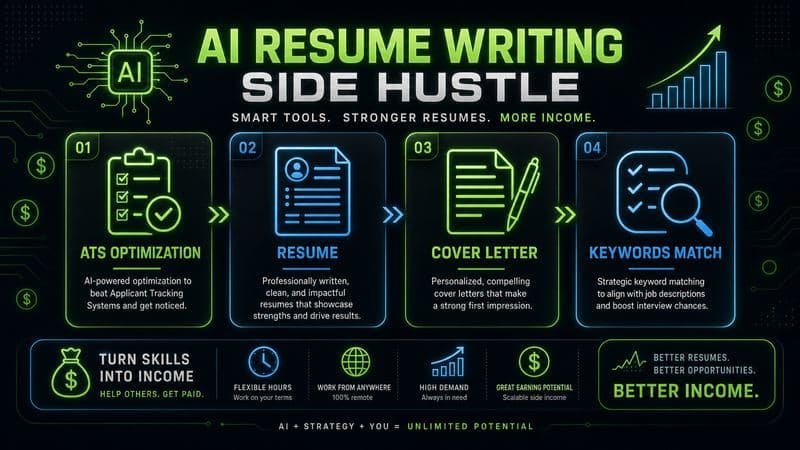
How to Start an AI-Assisted Resume Writing Side Hustle in 2026 (Beginner's Guide)
A step-by-step guide to using AI resume tools to offer a paid resume and cover letter writing service — what to charge, which tools to use, and how to find your first clients.
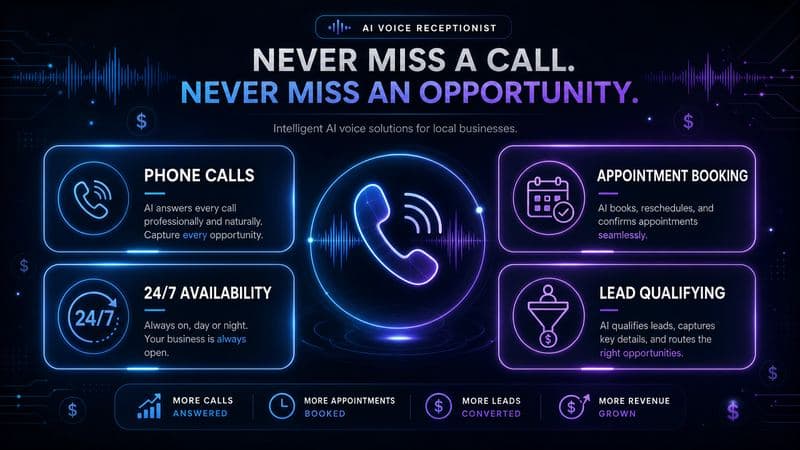
How to Build and Sell AI Voice Receptionists to Local Businesses in 2026
A beginner's guide to building AI voice agents that answer business phone calls — the tools to use, what to charge, and how to find your first client.

How to Make Money on Fiverr with AI Tools in 2026: 7 Gigs You Can Start This Week
Discover 7 real Fiverr gigs you can launch using free and low-cost AI tools in 2026 — no experience required. Real pricing data, step-by-step setup, and tools that actually work.