
US Government Forces Anthropic to Shut Down Its Most Powerful AI Models — Here's What Happened
The US government issued an export control directive forcing Anthropic to shut down Claude Fable 5 and Mythos 5 worldwide, just 3 days after launch. Here is the full story and what it means.

On the evening of June 12, 2026, Anthropic received a directive from the US government with a simple message: shut it all down.
Three days after the company launched Claude Fable 5 and Mythos 5 — its most capable AI models ever — the United States government ordered Anthropic to immediately suspend access for all foreign nationals, anywhere in the world. Within hours, both models went dark for every single user on the platform.
Here is exactly what happened, what triggered it, what Anthropic said about it, and what it means for anyone using AI tools today.
The Timeline

June 9, 2026 — Anthropic releases Claude Fable 5 and Mythos 5. Fable 5 is the company's most capable public model to date — stronger than GPT-5.5 on most coding and reasoning benchmarks. It generates immediate excitement on social media and on Hacker News, where coverage of the launch reaches over 2,000 points.
June 12, 2026, 5:21 PM ET — The US government delivers an export control directive to Anthropic. The directive, grounded in national security authorities, orders the company to suspend all access to Fable 5 and Mythos 5 for any foreign national — whether they are located inside or outside the United States, including foreign national employees of Anthropic itself.
June 12, 2026, ~7 PM PT — Anthropic completes its compliance. Both models are disabled for all customers, not just foreign nationals. The company chose this approach because selectively disabling accounts based on nationality while keeping the models live was not technically feasible under the required timeline.
June 13, 2026 (morning) — Anthropic publishes an official statement. The story reaches #13 on Hacker News with 2,819 points and spreads widely across social media.
What Triggered It
The government's stated concern was the discovery of a jailbreak — a technique that could cause the model to bypass its built-in safety limits.
According to Anthropic's own statement, the specific technique the government pointed to was narrow and non-universal: it involved asking the model to read a specific codebase and fix software flaws in a way that elicited problematic outputs. The company described this as a "relatively simple" method that exploits "minor, previously known vulnerabilities."
To put this in plain terms: a method was found that could, under specific conditions, get the model to output content it wasn't supposed to. The government decided this was severe enough to suspend international access entirely.
What Anthropic Said
Anthropic complied with the directive, but made clear it disagreed with the decision. Their statement made four core arguments:
1. The jailbreak is not unique to Fable 5. The same or equivalent vulnerabilities exist in other publicly available models, including OpenAI's GPT-5.5. If this standard is applied consistently, Anthropic argued, it would "essentially halt all new model deployments" across the industry.
2. Fable 5 was extensively reviewed before launch. The company spent thousands of hours on red-teaming (adversarial testing) before release. That testing involved the US government itself, the UK AI Safety Institute, and multiple third-party evaluators. No universal jailbreak was found during any of that testing.
3. Foreign access is already common. Fable 5 was available to users in Europe, Asia, Canada, and dozens of other countries from the moment of launch. The shutdown does not eliminate knowledge of the model's capabilities — it simply removes access for users who were already using it legally.
4. The process needs to improve. Anthropic called for "a more transparent, fair, and technically grounded statutory process" for government safety reviews. The implication is clear: receiving a shutdown directive with hours of notice, after a model has already launched and passed safety review, is not a workable framework for anyone.
What It Means for Regular Users
If you were using Claude Fable 5 or Mythos 5 through Claude.ai or the API — and you are outside the United States — you lost access overnight with no warning. The models simply stopped working.
Other Anthropic models are not affected. Claude Sonnet 4 and earlier Claude models remain available globally. If you rely on the Claude API for a project or business, you can continue using those older models while this gets resolved.
If you are inside the United States, Anthropic initially disabled both models for all customers (regardless of location) to ensure compliance with the directive. As of the morning of June 13, it is unclear when domestic US access will be restored — Anthropic's statement said they were "working to restore access."
For most beginners exploring AI tools, the practical short-term impact is straightforward: if you want to use a frontier-tier AI model right now, GPT-5.5 from OpenAI remains available globally, as does Google's Gemini 3.1 Pro.
The Bigger Picture: What Export Controls Mean for AI
Export controls are a set of US laws and regulations that restrict the export of certain technologies to foreign countries or foreign nationals, primarily on national security grounds. They have historically applied to things like weapons systems, encryption technology, and advanced semiconductors.
The application of export controls to a commercially available AI model is new territory.
Until now, export controls have been applied to the underlying hardware that powers AI (most notably, the restrictions on selling advanced NVIDIA chips to China). The June 12 directive appears to be one of the first instances of the US government using export control authority to shut down access to a specific AI model itself — not just the chips that run it.
This matters because:
- It sets a precedent. If the government can suspend access to a model within hours of finding a jailbreak, every major AI company now has to factor this into launch planning.
- It creates uncertainty for international users. Anyone outside the US who relies on US-developed frontier AI for work, research, or business now knows their access can be cut off overnight.
- It opens a debate about standards. Anthropic's statement effectively argues that no model is jailbreak-proof, and using jailbreaks as the threshold for shutdown would freeze the entire industry.
The IPO Angle: Coincidence or Strategy?
On social media, a number of commentators pointed to another piece of context: Anthropic is reportedly planning to file for a $1 trillion IPO in October 2026.
The theory circulating online is that the government intervention — and the resulting publicity — conveniently amplifies the narrative that Anthropic is building the world's most powerful and carefully regulated AI, which is exactly the story a company wants in front of investors before going public. The shutdown proves the model was powerful enough to worry the government. The company's pushback proves it has principles. The controversy drives news coverage at a critical moment.
Whether or not that reading is accurate, it is worth noting: Anthropic did not request the shutdown. They complied under legal obligation and publicly disagreed with it. The IPO-marketing interpretation is a theory, not a confirmed account of what happened.
What to Watch for Next
Access restoration timeline. Anthropic said they are working to restore access, but gave no specific date. Watch for an update on Claude.ai or the Anthropic newsroom.
Industry response. If other AI companies receive similar directives, or preemptively modify their launch plans to avoid them, this will confirm that the June 12 directive has changed how the AI industry operates.
Congressional and regulatory debate. Anthropic's call for "a more transparent, fair, and technically grounded statutory process" is essentially a request for Congress or a regulatory body to establish clearer rules. That conversation is now very publicly on the table.
Other model launches. Several competing models are in development or recently launched — including Kimi K2.7-Code from Moonshot AI and GLM-5.2 from Zhipu AI. If US government scrutiny now targets domestic models while foreign models remain freely available, there is a real risk that international users shift toward those alternatives.
AI Model Access After the Shutdown: What Still Works
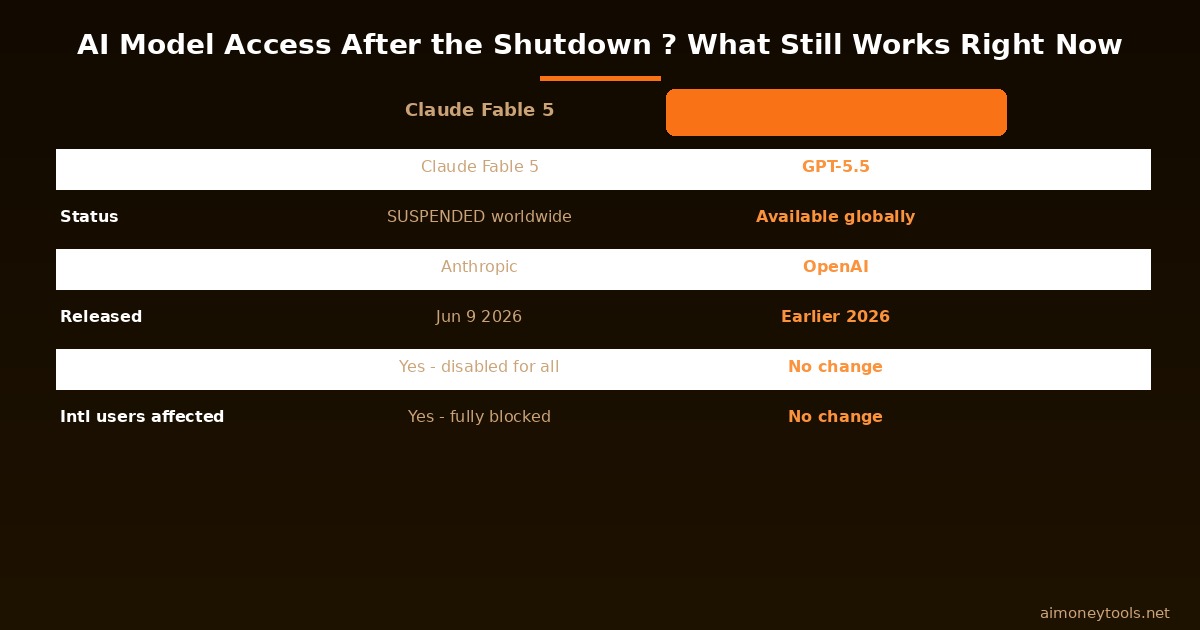
What are Claude Fable 5 and Mythos 5? They are Anthropic's most recently released AI models, launched on June 9, 2026. Fable 5 is described as Anthropic's most capable public model to date, outperforming GPT-5.5 on most coding and advanced reasoning tasks. Mythos 5 is a larger, multimodal version of the same model family.
Can I still use Claude? Yes. The directive only affects Fable 5 and Mythos 5. Older Claude models (Claude Sonnet 4 and earlier) remain available and were not part of the directive.
Why did the US government shut it down? The government cited national security concerns after learning of a jailbreak technique — a method to cause the model to bypass its safety limits. The specific technique involved asking the model to read a codebase and fix software flaws in a way that could elicit problematic outputs.
Was my personal data affected? No. The directive is about access to the models, not data. Shutting down model access does not affect your account, your conversation history, or any stored data.
Will access be restored? Anthropic stated they are working to restore access, but gave no timeline. This will likely depend on negotiations between Anthropic and the government about the conditions under which access can safely resume.
Does this mean AI is getting more regulated? This appears to be one of the first times US export control law has been applied directly to a commercially available AI model. It signals that the government views the most capable frontier AI models as falling under the same national security framework as advanced hardware and encryption — a significant policy development.
Is this only happening to Anthropic? As of June 13, yes. OpenAI, Google, and other AI companies have not received similar directives. However, Anthropic's statement implies that the jailbreak in question is not unique to Fable 5, which raises the question of whether other models could be similarly targeted.
What AI tools can I use instead right now? GPT-5.5 from OpenAI and Gemini 3.1 Pro from Google remain available globally. If you are interested in running a capable AI model completely locally — without any dependence on cloud services or government access controls — check out our guide to running Llama 4 with LM Studio or our Ollama + Open WebUI setup guide.
Could the government do this to other AI tools? Legally, yes — if a model is determined to fall under export control authorities, the government can restrict access. In practice, this seems most likely to apply to frontier-tier models that are considered to have dual-use potential (both civilian and military/harmful applications). Everyday AI productivity tools are not the likely target.
A Note on What We Know vs. What We Don't
The full picture here is still emerging. Anthropic's official statement is verified and is the primary source for the facts in this article. Claims circulating on social media — including specific details about the jailbreak technique and the exact wording of the government directive — have not all been independently confirmed. As more details become available, this situation will continue to develop rapidly.
If you want to follow it in real time, the Anthropic newsroom and Simon Willison's blog (simonwillison.net) are currently the most reliable sources with verified information.

Alex the Engineer
•Founder & AI ArchitectSenior software engineer turned AI Agency owner. I build massive, scalable AI workflows and share the exact blueprints, financial models, and code I use to generate automated revenue in 2026.
Related Articles
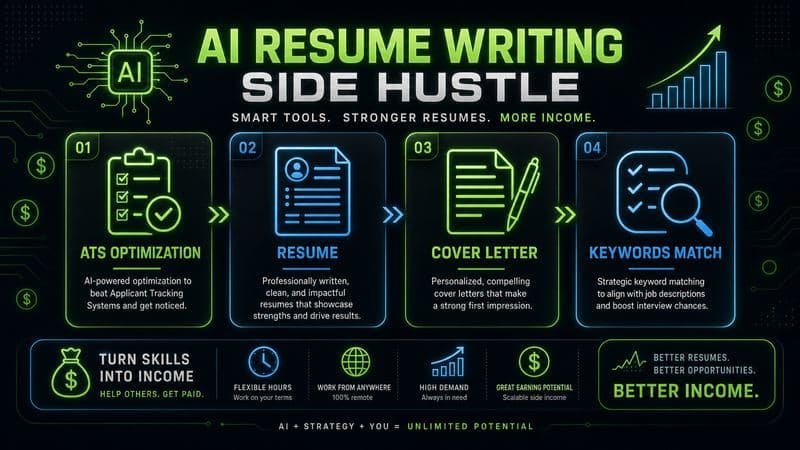
How to Start an AI-Assisted Resume Writing Side Hustle in 2026 (Beginner's Guide)
A step-by-step guide to using AI resume tools to offer a paid resume and cover letter writing service — what to charge, which tools to use, and how to find your first clients.
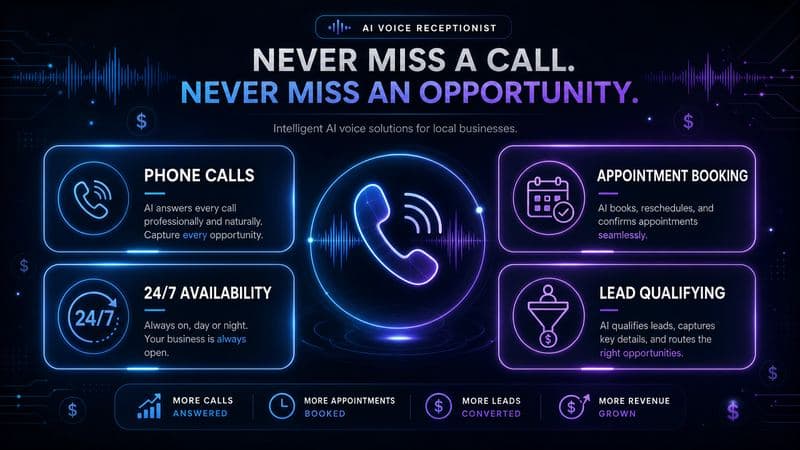
How to Build and Sell AI Voice Receptionists to Local Businesses in 2026
A beginner's guide to building AI voice agents that answer business phone calls — the tools to use, what to charge, and how to find your first client.
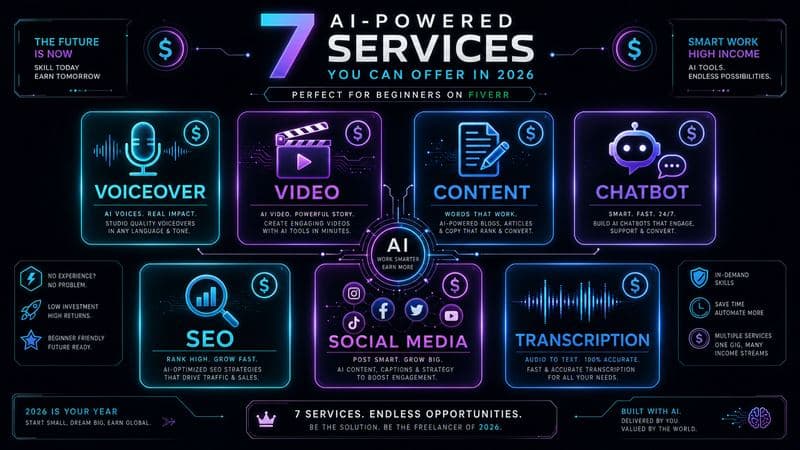
How to Make Money on Fiverr with AI Tools in 2026: 7 Gigs You Can Start This Week
Discover 7 real Fiverr gigs you can launch using free and low-cost AI tools in 2026 — no experience required. Real pricing data, step-by-step setup, and tools that actually work.