
How Does AI Work? A Practical Guide for 2026
Understand the mechanics of artificial intelligence. Learn how AI models process data, the types of machine learning, and how to use these tools for profit.
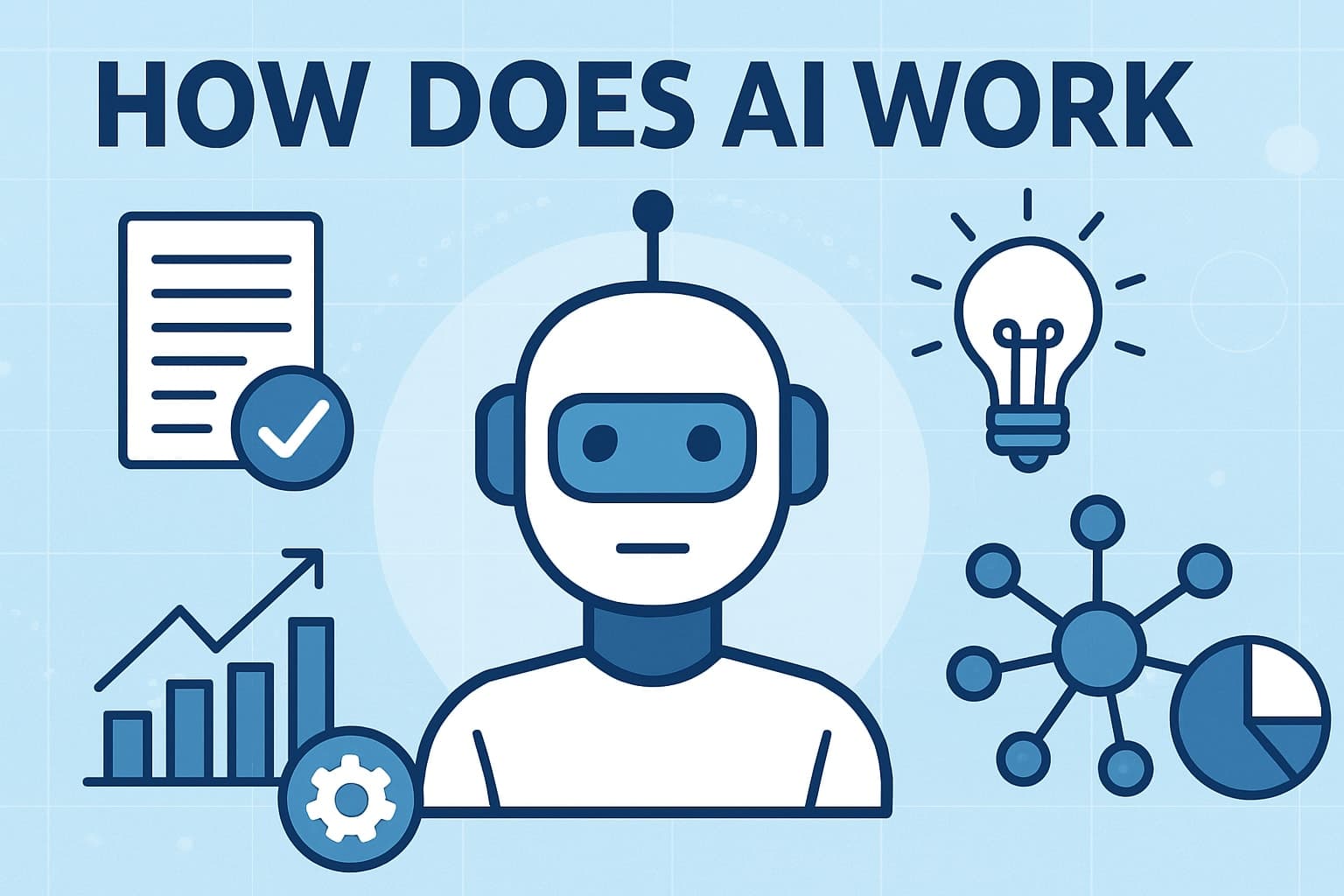
Artificial intelligence works by using mathematical algorithms to identify patterns within large datasets to make predictions or generate content. this technology has moved beyond simple automation to powering autonomous agents and complex creative workflows. Understanding the underlying mechanics is the first step toward building a profitable AI-driven side hustle or business.
The Logic Behind Machine Learning Models
AI systems do not "think" in the human sense; instead, they process input data through layers of weighted calculations to reach a statistical probability. When you ask a chatbot a question, it isn't retrieving a canned answer from a database. It is predicting the most likely sequence of characters or words based on the massive amount of text it was trained on.
The effectiveness of any AI tool depends on three pillars: data, hardware, and algorithms.
- Data: High-quality, labeled information acts as the "textbook" for the model.
- Hardware: Specialized chips (GPUs and NPUs) provide the raw computational power needed to run billions of calculations per second.
- Algorithms: These are the sets of rules that tell the computer how to learn from the data.
For those looking to build custom solutions, tools like CustomGPT.ai allow you to bypass the complex coding phase. CustomGPT indexes your specific documents and data in under 60 seconds, creating a functional assistant without requiring you to write a single line of machine learning code.
The Four Stages of the AI Workflow
To understand how AI functions in a business environment, you must look at the lifecycle of a model from raw data to actionable output.
- Data Ingestion: The system gathers information from diverse sources—text, images, or sensor logs. real-time data streaming is the standard for financial and logistics AI.
- Training and Processing: During this phase, the algorithm looks for correlations. In supervised learning, the model is told the "correct" answers during training. In unsupervised learning, it finds hidden structures on its own.
- Inference: This is the "live" stage where the AI is given new, unseen data and asked to make a prediction. For example, a fraud detection AI analyzes a new credit card transaction and assigns a risk score.
- Feedback Loops: Modern systems use reinforcement learning from human feedback (RLHF). When a user corrects an AI's mistake, that data is fed back into the system to improve future accuracy.
Distinguishing Between the Main Types of AI
Most tools we use today fall into the category of "Artificial Narrow Intelligence" (ANI), which is designed to excel at one specific task.
- Reactive Machines: These are the simplest forms of AI. They don't store memories or use past experiences to steer current decisions. They simply react to the current scenario (e.g., a basic chess computer).
- Limited Memory: This is the dominant type of AI in 2026. These systems can look into the past—such as a self-driving car monitoring the speed of nearby vehicles over the last few seconds—to make informed decisions.
- Generative AI: A subset of deep learning that creates new content. Whether it is a voiceover from Murf.ai or an image from Midjourney, these models work by "denoising" random data into a coherent structure that matches the user's prompt.
While "Theory of Mind" and "Self-Awareness" are frequently discussed in sci-fi, they remain theoretical in 2026. Current technology focuses on improving the utility and reliability of limited memory systems.
Essential AI Technologies You Can Use Today
Several distinct disciplines fall under the umbrella of artificial intelligence. Knowing which one to use is key to solving specific business problems.
Natural Language Processing (NLP)
NLP is what allows machines to read, hear, and interpret human language. It powers translation apps, sentiment analysis for brand monitoring, and the chatbots used in customer service. According to IBM, NLP combines computational linguistics with deep learning models to process the nuances of human speech.
Computer Vision
This technology enables computers to "see" and identify objects in images or videos. small business owners use computer vision for automated inventory management and quality control in manufacturing.
Neural Networks
Inspired by the human brain, neural networks consist of interconnected "neurons" that pass information through various layers. Deep learning is essentially a neural network with many layers, allowing the AI to learn complex patterns without human intervention. This is how high-fidelity voice synthesis works. You can see this in action by using Murf.ai to turn text into natural-sounding speech for YouTube or podcasts.
How to Deploy AI for Practical Side Hustles
You don't need a PhD in data science to make money with AI. The "low-code" movement has made it possible to deploy sophisticated models through simple APIs and user interfaces.
- Content Automation: Use NLP tools to generate SEO-optimized blog drafts, which you can then refine and monetize through affiliate marketing or ad revenue.
- AI Tutoring: Build a specialized knowledge base using CustomGPT.ai to answer student queries for a specific niche or course.
- Digital Product Sales: Use generative AI to create templates, stock photos, or educational guides, then sell them on platforms like Gumroad.
The most successful AI side hustles in 2026 aren't the ones that rely 100% on automation. Instead, they use AI to handle the "heavy lifting" (data sorting, first drafts, basic coding) while the human provides the creative direction and quality control. For more ideas on getting started, read our guide on AI tools for content creators.
The Practical Challenges of AI Implementation
Despite the speed of these tools, there are hurdles every user must navigate. The most significant is "hallucination"—when a model generates confident but entirely false information. This happens because the AI is prioritizing statistical probability over factual truth.
Furthermore, data privacy has become a major concern. Reliable providers now offer "Private AI" instances where your data is not used to train the public model. When setting up an AI assistant for a business, always ensure you are using a platform that respects data sovereignty and provides transparent usage logs.
To stay competitive, you should also monitor global AI adoption trends to see which industries are seeing the highest ROI. This data helps you decide where to focus your learning efforts. For a deeper look at specific applications, check out our breakdown of AI chatbot technology.
Frequently Asked Questions
How does AI learn from data?
AI learns through a process called training. It is fed massive datasets and uses an algorithm to find patterns. In supervised learning, the data is labeled with the correct answers. The model adjusts its internal parameters until it can predict the labels with high accuracy.
Is AI actually "intelligent"?
AI is not sentient or self-aware. It possesses "computational intelligence," meaning it can process logic and patterns at a scale impossible for humans. It does not have feelings, beliefs, or a conscious understanding of the tasks it performs.
Can I build an AI without coding?
Yes. Platforms like CustomGPT.ai and no-code builders allow you to create AI assistants and automated workflows by uploading documents or using "drag-and-drop" interfaces. These tools handle the complex backend math, allowing you to focus on the user experience.
Why does AI sometimes give wrong answers?
This is known as hallucination. Because generative AI predicts the next most likely word based on statistics, it can sometimes prioritize "sounding correct" over being factually accurate. Always verify AI-generated facts with a primary source before publishing or using them.
What is the difference between AI and Machine Learning?
AI is the broad concept of machines acting "smart." Machine Learning (ML) is a specific subset of AI that focuses on the idea that machines can learn from data and improve their performance over time without being explicitly programmed for every scenario.

Alex the Engineer
•Founder & AI ArchitectSenior software engineer turned AI Agency owner. I build massive, scalable AI workflows and share the exact blueprints, financial models, and code I use to generate automated revenue in 2026.
Related Articles
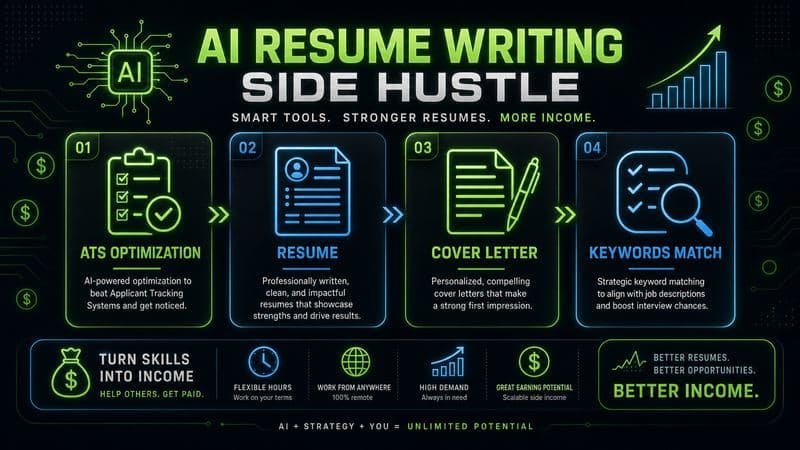
How to Start an AI-Assisted Resume Writing Side Hustle in 2026 (Beginner's Guide)
A step-by-step guide to using AI resume tools to offer a paid resume and cover letter writing service — what to charge, which tools to use, and how to find your first clients.
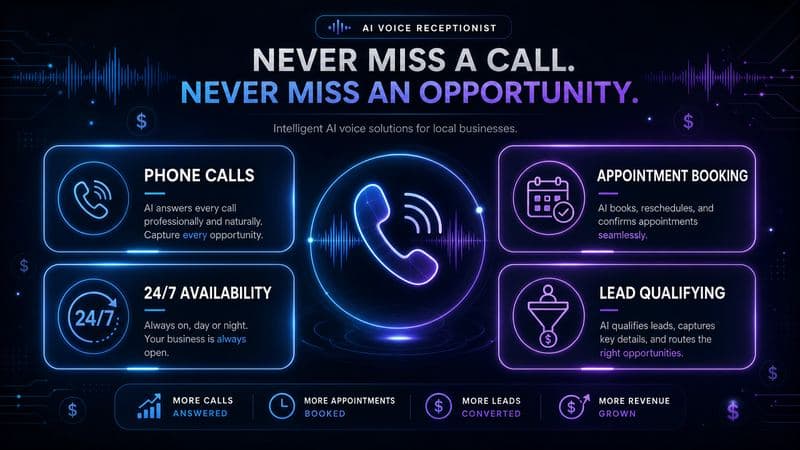
How to Build and Sell AI Voice Receptionists to Local Businesses in 2026
A beginner's guide to building AI voice agents that answer business phone calls — the tools to use, what to charge, and how to find your first client.
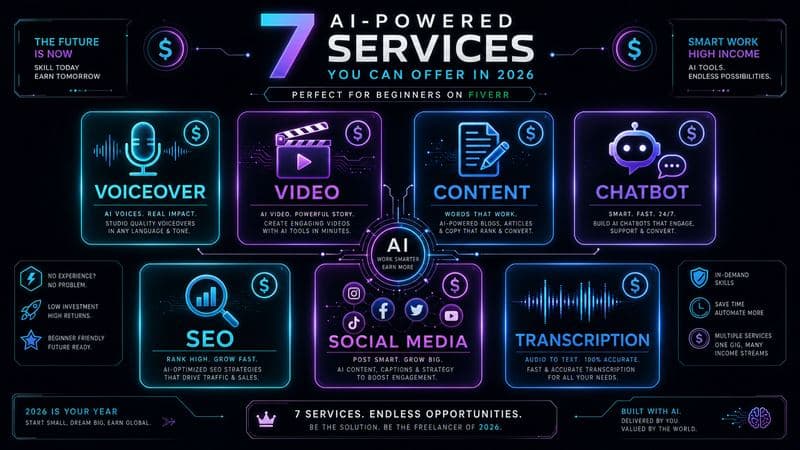
How to Make Money on Fiverr with AI Tools in 2026: 7 Gigs You Can Start This Week
Discover 7 real Fiverr gigs you can launch using free and low-cost AI tools in 2026 — no experience required. Real pricing data, step-by-step setup, and tools that actually work.