
What Is Qwen3.7-Max? Alibaba's New Agentic AI Model Explained for Beginners
Qwen3.7-Max dropped today at the Alibaba Cloud Summit. Here's what it actually is, what 'the agent frontier' means in plain English, how it compares to ChatGPT and Gemini, and how to try it free.
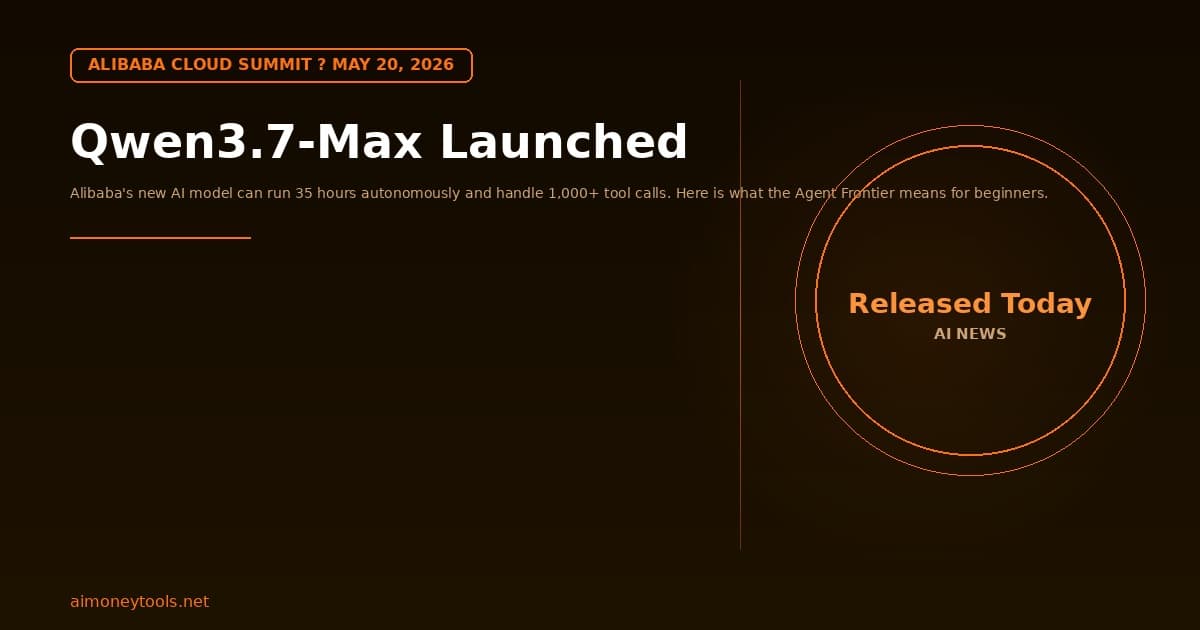
If you follow AI news at all, you've probably noticed that Alibaba's Qwen team has been releasing new models at a pace that's hard to keep up with. Today they did it again — and this time the announcement is actually worth paying attention to.
Qwen3.7-Max dropped this morning at the Alibaba Cloud Summit (May 20, 2026). The official tagline: "The Agent Frontier." Within hours it was trending on Hacker News at #3 with hundreds of comments from developers who'd already started testing it.
This article breaks down what it is, what actually changed, what "agentic" means for someone who doesn't write code, and how to try it for free right now.
What Is Qwen3.7-Max?
Qwen3.7-Max is Alibaba's latest and most capable AI language model. It's built by the same team inside Alibaba that has been releasing the Qwen series — each version improving over the last.
The "Max" in the name signals this is the top tier of the Qwen 3.7 family. Think of it as Alibaba's answer to GPT-4o or Claude Opus — the flagship model you reach for when you need the most capability.
But what makes this release different from a typical "our model got a little smarter" update is the specific angle Alibaba chose: this model was designed from the ground up to be useful as an agent — an AI that can carry out long, multi-step tasks on your behalf, not just answer single questions.
What Does "Agentic" Actually Mean?
"Agentic AI" is a term that sounds technical but has a practical definition: it means an AI that can take a sequence of actions to complete a goal, rather than just answering one question at a time.
Here's the difference in practice:
A regular AI interaction:
- You ask: "How do I send a follow-up email after a job interview?"
- The AI gives you advice or a draft.
An agentic AI interaction:
- You tell the model: "Research the company I'm interviewing with, find the interviewer's name, draft a personalized follow-up email, and schedule a reminder if I don't hear back in 3 days."
- The model plans the steps, uses tools to look things up, and executes each step — without you guiding it through each one.
Qwen3.7-Max was specifically engineered for this second type of task. Alibaba's announcement included a stat that stands out: the model can sustain autonomous operation for up to 35 hours and handle over 1,000 tool calls without performance degradation.
That's not a number you'd see in an older "chat assistant" era announcement. It's a signal about what the AI industry thinks is coming next: models that run as background workers on long tasks, not just a chat window you open when you have a question.
What Can Qwen3.7-Max Do?
Based on Alibaba's launch announcement at the Alibaba Cloud Summit, here's a breakdown of what the model is positioned for:
Complex Coding Tasks
Qwen3.7-Max handles everything from writing a quick frontend component to working through a multi-file software engineering project. The model was optimized for SWE-bench-style tasks — the industry benchmark for whether an AI can actually fix real-world software bugs, not just write simple scripts.
Its SWE-Pro score of 60.6 and SWE-Multilingual score of 78.3 place it among the top-performing models on coding benchmarks as of today.
For beginners: you don't need to understand what SWE-Pro is to benefit from a capable coding assistant. The takeaway is that this model is strong at code — stronger than most things available in this price range (which right now is free on the web).
Office Work Automation
Qwen3.7-Max is described as capable of orchestrating multi-agent workflows to tackle complex office tasks. In practice, this means the kind of work that usually requires bouncing between multiple apps — pulling from a spreadsheet, drafting an email, updating a document, routing something to the right person — can theoretically be handed off to this model.
Long-Horizon Planning
The model supports "autonomous planning" for tasks that span many steps. This makes it distinct from earlier models where performance degraded the longer a conversation or task chain went. The 35-hour / 1,000-tool-calls figure speaks directly to this: it's designed to keep going without losing the thread.
How Does It Compare to Other AI Models?
The independent AI benchmarking site Artificial Analysis placed Qwen3.7-Max at #5 overall in their current model rankings — roughly on par with GPT-5.4. It's also ranked #7 for Math and #9 for Coding on the LMSYS Chatbot Arena, which uses human preference comparisons rather than automated tests.
These rankings are for the preview version released yesterday. The full release is expected to score similarly.
At the lab level, Alibaba is now ranked #6 in text and #5 in vision among AI labs worldwide on Arena's leaderboard. A year ago they would have been nowhere near that list in anyone's top 5. That context matters: this is a serious lab putting out serious models.
For day-to-day use, comparisons like this are useful as a rough guide, but the real question is always: does it do the specific thing you need well? The best way to answer that is to try it.
How to Try Qwen3.7-Max for Free
Qwen3.7-Max is available today via Qwen Studio at chat.qwenlm.ai — which is Alibaba's free web interface, similar to how you'd use ChatGPT or Gemini without needing to set anything up.
You can sign up with a Google or Apple account and start using it immediately. No credit card, no waiting list.
For developers, Alibaba also provides API access through Model Studio (their equivalent of OpenAI's API) with an OpenAI-compatible format — meaning if you've ever written code against the OpenAI API, you can swap in Qwen3.7-Max with minimal changes.
If you want to run a version locally on your own hardware, smaller Qwen 3.7 series models (the open-weight variants) are expected to be added to LM Studio and Ollama — the two most beginner-friendly local AI tools — within a few days of this post, based on how quickly the previous Qwen releases were supported.
What Else Was Announced at the Alibaba Cloud Summit?
Qwen3.7-Max was the headline, but Alibaba also announced supporting infrastructure that's worth mentioning briefly:
Panjiu AL128 Supernode Server — a new server architecture with 128 AI accelerators in a single rack and petabyte-per-second bandwidth. This is the hardware that would run Qwen3.7-Max and future models at cloud scale. Not directly relevant to end users, but it signals that Alibaba is investing heavily in being able to serve this model reliably as demand grows.
Zhenwu M890 AI chip — Alibaba's in-house AI processor, now at 3× the performance of its predecessor. It supports 144GB of memory and 800GB/s inter-chip bandwidth, with native FP4 precision support. Again, more relevant to enterprise buyers than individual users — but it means Alibaba is building its own supply chain for AI compute, which reduces long-term dependence on Nvidia.
Should You Switch to Qwen3.7-Max?
The honest answer for most beginners: no immediate switching needed, because you're not stuck with any single tool.
If you're already using ChatGPT or Gemini for everyday tasks and they're working well for you, there's no urgent reason to change your workflow. But it's worth keeping a Qwen Studio tab open for tasks where you want a second opinion or want to try the same prompt in a different model.
Where Qwen3.7-Max is particularly worth trying:
- Coding tasks — especially if you're getting mediocre results from other models on a tricky problem
- Research and analysis — the multilingual capabilities and long context handling are strong
- Multi-step tasks — if you've run into a wall where other models lose track halfway through a complex task
Where it may not matter as much:
- Simple everyday questions — most models are functionally equivalent here
- Personalized workflows that rely on your specific documents or data — for that, a tool like CustomGPT that lets you build an assistant trained on your own content may be more useful than swapping models
The Bigger Picture: Why This Matters
Qwen3.7-Max is the latest data point in what's become a reliable pattern: Chinese AI labs, especially Alibaba's Qwen team and DeepSeek, are releasing frontier-quality models at a pace that keeps the entire field competitive.
For users, this is almost entirely good news. Competition means:
- Free access to high-quality models stays available longer
- Pricing pressure on paid plans (OpenAI, Anthropic, Google all have to justify their subscription costs)
- Faster iteration on capabilities like the long-horizon agentic operation Qwen3.7-Max focuses on
The specific "agentic" emphasis isn't unique to Alibaba either — Google's Gemini Spark (announced yesterday at I/O 2026) and Anthropic's recent Claude updates both point in the same direction. The next phase of AI is models that do work autonomously, not just respond to questions.
Qwen3.7-Max is a meaningful step in that direction, available to try for free today.
FAQ
Q: What is Qwen3.7-Max? A: Qwen3.7-Max is Alibaba's latest AI model, released May 20, 2026 at the Alibaba Cloud Summit. It's designed for advanced agentic tasks — meaning it can execute long, multi-step workflows autonomously, not just answer single questions. It's Alibaba's top-tier model in the Qwen 3.7 series.
Q: How does Qwen3.7-Max compare to ChatGPT? A: Based on the Artificial Analysis leaderboard, Qwen3.7-Max is currently ranked 5th overall — roughly comparable to GPT-5.4 in general performance. It scores particularly well on math (#7) and coding (#9). For most everyday tasks, performance is competitive with the top models from OpenAI and Google.
Q: Is Qwen3.7-Max free? A: Yes. You can use it for free via Qwen Studio at chat.qwenlm.ai. API access via Model Studio may have usage limits on free tiers. No credit card is required to start.
Q: What does "the agent frontier" mean? A: It's Alibaba's branding for the agentic capability focus of this model. An AI "agent" is one that can autonomously plan and execute multi-step tasks — unlike a chat assistant that waits for you to guide each step. Qwen3.7-Max can run for up to 35 hours and handle 1,000+ tool calls without losing track of the task.
Q: Can I run Qwen3.7-Max locally? A: The full Qwen3.7-Max is a large cloud model — running it locally isn't practical for most hardware. However, smaller open-weight models from the Qwen 3.7 family are expected in LM Studio and Ollama soon. If you're interested in running AI locally, check our VS Code local AI guide or LM Studio tutorial.
Q: What AI model should a beginner start with? A: For everyday use, start with whatever you already have access to — ChatGPT free, Gemini free, or Qwen Studio. All three are capable for basic tasks. For building an AI assistant trained on your own documents or website, CustomGPT is worth a look — it's a no-code tool that doesn't require you to pick or configure a model yourself.
Announced at the Alibaba Cloud Summit, May 20, 2026. Sources: Alibaba Cloud official press release, Artificial Analysis leaderboard, LMSYS Chatbot Arena, Latent Space AI News roundup.

Alex the Engineer
•Founder & AI ArchitectSenior software engineer turned AI Agency owner. I build massive, scalable AI workflows and share the exact blueprints, financial models, and code I use to generate automated revenue in 2026.
Related Articles
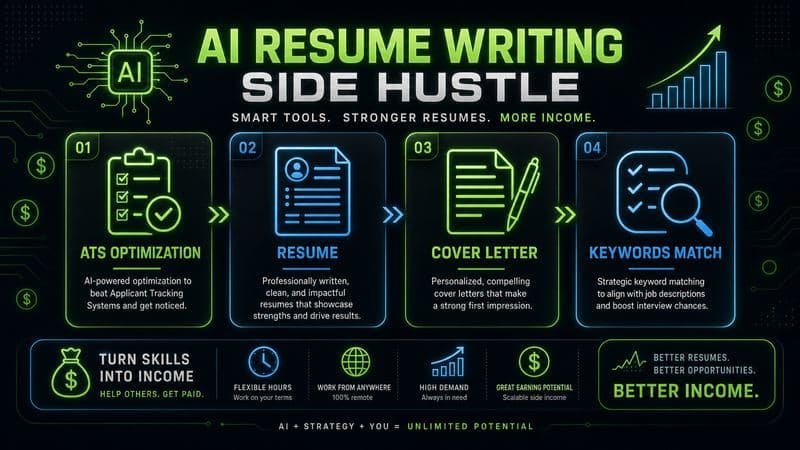
How to Start an AI-Assisted Resume Writing Side Hustle in 2026 (Beginner's Guide)
A step-by-step guide to using AI resume tools to offer a paid resume and cover letter writing service — what to charge, which tools to use, and how to find your first clients.
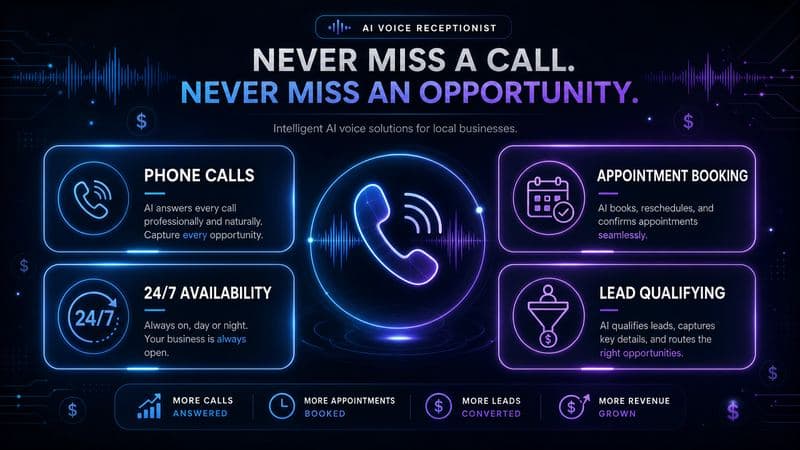
How to Build and Sell AI Voice Receptionists to Local Businesses in 2026
A beginner's guide to building AI voice agents that answer business phone calls — the tools to use, what to charge, and how to find your first client.
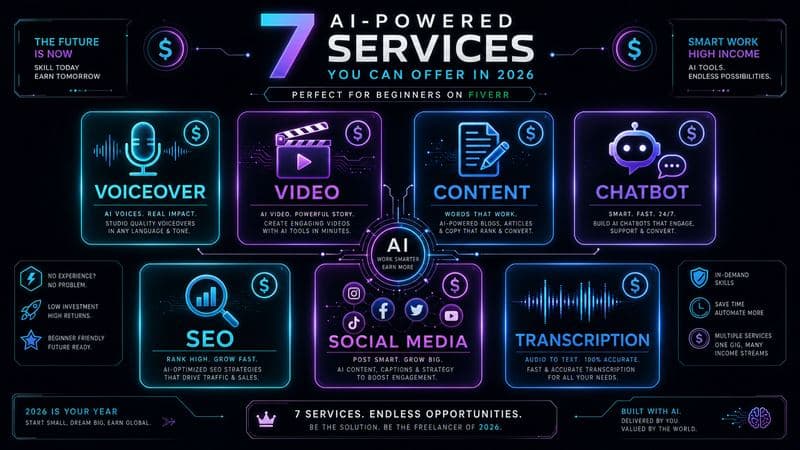
How to Make Money on Fiverr with AI Tools in 2026: 7 Gigs You Can Start This Week
Discover 7 real Fiverr gigs you can launch using free and low-cost AI tools in 2026 — no experience required. Real pricing data, step-by-step setup, and tools that actually work.