
7 Blogger Internet Secrets for Building a Profitable Site
Discover how to build a profitable blog in 2026. Learn the 7 secrets to niche selection, AI content workflows, and realistic income strategies for beginners.

The blogger internet remains a viable path for generating semi-passive income, even as search engines and AI technologies evolve. By focusing on niche authority and efficient content production, new creators can realistically target $500 per month within their first 90 days. Last updated: April 2026 to include the latest shifts in generative search and affiliate payout structures.
This guide breaks down the practical steps to launching a site that earns, using a modern tech stack to handle the heavy lifting.
1. Select a Niche with High Affiliate Gravity
A profitable niche requires a balance between search volume and high-value commercial intent. The most successful creators on the blogger internet avoid broad topics like "travel" and instead focus on "AI-powered travel planning" or "remote work ergonomics."
When evaluating a niche, look for products with recurring commissions. According to 2025 industry benchmarks, SaaS affiliate programs typically offer 20% to 30% lifetime recurring commissions, whereas physical goods via Amazon Associates often peak at just 4%. For example, referring 50 users to a $50/month AI tool can generate $500/month in passive income with AI tools indefinitely, while selling the equivalent value in electronics would require constant new sales.
2. Build a Lean Tool Stack for Content Velocity
Speed is your primary advantage when starting a new site. Instead of manual drafting, use a specialized assistant to handle research and structure. This allows you to move from a blank page to a published post in under 30 minutes.
- Writing & Architecture: CustomGPT.ai allows you to upload your own style guides and research documents. By creating a "Brand Persona" bot, you ensure the output matches your specific voice.
- Audio Integration: Use Murf.ai to turn your articles into high-quality audio files. With Murf’s Pro plan (approx. $26/month), you get access to ultra-realistic voices that increase "time on page"—a massive ranking signal for Google.
- Visuals: Stop using generic stock photos. Use Midjourney or DALL-E 3 to create custom diagrams that explain your concepts.
3. Implement the 7-Day Launch Framework
Avoid the "perfection trap" by setting a hard deadline. Most successful participants in the blogger internet space focus on functionality over aesthetic flair during the first month.
The Actionable Workflow:
- Days 1-2: Purchase a
.comdomain and set up lightweight hosting like Ampere.sh. - Days 3-4: Use a "Gutenberg-ready" theme. Disable all unnecessary plugins to keep your "Largest Contentful Paint" (LCP) under 1.2 seconds.
- Days 5-6: Generate 5 "Pillar" posts (2,000 words) and 10 "Response" posts (800 words) focusing on prompt engineering or specific tool tutorials.
- Day 7: Submit your sitemap to Google Search Console and Bing Webmaster Tools immediately.
4. Master Multi-Channel Content Distribution
Publishing on your website is only half the battle. To gain traction in 2026, you must distribute your message across platforms where your audience already spends time.
Repurposing is the most efficient way to do this. A single long-form article should be converted into a "Value Thread" for growing on X/Twitter. This creates "social signals" that tell search engines your content is being discussed by real humans, which is a key factor in GEO/generative engine optimization.
5. Focus on Information Gain and Real Experience
Search engines now prioritize "Information Gain"—the inclusion of new, unique facts or perspectives. If you are simply summarizing what others have written, your site will struggle to rank.
How to add EEAT (Experience, Expertise, Authoritativeness, Trust):
- Personal Testing: Don’t just list tool features. Show a screenshot of a prompt you ran and the actual result you got.
- Negative Reviews: Be honest. If a tool has a bad UI, say so. This increases trust and conversion rates on the products you do recommend.
- Unique Data: Conduct a poll on X and embed the results in your blog post.
6. Diversify Revenue Beyond Display Ads
While display ads are great, they require significant traffic. To earn $500/month early on, you need higher-margin streams.
- High-Ticket Affiliates: Focus on AI affiliate programs that pay $100+ per lead.
- Digital Products: Create a specialized PDF or Notion template. Use selling digital products online strategies to capture "low-hanging fruit" revenue from your first 1,000 visitors.
- Lead Gen: If you write about AI tools for businesses, you are essentially running a mini AI automation agency. Capture emails and offer 1-on-1 consulting.
7. Track the Metrics That Actually Matter
Beginners often waste time checking "vanity metrics" like total pageviews. Instead, monitor:
- CTR (Click-Through Rate): If a post ranks #3 but has a 1% CTR, your headline is the problem.
- Affiliate Link Clicks: This measures the "commercial intent" of your traffic.
- Email Opt-in Rate: Aim for 2-5%. Use a simple lead magnet like an "AI Tool Checklist" to convert readers into subscribers.
For a deeper look at this, read monetizing your blog with AI.
Frequently Asked Questions
Is blogging still profitable in 2026 with the rise of AI search?
Yes, but the strategy has shifted. Instead of writing generic "What is..." posts, you must focus on "How to..." content that includes personal experience. Google’s SGE (Search Generative Experience) often cites blogs that provide unique data or first-hand accounts that AI cannot replicate.
What is the fastest way to earn money with a new blog?
The fastest route is combining earn money with ChatGPT workflows for content speed with high-commission affiliate offers. Skip display ads initially; you only need about 2,000 targeted visitors to make $500/month if you are promoting a $50/month SaaS with a 30% recurring commission.
How much should I spend on tools when starting out?
Keep your "burn rate" low. Expect to spend $10/month on hosting and $20-$30/month on a primary AI writing tool. You do not need expensive "all-in-one" SEO suites until you are clearing $1,000/month in profit.
Can I use 100% AI-generated content?
No. Pure AI content often lacks the "Information Gain" required to rank. Use AI to build the 70% foundation of the post (structure, facts, drafting), then spend 30 minutes adding your personal "human layer"—opinions, screenshots, and formatting—to ensure it passes quality checks.
How do I find "low competition" keywords for the blogger internet?
Use the "Alphabet Soup" method on YouTube or Google search bars, or look for forums like Reddit where users are complaining about specific software. If a Reddit thread is the #1 result for a technical question, that is a prime opportunity for you to write a better, more authoritative article.
Get the Blueprint: Want to launch a profitable AI business from scratch? Grab The Ultimate AI Toolkit ($19) — a 200+ page framework featuring exact implementation steps for content automation, consulting, and AI agency building.

Alex the Engineer
•Founder & AI ArchitectSenior software engineer turned AI Agency owner. I build massive, scalable AI workflows and share the exact blueprints, financial models, and code I use to generate automated revenue in 2026.
Related Articles
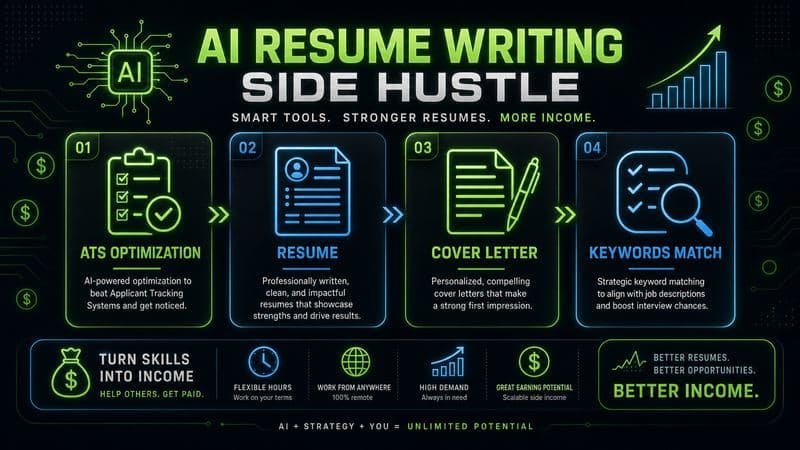
How to Start an AI-Assisted Resume Writing Side Hustle in 2026 (Beginner's Guide)
A step-by-step guide to using AI resume tools to offer a paid resume and cover letter writing service — what to charge, which tools to use, and how to find your first clients.
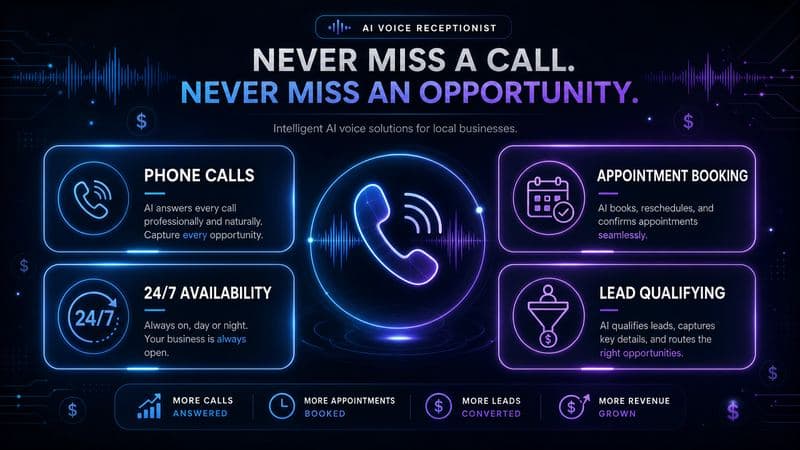
How to Build and Sell AI Voice Receptionists to Local Businesses in 2026
A beginner's guide to building AI voice agents that answer business phone calls — the tools to use, what to charge, and how to find your first client.
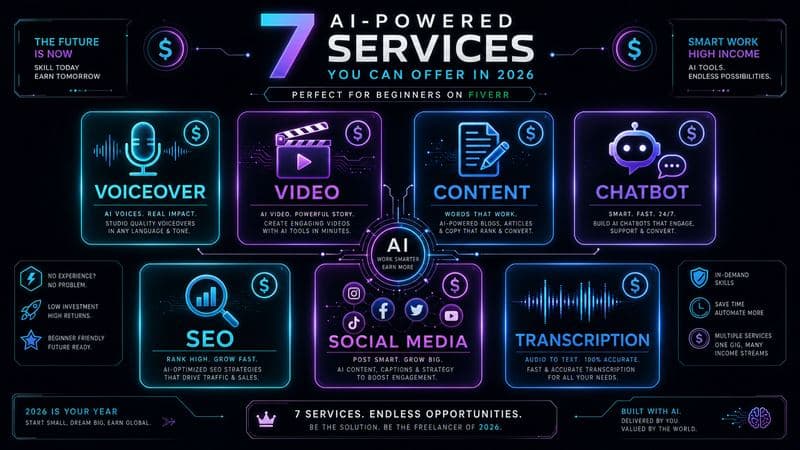
How to Make Money on Fiverr with AI Tools in 2026: 7 Gigs You Can Start This Week
Discover 7 real Fiverr gigs you can launch using free and low-cost AI tools in 2026 — no experience required. Real pricing data, step-by-step setup, and tools that actually work.