
Anthropic Surpasses OpenAI: Now the World's Most Valuable AI Startup at $965 Billion
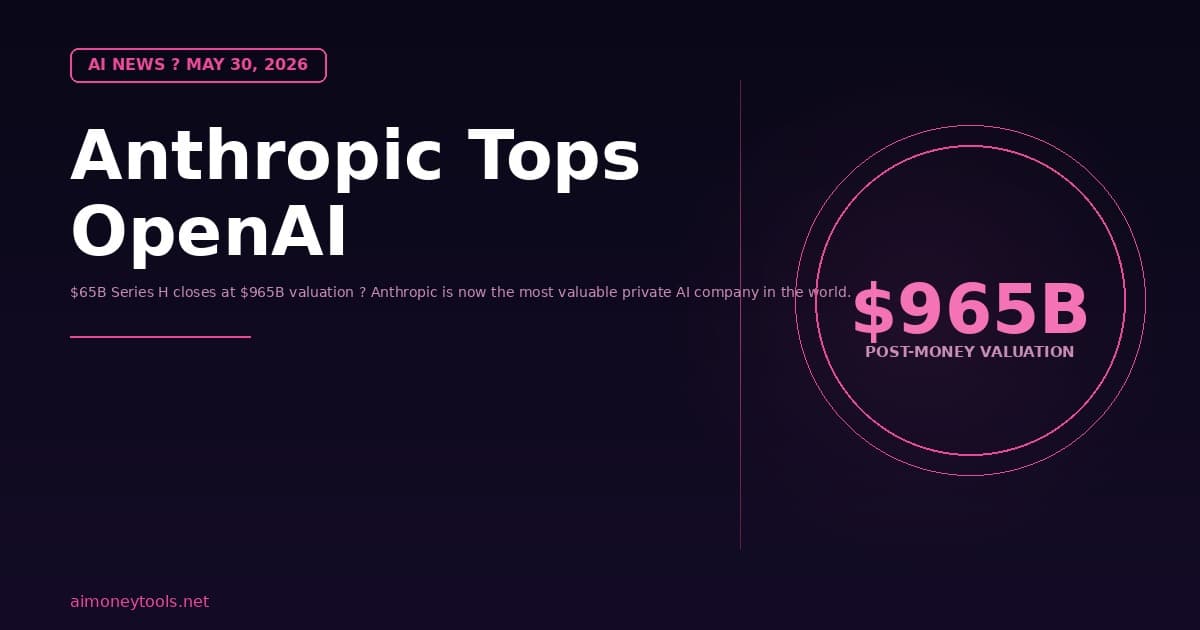
Anthropic raised $65 billion in a Series H round at a $965 billion valuation, officially surpassing OpenAI to become the most valuable private AI company in the world. Here is what happened, why it matters, and what it means for AI users and builders.
Something that would have sounded impossible two years ago just happened: Anthropic is now worth more than OpenAI.
The company behind Claude — the AI assistant that went from a credible challenger to a genuine industry leader in 2026 — officially closed a $65 billion Series H funding round at a post-money valuation of $965 billion, according to reporting from Reuters, Axios, CNBC, and the New York Times.
That puts Anthropic ahead of OpenAI, which last raised at an $852 billion valuation in March 2026.
The AI race just reshuffled. Here is what happened, why it happened, and what it means for anyone using, building on, or watching AI.
What Actually Happened
On May 28, 2026, Anthropic confirmed it had closed one of the largest private fundraising rounds in history: $65 billion in a Series H at $965 billion post-money.
For context:
- OpenAI raised $122 billion in March 2026 to reach an $852 billion valuation
- Anthropic's previous major funding was a reported $30 billion round in early May 2026 (see our earlier coverage)
- This Series H effectively adds another layer, bringing Anthropic within sight of $1 trillion — a milestone that no private AI company has crossed yet
The Guardian notes that OpenAI has flagged it may seek a $1 trillion IPO later in 2026. If Anthropic keeps its current trajectory, it may get there first.
Why Anthropic Is Now Worth More Than OpenAI
The shift did not happen overnight. Several factors contributed to Anthropic crossing OpenAI on the valuation table:
1. Claude Opus 4.8 Changed the Benchmark Conversation
Just one day before the funding news broke, Anthropic released Claude Opus 4.8 — the first AI model to pass every case on Anthropic's own Super-Agent benchmark, a set of real-world multi-step agentic tasks.
Where competitors had scored between 40–60 percent on agentic benchmarks, Opus 4.8 cleared 100 percent. That is not just a marketing claim. It is a technical leap that investors would have seen in their due diligence.
2. Enterprise Revenue Is Accelerating
Anthropic has consistently landed large enterprise contracts in a way OpenAI has not matched at the same scale. By mid-2026, Claude was deployed inside major banks, law firms, software companies, and government departments — not as a chatbot experiment, but as a core operating layer.
Enterprise revenue signals durability. That matters to the institutional investors behind a $65 billion round.
3. Safety Has Become a Selling Point
Two years ago, Anthropic's emphasis on AI safety and "Constitutional AI" was seen by some as a competitive disadvantage — slower to ship, more cautious, less viral.
In 2026, that position looks different. With regulatory scrutiny increasing in the US and Europe, enterprises want AI suppliers who can demonstrate responsible behavior at the model level. Anthropic's Constitutional AI framework, interpretability research, and systematic red-teaming have become a source of trust — which translates into contracts and retention.
4. Claude API Momentum
Developer adoption of the Claude API has accelerated significantly. The combination of a large context window, strong instruction-following, and competitive pricing has made Claude a genuine alternative to GPT-4-class models for production applications — not just for experimentation.
When developers build on an API, the switching cost rises over time. Investors are pricing in that lock-in.
The Bigger Picture: Two Very Different Companies Racing Toward $1 Trillion
Despite the headline comparison, Anthropic and OpenAI are not identical companies. They are competing for similar markets but with different architectures, cultures, and strategies.
OpenAI operates as a hybrid structure — a capped-profit company restructuring toward a conventional corporation, with Microsoft as its largest backer. It ships products at extremely high velocity (GPT-5.5 launched in April 2026) and has the largest consumer mindshare of any AI company globally through ChatGPT.
Anthropic was founded in 2021 by former OpenAI employees — including Dario Amodei and Daniela Amodei — specifically because they believed OpenAI was moving too fast without adequate safety guardrails. It runs as a public benefit corporation, with Amazon as its largest cloud partner. It ships less frequently but with a reputation for reliability and consistency in enterprise settings.
Two companies, two philosophies, now two valuations above $850 billion. The fact that both exist at this scale suggests the AI infrastructure market is larger than even aggressive 2023 projections assumed.
What This Means If You Are Building on AI
If you are a developer, entrepreneur, or small business owner using AI tools, the Anthropic valuation surge is a signal worth reading carefully.
It will not raise your prices immediately. Anthropic has been competing hard on API pricing, and a high valuation does not force a price increase. If anything, the capital infusion buys room to keep prices low while growing infrastructure.
It validates the Claude API as a long-term bet. A $965 billion company is not going away. If you are building applications or automations on top of Claude — through the API directly or via tools like CustomGPT — the underlying model provider just got significantly more stable.
The Claude ecosystem is expanding fast. With more capital comes more research, more compute, more model releases, and a faster improvement cycle. Claude Opus 4.9 or Claude 5 will be developed with infrastructure that was not possible at Anthropic's previous scale.
A Timeline of Anthropic's Valuation Climb
Anthropic has grown faster than almost any company in history on a pure valuation basis:
| Year | Valuation |
|---|---|
| 2021 (founding) | ~$1 billion (seed round) |
| 2023 | ~$4.6 billion |
| 2024 | ~$18.4 billion |
| Early 2025 | ~$61 billion |
| Early 2026 | ~$30 billion raise (Bloomberg/FT) |
| May 28, 2026 | $965 billion (Series H close) |
Each step came with a product milestone. The 2024 jump followed Claude 2's release. The 2025 climb tracked Claude 3 Opus becoming the leading reasoning model. The 2026 surge correlates directly with Claude Opus 4.8's agentic benchmark results and accelerating enterprise adoption.
What Happens Next
The natural next question is: will Anthropic go public?
Dario Amodei has not announced IPO plans. But at $965 billion, the pressure to create liquidity for early employees and investors will only grow. A public listing at over $1 trillion is not a stretch scenario — it is the logical outcome if enterprise revenue continues to scale.
For OpenAI, the pressure is now reciprocal. ChatGPT still has more users than Claude by a wide margin. But valuation is forward-looking: investors are pricing Claude's enterprise trajectory and the reliability of Anthropic's safety positioning as more durable long-term value drivers.
Both companies will need to convert their valuations into sustainable revenue. The race is not over — it is just entering a new phase.
Related Reading
- Anthropic's $30 Billion Round: What It Meant for Claude and AI
- Claude Opus 4.8 Is Out: The First Model to Pass Every Super-Agent Test
- How to Use the Claude API: A Beginner's Guide
- How to Start an AI Automation Agency in 2026
Frequently Asked Questions
Is Anthropic now worth more than OpenAI?
Yes. As of May 28, 2026, Anthropic's post-money valuation is $965 billion following a $65 billion Series H round. OpenAI's last reported valuation was $852 billion (March 2026). Anthropic is currently the most valuable private AI company in the world.
Who invested in Anthropic's Series H?
Full investor details have not been publicly disclosed at the time of writing. Amazon has been Anthropic's largest cloud partner and a major investor in prior rounds. Institutional investors and sovereign wealth funds are typical participants in rounds at this scale.
What is the difference between Anthropic and OpenAI?
OpenAI created ChatGPT and GPT-4/GPT-5. Anthropic created Claude. Both build large language models and offer API access for developers. Anthropic was founded by former OpenAI researchers who wanted a stronger focus on AI safety. The two companies are direct competitors across enterprise AI, developer APIs, and consumer AI assistants.
Does this affect Claude's pricing?
There is no announced pricing change. Anthropic has been competing on price with OpenAI, and new capital typically allows the company to maintain or improve pricing rather than raise it.
How do I start building with Claude?
The easiest path is the Claude API — get an API key at console.anthropic.com and make your first call in under five minutes. For no-code deployments, CustomGPT lets you build Claude-powered agents without writing code.
Will Anthropic go public (IPO)?
No IPO has been announced. At $965 billion, a public listing is a plausible next step, but Anthropic has not confirmed a timeline. Dario Amodei has historically been cautious about public market pressures. Watch for updates in late 2026 or 2027.
What is Constitutional AI?
Constitutional AI is Anthropic's approach to training AI models. Instead of relying solely on human feedback, models are trained using a set of principles (a "constitution") that guides how they evaluate their own responses. The goal is to make Claude more reliably helpful, harmless, and honest at scale — and it is one of Anthropic's core differentiators from OpenAI.
How does Claude Opus 4.8 relate to the valuation news?
The timing is almost certainly not a coincidence. Claude Opus 4.8, released May 29, 2026, was the first model to score 100 percent on Anthropic's Super-Agent benchmark — a practical test of multi-step agentic task completion. Strong product milestones precede funding announcements because investors doing due diligence see the technology first. The Series H likely reflected Opus 4.8's performance before the public release.

Alex the Engineer
•Founder & AI ArchitectSenior software engineer turned AI Agency owner. I build massive, scalable AI workflows and share the exact blueprints, financial models, and code I use to generate automated revenue in 2026.
Related Articles
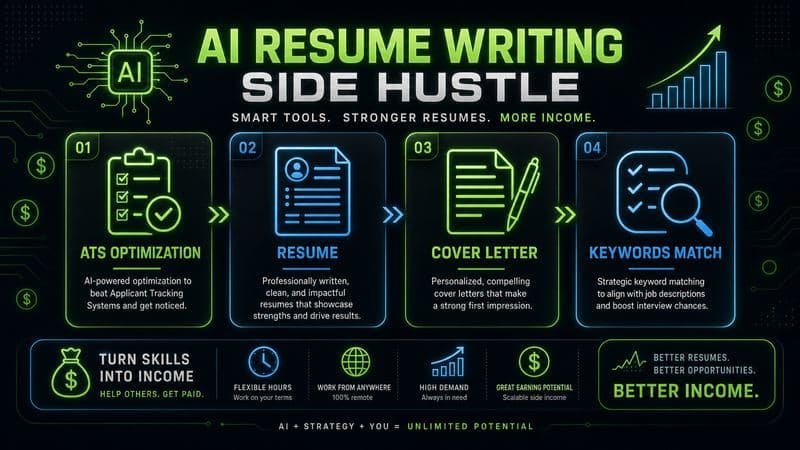
How to Start an AI-Assisted Resume Writing Side Hustle in 2026 (Beginner's Guide)
A step-by-step guide to using AI resume tools to offer a paid resume and cover letter writing service — what to charge, which tools to use, and how to find your first clients.
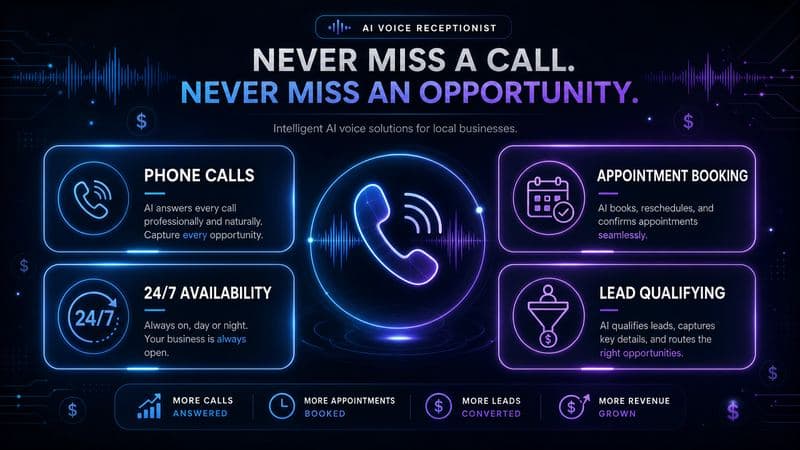
How to Build and Sell AI Voice Receptionists to Local Businesses in 2026
A beginner's guide to building AI voice agents that answer business phone calls — the tools to use, what to charge, and how to find your first client.
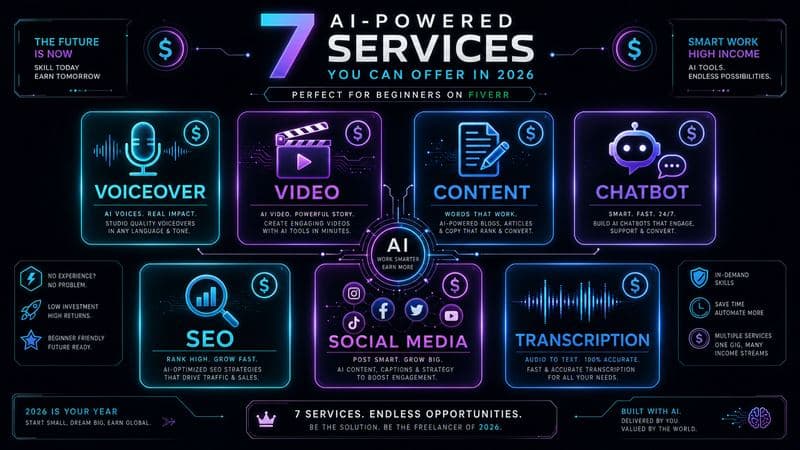
How to Make Money on Fiverr with AI Tools in 2026: 7 Gigs You Can Start This Week
Discover 7 real Fiverr gigs you can launch using free and low-cost AI tools in 2026 — no experience required. Real pricing data, step-by-step setup, and tools that actually work.