
The Essential Guide to Voice Bots in 2026
Learn how to build and deploy AI voice bots to automate customer support, save 20+ hours weekly, and increase ROI using CustomGPT and Murf.
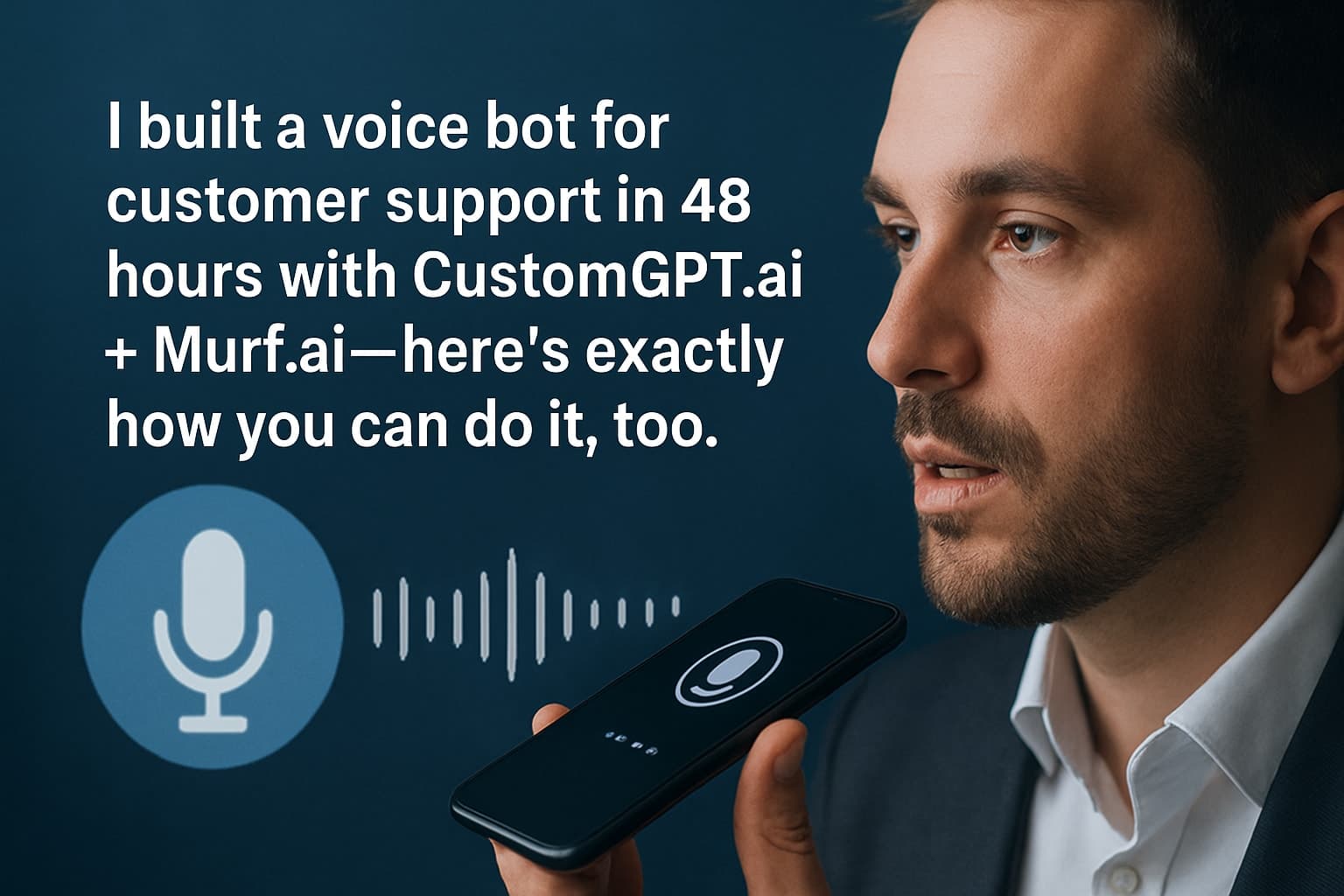
I built a functional AI voice assistant for customer support in just 48 hours, and you can achieve the same results. automated voice systems are helping small business owners reclaim dozens of hours each week while providing instant responses to customer inquiries.
By integrating tools like CustomGPT.ai for logic and Murf.ai for natural speech, you can create a professional support line without a developer. This guide explores how to set up these systems, the real-world ROI you can expect, and the specific workflows that generate the most profit.
Why Voice Automation is Essential for 2026 Businesses
Voice-based AI is no longer a luxury; it is a fundamental requirement for scaling a lean business. Modern customers expect immediate resolutions, and manual call handling often leads to long wait times and abandoned leads. By deploying an automated assistant, you ensure that every caller is greeted instantly, regardless of the time of day.
The primary benefit is the drastic reduction in repetitive administrative labor. Most support staff spend roughly 60% of their day answering the same five to ten questions. When an AI handles these FAQs, human team members can focus on high-ticket sales or complex problem-solving. This shift doesn't just save money—it reallocates human talent to areas that actually drive growth.
Furthermore, the technology has reached a point where "robotic" tones are a thing of the past. High-fidelity voice synthesis allows these bots to sound professional and empathetic. This improves brand perception, as small startups can now offer the same level of sophisticated phone support as enterprise-level corporations.
Practical Use Cases for Voice Assistants
The versatility of modern AI allows it to handle diverse business functions beyond simple message taking. Here are the most effective ways to use this technology today:
- Appointment Scheduling: Connect your bot to a digital calendar (like Calendly or Google Calendar) to allow customers to book, reschedule, or cancel appointments via phone without human intervention.
- Lead Qualification: Program the bot to ask specific qualifying questions to incoming callers. It can then push the data to your CRM and only alert a salesperson if the lead meets your criteria.
- Order Tracking: By connecting to your e-commerce backend, the bot can provide real-time shipping updates to customers who provide their order number.
- Multilingual Support: Modern tools allow you to deploy assistants that speak dozens of languages, opening your business to global markets without hiring a multilingual staff.
For those looking to expand their digital offerings, combining these voice tools with other AI tools for content creators can help build a comprehensive automation agency.
The Recommended Tech Stack: CustomGPT.AI + Murf.AI
To build a reliable system, you need a "brain" and a "voice." I recommend using CustomGPT.ai as the logic engine and Murf.ai for the audio output.
CustomGPT.ai stands out because it allows you to upload your own business documents—SOPs, product manuals, and pricing sheets—to create a "private" AI that only speaks based on your data. It indexes your documents almost instantly, ensuring the bot doesn't hallucinate or provide incorrect info.
Murf.ai provides the realistic "human" element. It offers over 120+ lifelike voices in 20+ languages. When you pair this with a logic engine, the result is a fluid conversation that feels natural to the caller.
| Feature | CustomGPT.ai (The Brain) | Murf.ai (The Voice) |
|---|---|---|
| Primary Role | Knowledge base & logic | Speech synthesis |
| Setup Speed | Under 10 minutes | Instant |
| Best For | Accuracy & data privacy | Professional brand tone |
How to Build Your First Voice Assistant in 5 Steps
Creating an automated phone system is a linear process that requires no coding knowledge. Follow these steps to get your first bot live:
1. Centralize Your Knowledge Base
Gather all the information your bot needs to know. This includes your FAQ page, refund policies, and service descriptions. Upload these files directly to CustomGPT.ai. The system will ingest this data, creating a restricted knowledge base so the bot only answers questions using your approved facts.
2. Configure the Persona and Logic
Define how you want the bot to behave. Should it be formal or casual? In the settings, provide a "system prompt" such as: "You are a helpful assistant for Smith Plumbing. Your goal is to help customers book repairs and answer questions about our pricing."
3. Select a Professional Voice
Head to Murf.ai and audition voices. Choose a tone that matches your brand identity. You can adjust the pitch, speed, and emphasis to ensure the bot sounds like a natural extension of your team. This is also a great tool for those exploring an AI voice generator for YouTube or other social media content.
4. Integration and Testing
Use a tool like Zapier or a direct API connection to link your logic engine to a phone service (like Twilio or Vapi). Before going public, call the number yourself. Try to "break" the bot by asking off-topic questions or speaking quickly to ensure it remains stable.
5. Monitor and Refine
Review the transcripts of the calls daily during the first week. If you notice the bot struggling with a specific question, simply update your knowledge base document in CustomGPT, and the bot will learn the new information immediately.
Measuring the ROI of Voice Automation
The financial impact of these systems is immediate and measurable. According to data from Gartner, conversational AI is expected to reduce contact center labor costs by $80 billion globally by 2026. For a solo entrepreneur or small agency, the savings manifest in two ways: hard cost reduction and opportunity gain.
If a human assistant costs $25/hour and spends 10 hours a week on basic phone tasks, that is $1,000 per month. A high-tier AI stack typically costs significantly less, resulting in a 70-90% reduction in support costs.
More importantly, the opportunity gain is found in the "zero-missed-call" policy. Every call handled by the bot is a potential lead that would have otherwise gone to a competitor's voicemail. To learn more about maximizing these efficiencies, explore our guide on building multiple income streams with AI.
Common Pitfalls to Avoid
Even with the best tools, implementation can fail if you overlook the user experience.
One major error is making the bot's intro too long. Customers want to know they are being helped, not listen to a 30-second disclaimer. Keep the greeting under 5 seconds.
Another mistake is failing to provide a "human escape hatch." Always ensure that if the AI cannot solve a problem, the caller has an option to say "operator" or "human" to be transferred to a real person. This prevents customer frustration and maintains trust. Finally, ensure your knowledge base is updated regularly. An AI is only as good as the data you give it; if your prices change, your documents must change too.
Frequently Asked Questions
Can voice bots handle complex customer complaints?
While AI can handle basic troubleshooting and venting, complex emotional or legal complaints should be routed to a human. Most businesses use AI to "triage" the call before passing it to a specialist.
Do I need to know how to code to build one?
No. Using platforms like CustomGPT.ai and no-code connectors like Zapier, you can build a fully functional voice assistant using only drag-and-drop interfaces and document uploads.
How much does it cost to run an AI voice bot?
A professional setup usually ranges from $50 to $500 per month depending on call volume and the specific tools used. This is significantly cheaper than hiring even a part-time virtual assistant.
Will customers get frustrated talking to an AI?
If the AI is fast, accurate, and sounds natural, most customers prefer it over waiting on hold for 10 minutes. The key is ensuring the bot actually solves the problem rather than just repeating a script.
Can I use these bots for outbound sales calls?
Yes, but you must comply with local telemarketing laws and TCPA regulations. AI bots are highly effective for "warm" follow-ups, such as confirming an interest in a recently downloaded whitepaper or lead magnet.
Get the Blueprint: Want to launch a profitable AI business from scratch? Grab The Ultimate AI Toolkit ($19) — a 200+ page framework featuring exact implementation steps for content automation, consulting, and AI agency building.

Alex the Engineer
•Founder & AI ArchitectSenior software engineer turned AI Agency owner. I build massive, scalable AI workflows and share the exact blueprints, financial models, and code I use to generate automated revenue in 2026.
Related Articles
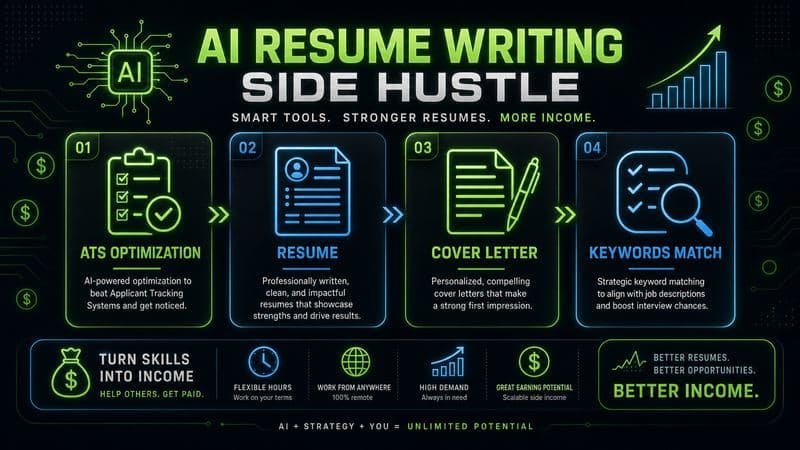
How to Start an AI-Assisted Resume Writing Side Hustle in 2026 (Beginner's Guide)
A step-by-step guide to using AI resume tools to offer a paid resume and cover letter writing service — what to charge, which tools to use, and how to find your first clients.
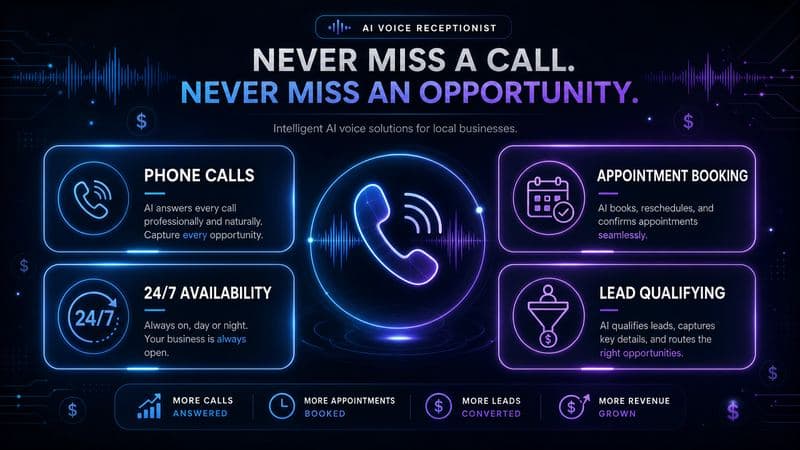
How to Build and Sell AI Voice Receptionists to Local Businesses in 2026
A beginner's guide to building AI voice agents that answer business phone calls — the tools to use, what to charge, and how to find your first client.
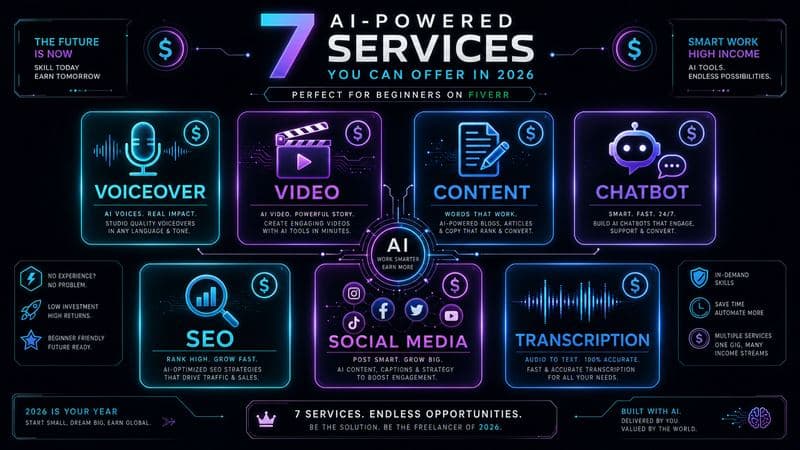
How to Make Money on Fiverr with AI Tools in 2026: 7 Gigs You Can Start This Week
Discover 7 real Fiverr gigs you can launch using free and low-cost AI tools in 2026 — no experience required. Real pricing data, step-by-step setup, and tools that actually work.