
How to Make Money with AI in 2026: 12 Methods That Actually Work
Looking to make money with AI in 2026? Here are 12 legitimate, beginner-friendly methods — from AI freelancing and affiliate programs to local automation services and digital products. No fluff, no overnight-millionaire promises.
There are two kinds of "make money with AI" articles on the internet right now.
The first kind promises you'll earn $10,000 a month before the end of your first week. The second kind lists 47 vague ideas that all boil down to "use ChatGPT and figure it out."
This is neither of those. What follows are 12 specific methods that real people are using in 2026 to generate income from AI tools — with honest notes on how much effort each actually requires, what the realistic income range looks like, and which tools you need to get started.
1. AI Freelance Writing and Content Creation

Realistic monthly income: $500–$5,000+
This is the most accessible starting point. Businesses need blog posts, product descriptions, email sequences, ad copy, and social media content — and AI tools have made it possible for one person to produce what used to require a small team.
The key is not just generating content but editing and improving it until it reads like something a skilled human writer would produce. Clients are not paying for raw ChatGPT output. They are paying for someone who knows how to prompt effectively, edit ruthlessly, and understand their brand voice.
Getting started: Build a small portfolio (3–5 samples in your niche), list on Upwork or Contra, and charge $0.05–$0.20 per word. Specialize in a niche (SaaS, e-commerce, finance) to command higher rates.
2. AI Automation Agency
Realistic monthly income: $2,000–$15,000+
Small businesses are paying $500–$3,000 per project for AI automations that save them time: automated customer support replies, lead qualification bots, email follow-up sequences, appointment booking, inventory reporting.
You build these once, charge for setup, and often retain a monthly maintenance fee. The tools most commonly used are n8n, Make (formerly Integromat), and CustomGPT for custom chatbot deployments that run on a client's own data.
If you can solve one specific problem repeatedly — like setting up a 24/7 AI customer service bot for restaurant chains — you have a service business with high margins and low competition.
Getting started: Read our AI automation agency guide and pricing guide to understand the full service model before pitching your first client.
3. AI Affiliate Marketing
Realistic monthly income: $200–$10,000+
AI tools have among the highest affiliate commissions of any software category. Most AI SaaS companies pay 20–40% recurring commission, which means a single referred customer keeps paying you every month.
The catch is that you need an audience. A blog, YouTube channel, newsletter, or social media following is the distribution layer. The content itself — tutorials, comparisons, reviews — does the selling.
High-converting programs worth knowing:
- CustomGPT — custom AI chatbots for businesses, strong conversion on local business content
- Murf.ai — AI voice generation, $0–$29/month plans, popular for YouTube creators
- Ampere — AI-powered infrastructure, targets developers and agencies
The fastest path: write comparison articles ("X vs Y") and "best of" lists, since these capture high-intent buyers who are already deciding between options.
4. AI-Powered YouTube Automation (Faceless Channels)
Realistic monthly income: $500–$8,000+ (once monetized)
Faceless YouTube channels — where there is no on-camera presenter — have been around for years, but AI has dramatically reduced the production cost. A script, a voice-over, stock footage, and B-roll can now be assembled in a few hours using AI tools.
The most successful niches in 2026 are finance, tech news recaps, AI tool tutorials, and "top 10" listicle content. Monetization via AdSense typically requires 1,000 subscribers and 4,000 watch hours, which takes 3–6 months of consistent posting.
For voice generation, Murf.ai and ElevenLabs are the two tools most creators actually use. For video assembly, CapCut and InVideo AI handle most of the editing workflow.
Read more: AI YouTube Automation Guide
5. Sell Digital Products Built with AI
Realistic monthly income: $200–$5,000+
AI has dramatically lowered the barrier to creating digital products: prompt packs, Notion templates, mini-courses, ebooks, email newsletter templates, and SOP libraries.
The economics are attractive: create once, sell indefinitely, no inventory, no shipping. Gumroad, Lemon Squeezy, and Whop are the most common platforms in 2026.
The specific opportunity right now: there is strong demand for "AI starter kits" — curated bundles of prompts, templates, and workflows that help someone in a specific job role (real estate agent, copywriter, personal trainer) start using AI immediately. A well-positioned $29–$49 product in a niche with no direct competition can generate $500–$2,000/month with modest marketing.
6. Local Business AI Services
Realistic monthly income: $1,000–$6,000+
Most small local businesses — restaurants, salons, plumbers, gyms — have not implemented any AI. They are often willing to pay $300–$1,500 for a one-time setup of a customer-facing chatbot that answers FAQs, takes bookings, and qualifies leads after business hours.
This is a referral-heavy business. One good result leads to three referrals. The tools are the same as the automation agency model — CustomGPT, Tidio, or Voiceflow for chatbots — but the sales process is simpler because you are solving a very concrete problem.
7. Data Labeling and AI Model Training Work
Realistic monthly income: $300–$2,500+
Platforms like Outlier AI (formerly Scale AI's RLHF platform) pay $18–$50 per hour for people who review AI responses, write training examples, and evaluate model quality.
This is legitimate, scalable work. You need no special skills beyond being a careful, clear writer. The demand exists because AI companies need massive amounts of human-evaluated training data.
The income ceiling is lower than the other methods here, but the barrier to entry is also the lowest — most people can start within a week.
8. AI Voice and Audio Services
Realistic monthly income: $500–$4,000+
Podcast production, voiceover for explainer videos, audio descriptions for e-learning courses, and audiobook narration are all high-demand services where AI voice tools have changed the economics.
Murf.ai produces voice quality that passes for human in most non-broadcast applications. Combined with a simple audio editing setup, one person can now produce what used to require a professional recording studio.
Clients include educational content creators, SaaS companies (product demo videos), and self-published authors who want an audiobook version without paying $200+ per finished hour for human narration.
9. AI SEO and Content Strategy Consulting
Realistic monthly income: $1,500–$8,000+
Businesses are actively looking for people who understand both SEO fundamentals and how to use AI to scale content production efficiently. This is a narrow skill set in 2026 that commands consulting rates of $75–$200 per hour.
The role involves auditing existing content, identifying gap keywords, building topical authority clusters, and setting up AI-assisted content workflows that the client's team can maintain. Tools like Surfer SEO, Ahrefs, and Claude or ChatGPT for content generation are the standard stack.
10. AI Image Generation Licensing
Realistic monthly income: $200–$3,000+
Platforms like Adobe Stock, Shutterstock, and Getty now accept AI-generated images in their contributor libraries. The economics are not spectacular — typically $0.25–$4.00 per download — but the volume potential is high if you build a large library in under-served niches.
The more reliable path is direct licensing: building a niche set of AI images (architectural visualization, product mockups, specific industry imagery) and licensing directly to buyers via Etsy, Creative Market, or direct outreach.
11. Build and Monetize a Niche AI Blog
Realistic monthly income: $500–$10,000+ (at scale)
This site exists because niche AI blogs work. The formula: identify a specific audience (beginners learning AI tools, side hustlers, local business owners), publish consistently, build topical authority, and monetize through affiliate commissions and display ads.
The AI tools niche is competitive at the top but has significant gaps at the mid-tail keyword level — specific tool comparisons, local use cases, beginner tutorials for tools that launched in the last 12 months. Those gaps are where new blogs can build traffic.
The realistic timeline is 6–12 months to meaningful organic traffic. The economics improve significantly after month 12.
12. AI-Assisted Coding and App Development
Realistic monthly income: $1,000–$20,000+
With tools like Cursor, Claude Code, and GitHub Copilot, people with basic coding knowledge can now build simple SaaS tools, browser extensions, or automation scripts far faster than before.
The freelance market for small custom tools — a Shopify app that does one specific thing, a Chrome extension, a data scraping script — is robust. These are projects that take experienced developers 2–4 hours but that non-technical business owners are willing to pay $200–$1,000 for.
If you are learning to code with AI assistance, start with Python. Our terminal beginners guide covers the setup you will need.
Frequently Asked Questions
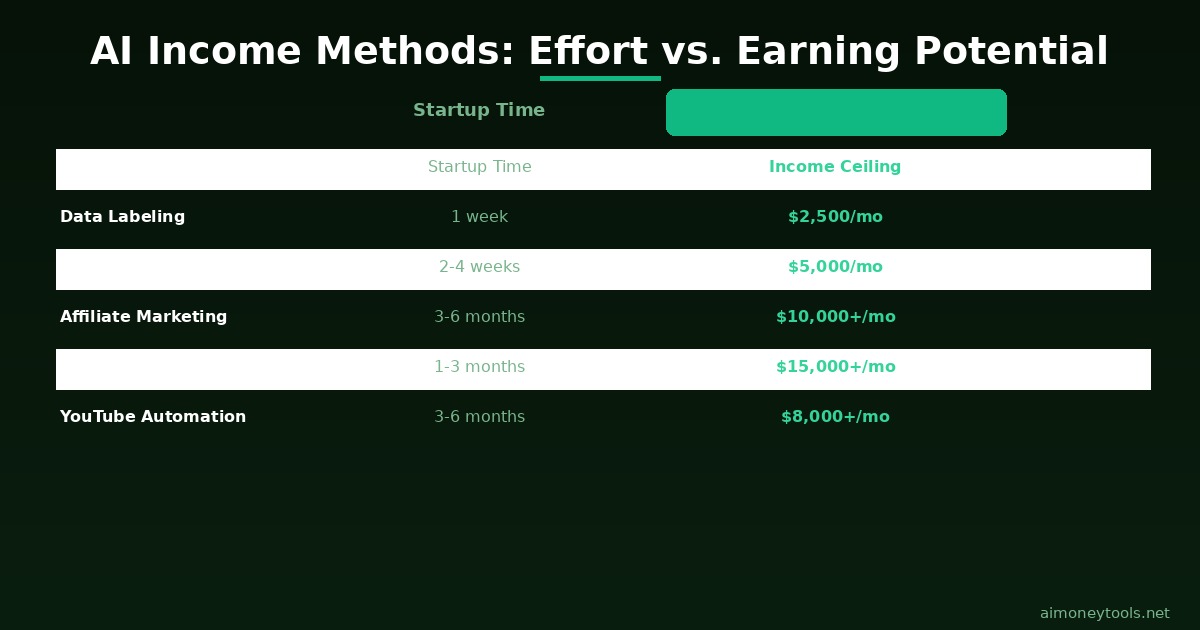
What is the fastest way to start making money with AI in 2026? Data labeling work (Outlier AI, Scale AI) is the fastest — most people can qualify and start within a week. Freelance AI writing via Upwork is close second. Both have low barriers and genuine demand.
Do I need to be technical to make money with AI? No. Most of the methods above require no coding knowledge. Freelance writing, affiliate marketing, digital products, and local business services are all accessible without any technical background.
How much can a beginner realistically make with AI in the first month? $100–$500 is a realistic target for most people in month one. Data labeling, small freelance writing jobs, or a first affiliate sale are achievable in 30 days. Consistent $1,000+ months typically take 2–4 months of focused effort.
What AI tools do I actually need? For most of the methods above: a ChatGPT Plus subscription ($20/month), a Claude subscription ($20/month), and one or two niche tools depending on your method (Murf for voice, CustomGPT for chatbots, Canva for design). Total: $40–$80/month.
Is AI freelancing saturated? Generic AI writing is competitive. Specialized AI writing (technical documentation, regulated industries, specific brand voices) is not. The more specific your niche, the less competition and the higher the rates.
Can I do this while working full-time? Yes. Most people start these methods on the side. Affiliate marketing, digital product sales, and running a niche blog are all async — they do not require you to be available during business hours. Freelancing and agency services require more scheduling but can be kept to 10–15 hours per week.
What is the highest-income potential method? AI automation agencies and AI-assisted app development have the highest income ceilings, but they require the most skill development upfront. Affiliate marketing combined with a niche blog has the best passive income potential over 12+ months.

Alex the Engineer
•Founder & AI ArchitectSenior software engineer turned AI Agency owner. I build massive, scalable AI workflows and share the exact blueprints, financial models, and code I use to generate automated revenue in 2026.
Related Articles
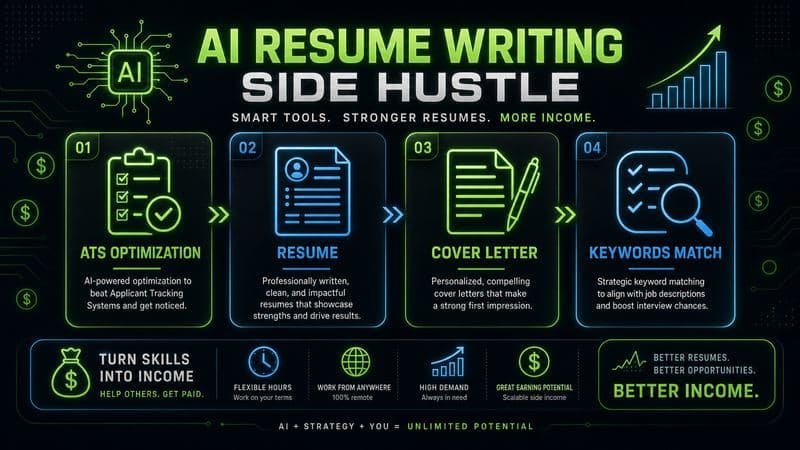
How to Start an AI-Assisted Resume Writing Side Hustle in 2026 (Beginner's Guide)
A step-by-step guide to using AI resume tools to offer a paid resume and cover letter writing service — what to charge, which tools to use, and how to find your first clients.
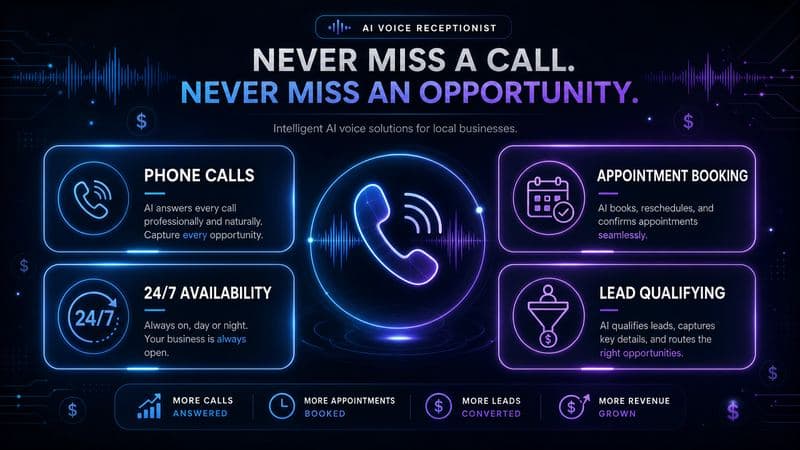
How to Build and Sell AI Voice Receptionists to Local Businesses in 2026
A beginner's guide to building AI voice agents that answer business phone calls — the tools to use, what to charge, and how to find your first client.
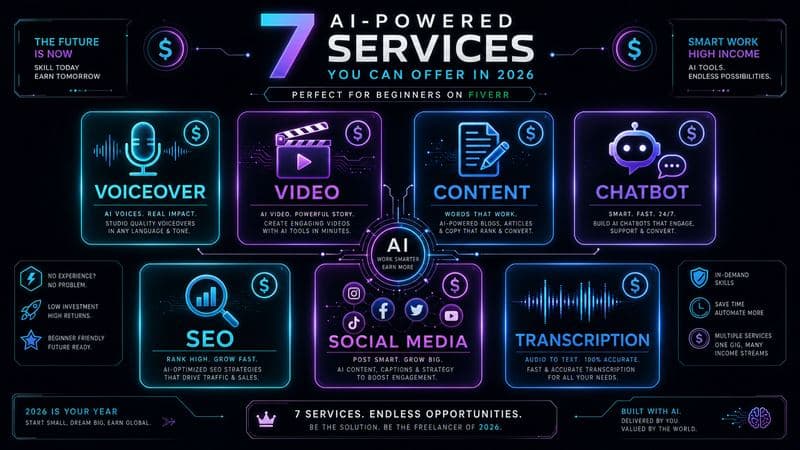
How to Make Money on Fiverr with AI Tools in 2026: 7 Gigs You Can Start This Week
Discover 7 real Fiverr gigs you can launch using free and low-cost AI tools in 2026 — no experience required. Real pricing data, step-by-step setup, and tools that actually work.