
ChatGPT OpenAI Guide: 2026 Strategy for Practical Success
Master ChatGPT OpenAI in 2026. Learn practical use cases, compare top AI tools, and follow a step-by-step roadmap to boost your productivity and income.
ChatGPT has moved beyond being a novelty to becoming a core utility for digital creators. To get real results in 2026, you need to move past basic chatting and start building specialized workflows. This guide explains how to use the OpenAI ecosystem to automate tasks and build sustainable side hustles.
Understanding the ChatGPT OpenAI Ecosystem in 2026
ChatGPT is a conversational interface built by OpenAI that allows users to interact with large language models (LLMs). By 2026, the platform has transitioned from a simple text box into a multimodal hub capable of processing voice, vision, and complex reasoning. The system works by predicting the most likely next sequence of information based on massive datasets, refined through human feedback to ensure safety and utility.
The current landscape is defined by "GPTs"—custom versions of the chatbot tailored for specific instructions. According to official OpenAI usage data, the platform serves over 200 million weekly active users, ranging from students to Fortune 500 developers. For a solopreneur, this means the barrier to entry for coding, graphic design, and data analysis has effectively vanished.

6 Practical Ways to Generate Value with AI
Using AI effectively requires shifting your perspective from "asking questions" to "delegating tasks." Here are the most effective applications for those looking to earn or save time in 2026.
1. Content Architecture and Drafting
You can use AI to build comprehensive content clusters rather than just single articles. By providing a target keyword, the tool can generate semantic maps, outlines, and first drafts. While the output requires a human "edit for soul," it reduces the time spent on a 1,500-word post from five hours to roughly forty-five minutes. For more on this, see our guide on how to make money using ChatGPT.
2. Rapid Data Synthesis
AI is exceptionally good at "reading" long documents. You can upload a 50-page industry PDF and ask for a bulleted list of actionable threats and opportunities. This turns hours of dense reading into five minutes of high-level review.
3. Technical Troubleshooting
For non-coders, AI acts as an interpreter. You can paste a broken piece of website code, and the model will typically identify the syntax error and provide the fix instantly. This eliminates the need for expensive hourly developers for minor site tweaks.
4. Automated Customer Correspondence
By creating a custom instructions profile, you can train the AI to draft email responses in your specific brand voice. This ensures consistency across client communications while saving you hours of repetitive typing every week.
5. Multi-Language Localization
Expanding into global markets is now feasible for small teams. The translation capabilities in 2026 are nuanced enough to handle cultural idioms, allowing you to localize marketing copy for a fraction of the cost of traditional agencies.
6. Creative Storyboarding
Before filming video content, use AI to generate scene descriptions and scripts. Tools like TryHolo.ai can then take these scripts to help create digital avatars or video assets, streamlining the entire production pipeline.
ChatGPT vs. CustomGPT: Choosing Your Infrastructure
The standard ChatGPT interface is great for general tasks, but businesses often require more control over their data and specific "knowledge bases."
| Feature | ChatGPT (Standard) | CustomGPT.ai |
|---|---|---|
| Data Source | General Training Data | Your Specific Files/Website |
| Interface | OpenAI Website/App | Embeddable on Your Site |
| Privacy | Shared for Training (Free) | Private/Enterprise Grade |
| Purpose | General Assistance | Specialized Customer Bot |
If you are building a tool for your own customers, CustomGPT.ai is often the better choice. It indexes your specific documents in under 60 seconds, ensuring the AI only answers based on your facts, not general internet hallucinations. This is a critical distinction for anyone running a professional agency or e-commerce store. You can learn more about these builders in our custom ChatGPT builder insights.
Essential Tools for an AI-Driven Workflow
No single tool does everything perfectly. To maximize your ROI, you should build a "stack" where different AI models handle what they do best.
- Writing & Logic: Use OpenAI's latest models for the "brain" of your operation.
- Voice & Audio: For high-quality text-to-speech, Murf.ai provides studio-quality voices that sound indistinguishable from humans, which is perfect for YouTube automation.
- Hosting Agents: If you are building complex AI agents that need to "live" somewhere, Ampere.sh offers specialized hosting for AI applications.
- Visuals: DALL-E 3 (integrated into ChatGPT) is the standard for quick blog images and social media graphics.

Pricing Breakdown: Free vs. Plus Plans
OpenAI maintains a tiered structure to balance accessibility with the high compute costs of advanced models.
The Free Tier
The free version provides access to the standard model. It is suitable for casual users who need help with basic writing, summaries, or general questions. However, during times of high global traffic, free users may face slower response times or temporary access limits to the newest models.
The Plus Subscription ($20/Month)
For $20 a month, the Plus plan offers priority access, even during peak hours. More importantly, it grants access to the "GPT Store" and advanced data analysis features. For anyone using AI as a "side hustle" tool, the time saved usually covers the subscription cost within the first few days of the month.
Avoiding the "AI Hallucination" Trap
A common mistake for beginners is trusting AI output blindly. LLMs are "probabilistic," meaning they choose the most likely next word, which can occasionally result in "hallucinations"—confidently stated falsehoods.
To mitigate this, always verify dates, legal citations, and mathematical calculations. Use the "Chain of Thought" prompting method: ask the AI to "think step-by-step" before providing the final answer. This forces the model to check its own logic, significantly increasing the accuracy of the output. Also, avoid sharing sensitive personal information or proprietary trade secrets unless you have confirmed your privacy settings are set to "Team" or "Enterprise" mode.
Frequently Asked Questions
What is the difference between OpenAI and ChatGPT?
OpenAI is the research organization and company that develops AI technologies. ChatGPT is the specific consumer-facing chatbot product they created using their GPT (Generative Pre-trained Transformer) models. Think of OpenAI as the car manufacturer and ChatGPT as the specific car model.
Is ChatGPT OpenAI free to use in 2026?
Yes, OpenAI offers a free version of ChatGPT that allows for basic text generation and conversation. However, the more advanced models (like GPT-5 or specialized reasoning models) and faster response times generally require a paid "Plus" subscription or API credits.
Can I use ChatGPT for commercial work?
Yes, OpenAI’s terms of service generally allow you to own the output generated by the models, meaning you can use the text and images for blogs, books, or client work. However, always check the latest usage policies regarding AI disclosure requirements in your specific industry.
How do I stop ChatGPT from making things up?
To reduce "hallucinations," give the AI clear context and source material to work from. Use prompts like "Only answer using the provided text" or "If you don't know the answer, say you don't know." Using tools like CustomGPT.ai also helps by restricting the AI to your specific data.
Do I need to learn coding to use the OpenAI API?
While the API requires some technical knowledge, many "no-code" tools like Zapier and Make.com allow you to connect OpenAI to your email or website without writing a single line of code. This makes AI automation accessible to non-technical business owners.
Get the Blueprint: Want to launch a profitable AI business from scratch? Grab The Ultimate AI Toolkit ($19) — a 200+ page framework featuring exact implementation steps for content automation, consulting, and AI agency building.

Alex the Engineer
•Founder & AI ArchitectSenior software engineer turned AI Agency owner. I build massive, scalable AI workflows and share the exact blueprints, financial models, and code I use to generate automated revenue in 2026.
Related Articles
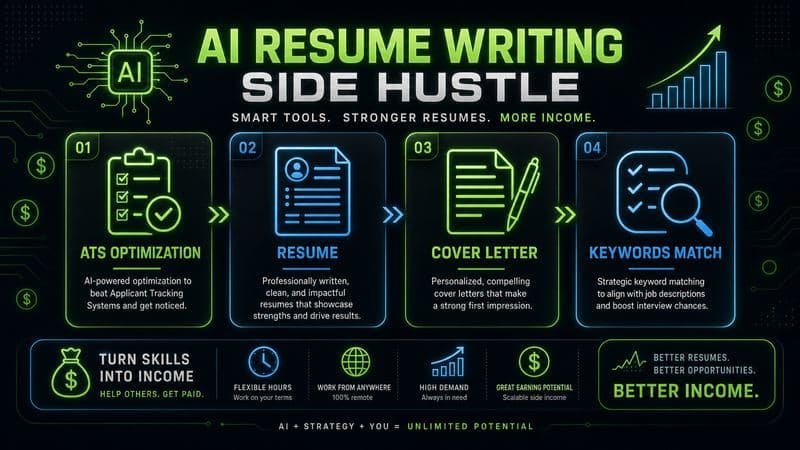
How to Start an AI-Assisted Resume Writing Side Hustle in 2026 (Beginner's Guide)
A step-by-step guide to using AI resume tools to offer a paid resume and cover letter writing service — what to charge, which tools to use, and how to find your first clients.
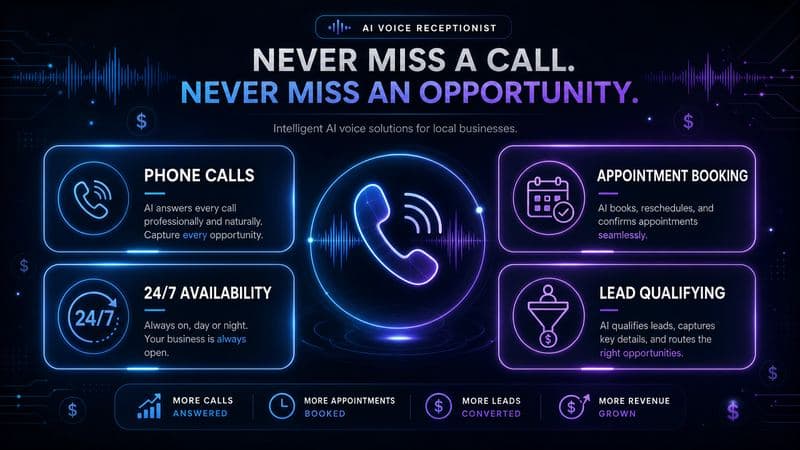
How to Build and Sell AI Voice Receptionists to Local Businesses in 2026
A beginner's guide to building AI voice agents that answer business phone calls — the tools to use, what to charge, and how to find your first client.
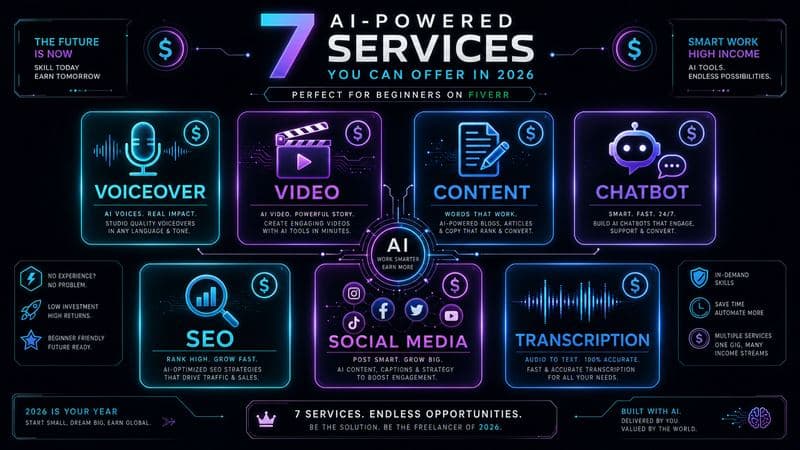
How to Make Money on Fiverr with AI Tools in 2026: 7 Gigs You Can Start This Week
Discover 7 real Fiverr gigs you can launch using free and low-cost AI tools in 2026 — no experience required. Real pricing data, step-by-step setup, and tools that actually work.