
Best AI Tools for Students in 2026: Free and Paid Options That Actually Help
The best AI tools for students in 2026 — free-first picks for studying, writing, research, and presentations. Includes what each tool is actually good at.

Searching "best AI tools for students" is up 5,000% this month. Students aren't just curious anymore — they're actively building workflows around AI, and the ones who do it right are finishing faster, researching better, and producing higher-quality work.
This guide covers the tools that are genuinely useful in 2026, with real information about what each one does well, what it costs, and when to use it.
The Short List
If you want the quick version before diving in:
| Tool | Best For | Free Tier |
|---|---|---|
| NotebookLM | Research synthesis, notes, study guides | Yes — full featured |
| Perplexity AI | Real-time research with citations | Yes — most features |
| ChatGPT | Writing, brainstorming, problem-solving | Yes — GPT-4o limited |
| Grammarly | Writing polish, grammar | Yes — basic |
| QuillBot | Paraphrasing, flow | Yes — limited |
| Notion AI | Notes and organization | Yes — within Notion free |
| Murf AI | AI voiceovers for presentations | Free trial |
1. NotebookLM — Best Free Research Tool for Students
Cost: Free
Google's NotebookLM is the most underused AI tool students have access to. You upload your sources — PDFs, articles, notes, slides — and it becomes a research assistant that only answers from those sources. No hallucination from the open internet. Just your material.
What it's good for:
- Building study guides from your class readings
- Asking questions about dense academic papers
- Creating FAQ summaries from lecture notes
- Generating practice questions before exams
The Audio Overview feature converts your notes into a conversational podcast — useful if you learn better by listening. You can also ask it to write a study guide, timeline, or briefing in seconds from your uploaded materials.
If you're doing research-heavy coursework — sciences, law, history, policy — NotebookLM is the first tool to set up. It's completely free.
2. Perplexity AI — Best AI Search Engine for Students
Cost: Free (Pro plan ~$20/month for higher limits)
Perplexity answers questions with citations. Unlike a general chatbot, it's built around real-time web search — so when you ask about a current topic, you get sources you can actually click, verify, and cite.
What students use it for:
- Starting a research paper (get an overview + 10 sources instantly)
- Understanding a concept you're stuck on (better than Google for multi-step explanations)
- Quickly checking facts before putting them in an essay
- Keeping up with current events for class discussion
The free tier covers most student needs. The paid tier adds access to deeper models and more searches per day, but the free version is sufficient for day-to-day use.
Note: Perplexity is research-support, not a substitute for your own writing. Using it to get a landscape of sources is legitimate. Submitting its output as your own work is not.
3. ChatGPT — Best All-Purpose AI for Writing and Studying
Cost: Free tier (GPT-4o, limited daily), $20/month for Plus
No surprise here — ChatGPT is the most versatile tool on the list. The free tier now includes access to GPT-4o with usage limits. For most students, those limits are enough for coursework support.
Where ChatGPT earns its spot:
- Brainstorming essay arguments and counterarguments
- Explaining a concept in plain language when textbooks fail
- Outlining a paper structure before you write
- Debugging code for computer science courses
- Practicing for presentations by simulating an audience's questions
The key is using it as a collaborator, not a ghostwriter. Having it argue against your thesis before you submit — and then incorporating what you learn — is genuinely useful. Using it to write the thesis for you is a trap.
4. Grammarly — Best Writing Polish Tool
Cost: Free (basic), $12–30/month for Premium
Grammarly integrates with your browser, Google Docs, Word, and most email platforms. The free version catches grammar, spelling, and basic clarity issues. The paid tier adds tone adjustments, full sentence rewrites, and citation assistance.
For academic writing, even the free tier makes a difference. It catches the errors that self-editing misses — especially useful after a late night of writing when your brain stops seeing your own mistakes.
Grammarly also has an AI writing feature built into the paid plan — useful for rephrasing awkward sentences without changing your meaning.
5. QuillBot — Best Paraphrasing Tool
Cost: Free (limited modes), ~$10/month for Premium
When you understand an idea but can't quite articulate it, QuillBot helps. It rephrases sentences or paragraphs while preserving meaning, with different modes: standard, formal, academic, creative.
Most useful for:
- Rewriting a sentence you've written three times and it still sounds off
- Converting informal notes into academic language
- Paraphrasing a dense quote to make it more readable in your writing
The free tier gives you access to two paraphrasing modes and a word limit. Premium removes limits and unlocks all modes. For occasional use, free is fine.
6. Notion AI — Best for Organizing Everything
Cost: Included in Notion free and paid plans
If you use Notion for notes, task management, or project planning — which most organized students do — Notion AI is already built in. It summarizes long notes, drafts meeting agendas, converts bullet points to paragraphs, and generates to-do lists from unstructured text.
For group projects, Notion AI is especially useful. Paste in a wall of scattered ideas and have it organize them into a structured doc in 10 seconds. Useful for:
- Organizing research from multiple sources
- Building study schedules with priority ordering
- Drafting outlines for group assignments
- Summarizing long meeting notes
7. Murf AI — Best for AI Voiceovers on Presentations
Cost: Free trial, paid plans from ~$23/month
Many students need to narrate video assignments, class presentations, or YouTube projects. Recording yourself works — but if you're self-conscious about your voice, don't have a quiet recording space, or just want something more polished, Murf AI generates natural-sounding voiceovers from typed text.
More than 120 voices, multiple languages, and adjustable pacing. You write the script, pick a voice, and export a finished audio track in minutes. Works well over slideshows, screencasts, and short video essays.
For students building a content side hustle — YouTube channels, tutorial videos, explainer content — Murf reduces the friction of production significantly. Try Murf here.
Bonus: Building a Side Hustle With These Tools
Students who combine these tools are doing more than passing classes — they're building income. A common pattern in 2026:
- Use Perplexity to research a topic
- Use ChatGPT to outline and draft
- Use Grammarly to polish
- Use Murf to add a voiceover for a YouTube video
- Publish and monetize
If you're building custom AI tools — like a study bot for your classmates, a tutoring assistant, or an AI flashcard generator — CustomGPT lets you create them on top of powerful models without writing code. Students have used it to build tools they later charge for.
For a full breakdown of how to turn AI skills into income, see 7 AI Side Hustle Ideas You Can Start This Weekend.
Frequently Asked Questions
Are AI tools allowed in school? Policies vary widely by institution and even by course. Most schools have moved from blanket bans to nuanced policies — some prohibit AI on exams, some allow it for research, some require disclosure. Check your syllabus. When in doubt, ask your professor. Using AI for brainstorming and editing is generally lower risk than submitting AI-generated text as your own work.
What's the best free AI tool for writing essays? ChatGPT (free tier) is the strongest general writing assistant. For grammar and polish, pair it with Grammarly. For research, add Perplexity. These three free tools together cover most of what a student needs without paying anything.
Is NotebookLM really free? Yes. Google's NotebookLM is free to use with a Google account. There are limits on the number of notebooks and sources, but for a student managing coursework for several classes, the free tier is more than enough.
What AI tool is best for studying? NotebookLM is the best purpose-built study tool — especially if you have existing notes and readings you want to make searchable and conversational. Perplexity is better for external research. For most students, the combination of NotebookLM + Perplexity covers the full research-to-study pipeline.
Can AI help with math and science courses? Yes — ChatGPT handles algebra through calculus reasonably well and can explain scientific concepts step by step. For highly specialized or upper-level math, Wolfram Alpha remains more reliable for computation. For conceptual understanding, AI tools are genuinely useful.
Is using AI cheating? Using AI as a tool for learning, research, and editing is generally not cheating — it's how professionals in every field work in 2026. Using AI to produce work you represent as your own original thinking, especially on assessments designed to evaluate your understanding, is a form of academic dishonesty. The line is whether AI is augmenting your work or replacing it.

Alex the Engineer
•Founder & AI ArchitectSenior software engineer turned AI Agency owner. I build massive, scalable AI workflows and share the exact blueprints, financial models, and code I use to generate automated revenue in 2026.
Related Articles
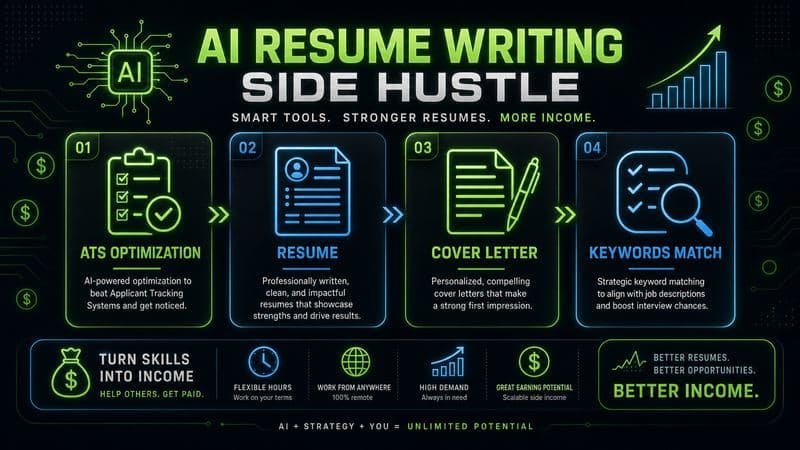
How to Start an AI-Assisted Resume Writing Side Hustle in 2026 (Beginner's Guide)
A step-by-step guide to using AI resume tools to offer a paid resume and cover letter writing service — what to charge, which tools to use, and how to find your first clients.
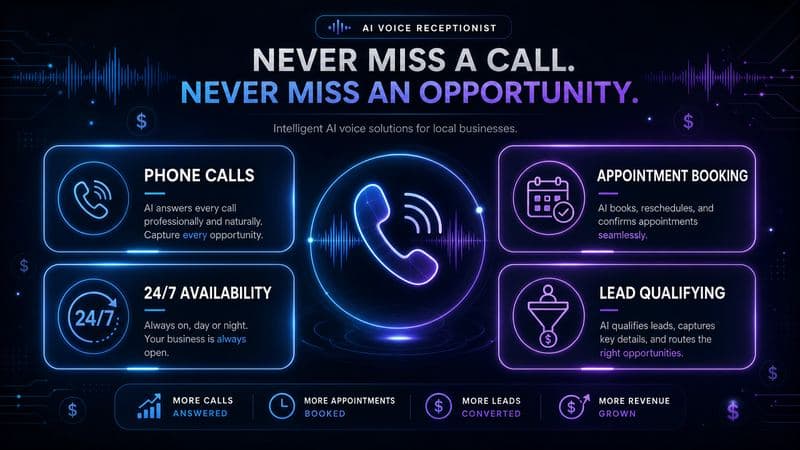
How to Build and Sell AI Voice Receptionists to Local Businesses in 2026
A beginner's guide to building AI voice agents that answer business phone calls — the tools to use, what to charge, and how to find your first client.
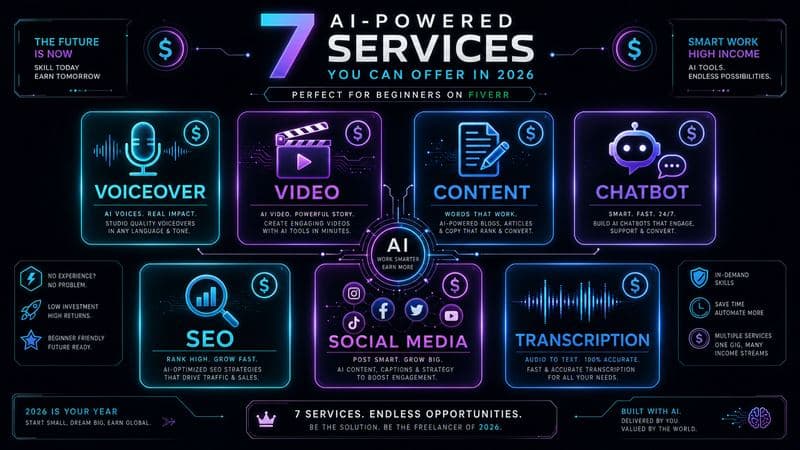
How to Make Money on Fiverr with AI Tools in 2026: 7 Gigs You Can Start This Week
Discover 7 real Fiverr gigs you can launch using free and low-cost AI tools in 2026 — no experience required. Real pricing data, step-by-step setup, and tools that actually work.