
What is Programmatic SEO (PSEO)? The 12-Pattern Playbook for 2026
Programmatic SEO explained: what PSEO is, how it works, and the 12 proven patterns powering sites like Zapier, Nomad List, and Tripadvisor.
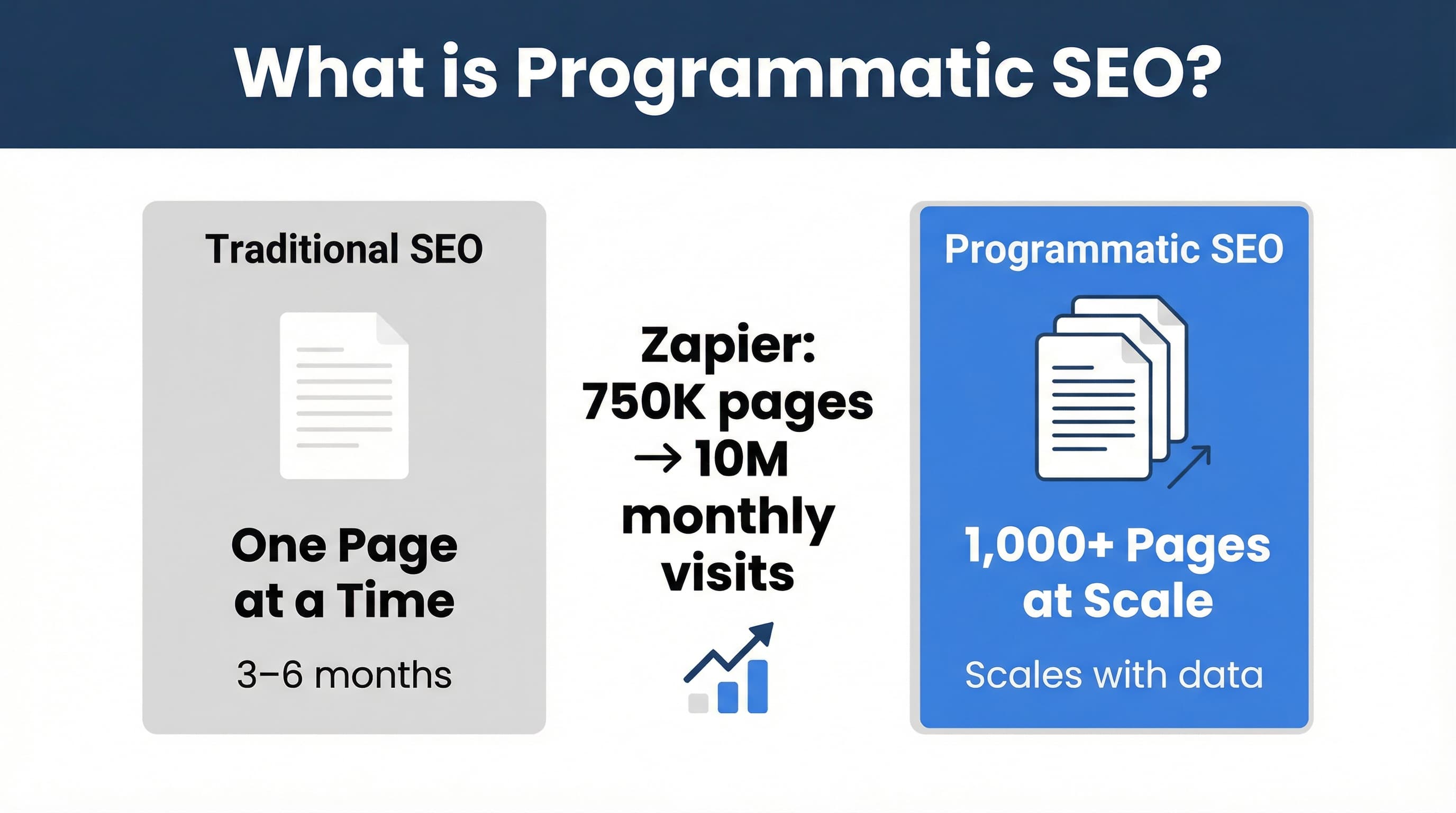
Most SEO guides tell you to write one great article and hope it ranks. Programmatic SEO flips that model: instead of 1 article, you publish 1,000 — each targeting a slightly different keyword, generated from a structured template and a data source.
That's how Zapier built a site with 750,000+ pages and 10M+ monthly organic visitors. It's how Nomad List, Tripadvisor, and Zillow turned structured data into organic traffic machines.
This guide explains exactly how PSEO works, when to use it, and the 12 patterns behind the best-performing programmatic sites in 2026.
What is Programmatic SEO?
Programmatic SEO (PSEO) is a strategy where you create a large number of web pages at scale using a repeatable template + a database of unique data points, rather than writing each page manually.
Each page targets a long-tail keyword variant. The template stays the same; the data (city name, tool name, use case, etc.) changes per page.
Three components make it work:
- Template — the reusable page structure (headline, content blocks, FAQ, CTA)
- Dataset — the unique variable (e.g., 500 cities, 200 tools, 100 job titles)
- Publishing pipeline — the system that generates and publishes pages at scale
PSEO is not spam or thin content. The best programmatic sites combine real data with genuinely useful structure that helps users make decisions or find answers.
PSEO vs. Traditional SEO
| Traditional SEO | Programmatic SEO | |
|---|---|---|
| Page creation | Manual, 1 article at a time | Automated, 100–10,000+ pages |
| Keyword targeting | Broad + head terms | Long-tail keyword clusters |
| Time to traffic | 3–6 months per article | Scales once template is built |
| Content uniqueness | High per page | Unique data; shared template |
| Best for | Authority, brand, editorial | High-volume long-tail patterns |
Neither approach is better — they're complementary. Strong sites run both.
The 12 Core PSEO Patterns
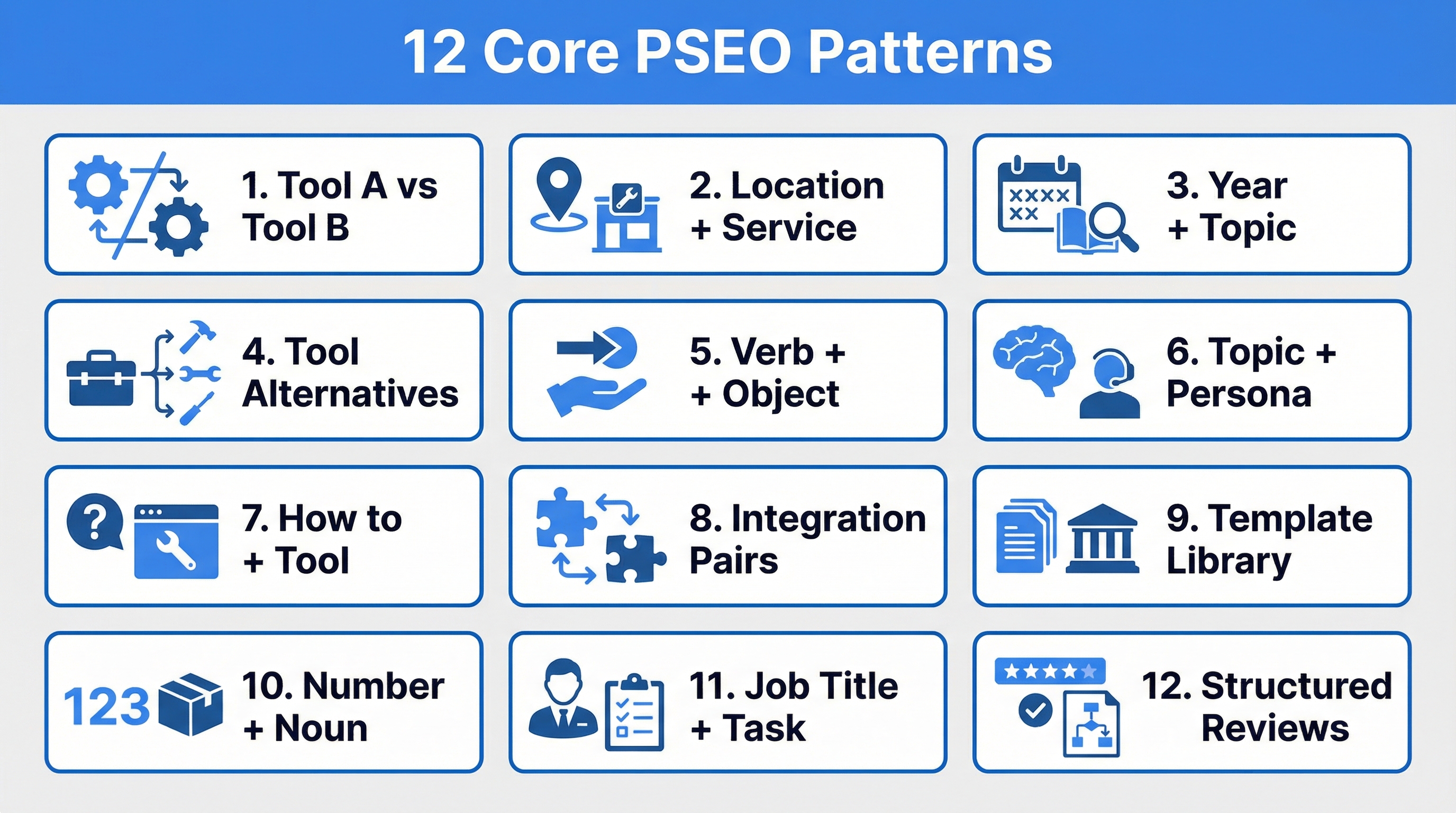
These are the proven template formulas behind the best-performing programmatic sites:
1. [Tool A] vs [Tool B] Example: "Notion vs Coda," "Murf vs ElevenLabs." Captures high commercial intent. Works for any category with 20+ competing tools.
2. [Location] + [Service] Example: "Best dentist in Austin," "AI agencies in Toronto." Local intent, easy to scale across cities/states.
3. [Year] + [Topic] Example: "Best project management tools 2026." Time-indexed queries renew traffic annually.
4. [Tool] + Alternatives Example: "Best Notion alternatives," "Zapier alternatives for small teams." Captures buyers who've already decided to switch.
5. [Verb] + [Object] Example: "Convert PDF to Word," "Compress image online." Task-driven intent with clear utility.
6. [Topic] + for [Persona] Example: "AI tools for teachers," "ChatGPT prompts for lawyers." Persona targeting at scale.
7. How to [Task] + [Tool] Example: "How to use n8n for email automation." Tutorial format, extremely high AEO value.
8. [Tool] + Integration Example: "Slack + Google Drive integration," "Zapier + Notion automation." Zapier's entire 750k-page site is built on this.
9. [Adjective] + [Noun] Templates Example: "Free invoice templates," "Cold email templates for SaaS." Template downloads + SEO traffic.
10. [Number] + [Noun] Example: "50 AI prompts for marketers," "100 side hustle ideas." List patterns with clear search intent.
11. [Job Title] + [Task] Example: "AI tools for content writers," "Automation ideas for solopreneurs." Role-based queries scale cleanly across industries.
12. [Topic] Reviews + Structured Scoring Example: "Murf.ai review 2026," scored against a repeatable rubric. Captures bottom-funnel buyers.
Each pattern works because it targets specific intent at scale — users who know exactly what they want, but haven't found the right page yet.
Real Examples of PSEO Done Right
Zapier — Built ~750,000 pages around the "[App A] + [App B] integration" pattern. Every page is unique because the data (what each pair of apps can do together) is real. Result: 10M+ monthly organic visits.
Nomad List — Each city has a programmatically generated page with real-time cost of living, internet speed, and lifestyle data. Pattern: "[City] for digital nomads." Entirely data-driven, genuinely useful.
Tripadvisor — "Best [Category] in [City]" at scale, across 50+ categories and 10,000+ cities. Template is shared; the aggregated review data makes each page unique.
Wise (formerly TransferWise) — "[Currency A] to [Currency B] exchange rate." 1,000+ pages, each with live data. Pattern 5 + data freshness = permanent search relevance.
The common thread: the data is real, and the pages answer a genuine question.
When Should You Use PSEO?
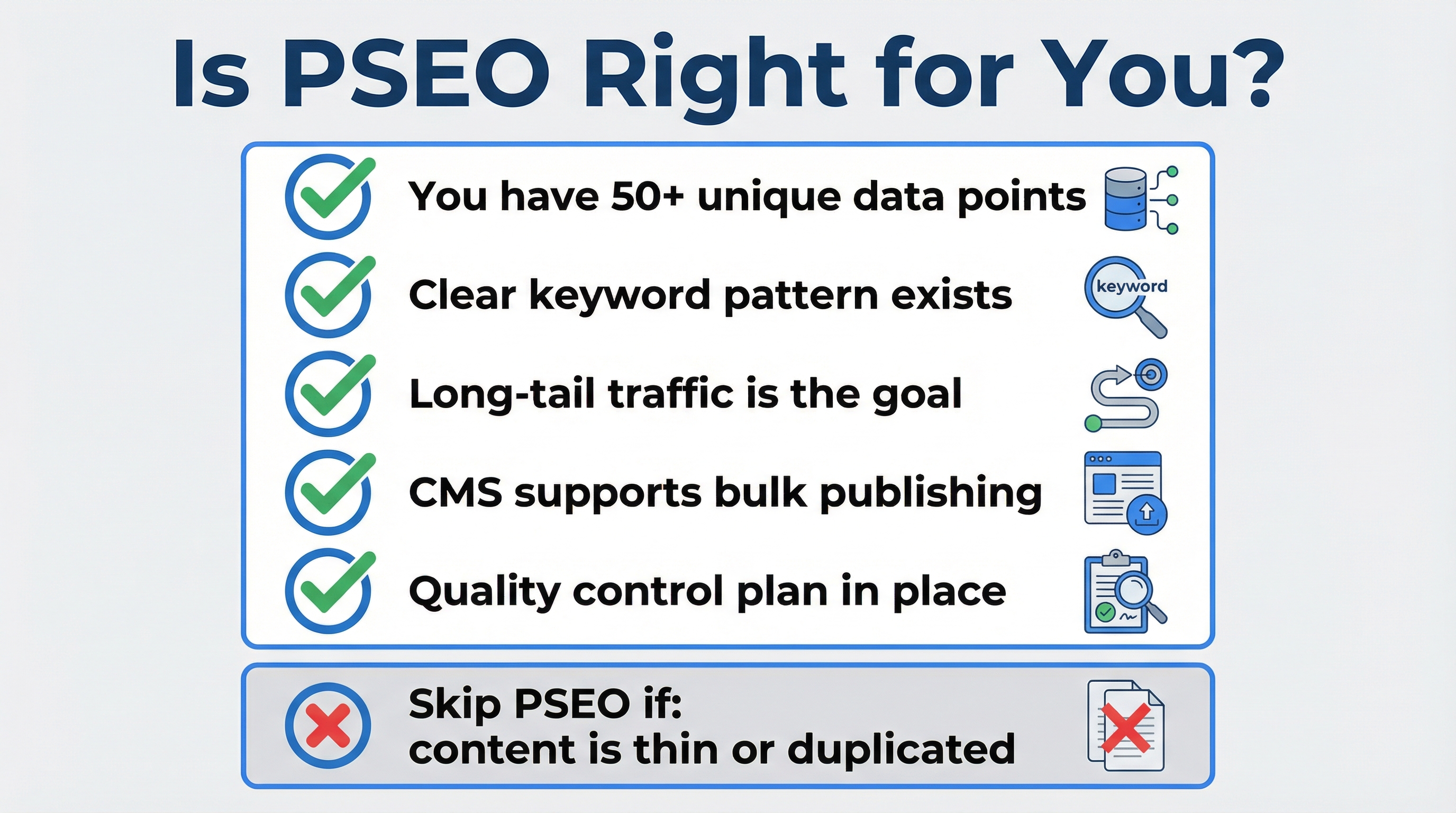
PSEO is the right move when:
- You have (or can build) a structured dataset with 50+ unique data points
- Your market has many keyword variants following a predictable pattern
- You're trying to capture long-tail traffic at scale, not brand authority
- You have the technical setup to generate and publish pages programmatically (or a CMS that supports it)
PSEO is the wrong move when:
- You're in a niche with <50 meaningful keyword variants
- You can't source unique, high-quality data per page
- Your goal is editorial authority (here, deep individual articles win)
- You're trying to game rankings with thin, repetitive content — Google's Helpful Content Update targets this directly
How to Start with PSEO in 2026
Step 1: Find your pattern. Look at your top 10 competitors. Are any of their high-traffic pages clearly templated? That's your signal.
Step 2: Map your dataset. What structured data do you have access to — or can easily compile? Tools, cities, industries, job titles, use cases. You need at least 50–100 rows to start.
Step 3: Build a single great template. Write one genuinely good page manually. This becomes your template. It should answer the user's intent clearly, include real data, and have a natural internal linking structure.
Step 4: Automate publishing. CMS options: Webflow CMS, Notion + Next.js, Contentful. You can also use AI-assisted tools like CustomGPT.ai to generate on-brand content variants at scale from your own dataset — useful if your data is text-heavy rather than structured numbers.
Step 5: Monitor quality at scale. Set up automated checks for thin content, duplicate meta descriptions, and cannibalization. PSEO fails when quality control breaks down.
Key Takeaways
- Programmatic SEO = template + dataset = hundreds or thousands of targeted pages
- The 12 patterns cover 90% of successful PSEO strategies in use today
- Best examples (Zapier, Nomad List, Wise) succeed because their data is real and unique per page
- PSEO complements editorial SEO — it doesn't replace it
- Start with one manually-written template, a dataset of 50+ rows, and a CMS that supports bulk publishing
- The Google Helpful Content Update has raised the bar: thin, data-less PSEO gets penalized; data-rich PSEO thrives
Frequently Asked Questions
Is programmatic SEO against Google's guidelines? No — programmatic SEO is fine as long as each page provides genuine value to users. Google targets thin, repetitive, low-quality pages, not scale itself. Sites like Zapier and Tripadvisor are programmatic and rank extremely well.
How many pages do you need for PSEO to work? There's no minimum, but most practitioners start to see significant traction around 200–500 pages targeting the same pattern. The more unique data per page, the lower the minimum threshold.
Do I need to be a developer to do programmatic SEO? Not anymore. No-code CMSes (Webflow, Framer, Notion-based setups) make it accessible. That said, a basic understanding of structured data and templates helps.
What's the difference between PSEO and spam? Intent and data quality. Spam = identical thin content with only one word changed. PSEO = structured pages where the data genuinely differs per page and helps users. Google is very good at telling the difference.
How long does it take to see results from PSEO? Template + dataset setup: 1–4 weeks. Initial indexing: 2–8 weeks after publishing. Ranking traction: 2–4 months depending on domain authority and competition.
Can AI tools help with programmatic SEO? Yes. AI is useful for generating content variations, writing meta descriptions at scale, and quality-checking output. The key is combining AI-generated structure with real, unique data per page — not using AI to produce identical-feeling pages.

Alex the Engineer
•Founder & AI ArchitectSenior software engineer turned AI Agency owner. I build massive, scalable AI workflows and share the exact blueprints, financial models, and code I use to generate automated revenue in 2026.
Related Articles
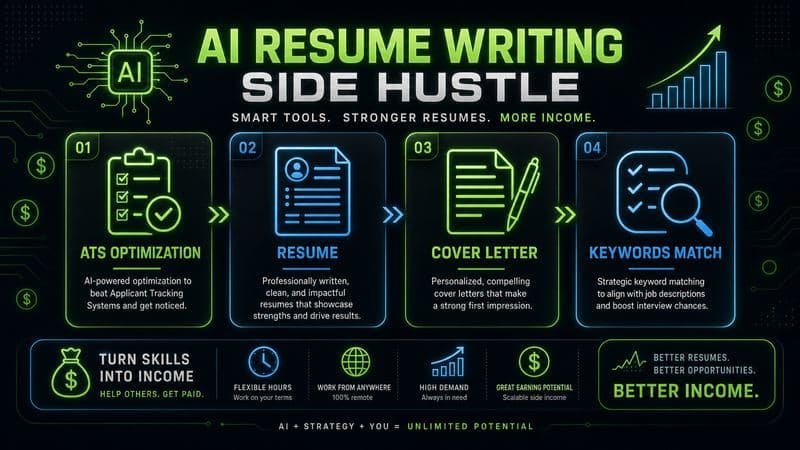
How to Start an AI-Assisted Resume Writing Side Hustle in 2026 (Beginner's Guide)
A step-by-step guide to using AI resume tools to offer a paid resume and cover letter writing service — what to charge, which tools to use, and how to find your first clients.
How to Build and Sell AI Voice Receptionists to Local Businesses in 2026
A beginner's guide to building AI voice agents that answer business phone calls — the tools to use, what to charge, and how to find your first client.
How to Make Money on Fiverr with AI Tools in 2026: 7 Gigs You Can Start This Week
Discover 7 real Fiverr gigs you can launch using free and low-cost AI tools in 2026 — no experience required. Real pricing data, step-by-step setup, and tools that actually work.