
How to Start an Online Store Using AI Tools in 2026
Step-by-step guide to launching and running a profitable online store using AI tools in 2026. Covers product research, store setup, content creation, customer service, and marketing — all with AI.
Starting an online store used to require a developer, a graphic designer, a copywriter, and a marketing team. In 2026, a single person with the right AI tools can handle all of it — and get a store live in a weekend.
This guide covers the full stack: finding a product, building your store, creating content, handling customer questions, and driving traffic. Each step includes the specific AI tool that makes it faster.
Why AI Changes the Online Store Equation
The two things that killed most first-time store attempts were content (product descriptions, photos, ads) and customer service (answering the same questions at midnight). AI solves both directly.
In 2026, you can realistically run a lean online store as a one-person operation without sacrificing quality — as long as you use the right tools at each step.
Step 1: Find a Product Worth Selling
Before touching any AI tool, you need a product people actually want.
What works well for solo AI-powered stores:
- Digital products (templates, ebooks, presets, courses) — no shipping, no inventory, pure margin
- Print-on-demand physical products (t-shirts, mugs, posters) — Printful/Printify handle fulfillment
- Handmade or niche physical goods where you control sourcing
Use AI to validate your idea:
Ask ChatGPT or Claude to analyze your niche:
"What are the top 10 customer complaints in [your niche] on Amazon and Reddit? What product would solve the most common one?"
Search Google Trends for your product category — look for keywords with rising search volume, not declining ones.
Check Reddit: find the 2–3 subreddits for your niche and look at what questions keep coming up. That's your product development research, free.
Step 2: Set Up Your Store (No Developer Needed)
Shopify remains the standard for most solo store owners in 2026. It's $39/month on the basic plan and handles payments, shipping integrations, and inventory out of the box.
For digital products only, Gumroad or Lemon Squeezy are simpler and cheaper — Gumroad is free until you make sales, then takes a percentage.
AI shortcut for setup: Shopify's built-in AI (Magic) can generate your store name, homepage copy, and initial product descriptions. Give it your niche, target customer, and product type and it'll draft the skeleton.
For your About page and brand voice, use Claude or ChatGPT:
"Write an About page for my online store that sells [product] to [audience]. Brand tone: friendly, knowledgeable, no corporate jargon. 150 words."
Domain name: Namecheap + ChatGPT. Ask it to generate 20 domain ideas for your niche, filter for .com availability, pick the cleanest one.
Step 3: Create Product Content with AI
Product listings live or die by images and copy. This is where most solo store owners lose the most time — AI cuts it dramatically.
Product Descriptions
Claude and ChatGPT both write strong product copy. The key is giving them enough context:
"Write a product description for [product name]. Target buyer: [describe them]. Key benefit: [main value prop]. Tone: direct, benefit-focused, no fluff. Include a 3-bullet feature summary. 120 words."
Write one good description manually for your best product. Use it as a template example when prompting AI for the rest.
Product Images and Marketing Visuals
For social media graphics, sale banners, and promotional images, Canva's AI tools are the fastest option in 2026. Generate background images, resize for every platform, and add your product mockup on top.
For product demo videos and voiceovers, Murf handles professional-quality voiceovers from a text script. Combine a simple screen recording or product video with a Murf voiceover and you have an ad-quality explainer in under an hour — no microphone, no studio, no recording talent required.
Murf has 120+ voices across 20+ languages, so if you're selling internationally, you can localize your product videos without hiring translators or voice actors.
Step 4: Handle Customer Questions Automatically
This is where the math changes completely for solo operators.
The average online store owner spends 1–3 hours per day answering customer questions that are mostly the same: shipping times, return policy, product compatibility, sizing. AI handles all of it.
CustomGPT lets you build a chatbot trained specifically on your store's data — your FAQ, product pages, return policy, shipping information. Customers get accurate answers instantly, 24/7, without you being involved.
The setup takes about 30 minutes:
- Export your product FAQ and policy pages
- Upload them to CustomGPT
- Embed the chatbot widget on your Shopify store
- Done — the bot handles the common questions, escalates the rest to your email
For a store doing 50–200 orders a month, this easily saves 10+ hours per week. At that point the $50–100/month CustomGPT cost pays for itself many times over.
Step 5: Drive Traffic Without Paid Ads
Paid ads are expensive and competitive. For a new store, organic traffic is more sustainable — and AI makes it cheaper to build.
SEO Product Descriptions
Every product page should target a specific search query. Use free tools like:
- Google's autocomplete — type your product category and see what people are actually searching
- Answer the Public — find question-based queries around your niche
- ChatGPT — "What are the top 10 search queries someone uses when looking to buy [product type]?"
Then write (or have AI write) your product descriptions around those queries naturally.
Pinterest and Instagram
Pinterest drives significant e-commerce traffic, especially for visual products, home goods, fashion, and crafts. Canva's AI generates Pinterest-sized graphics in minutes. Batch-create 20 pins for a new collection in an afternoon.
For Instagram, TryHolo can generate AI video content for product showcases and Reels — useful if you want video content without being on camera yourself.
Email List from Day One
Use Klaviyo's free tier (up to 250 contacts) with a simple lead magnet — a discount code, a free guide, a style quiz. Build your list from the first sale.
Have Claude draft your welcome sequence:
"Write a 3-email welcome sequence for new subscribers who signed up for a 10% discount at my online store selling [product]. Emails: (1) discount delivery + brand story, (2) bestsellers, (3) social proof. Conversational tone."
Step 6: Automate the Repetitive Stuff
Once your store is running, the goal is to spend your time only on decisions that require you — everything else should run on autopilot.
What to automate:
- Abandoned cart emails → Shopify handles this natively
- Review request emails → Klaviyo or Judge.me free tier
- Inventory reorder alerts → Shopify low-stock notifications
- Customer Q&A → CustomGPT chatbot (see Step 4)
- Social media posting → Buffer or Later for scheduling Canva-generated posts
The target: 1–2 hours per day running the store once it's established. AI-assisted content creation + automated customer service makes this realistic at 100–500 orders/month.
AI Tools for Online Stores: Quick Reference
| Task | Tool | Cost |
|---|---|---|
| Product descriptions | Claude / ChatGPT | Free–$20/mo |
| Marketing graphics | Canva AI | Free–$13/mo |
| Product video voiceovers | Murf | From $29/mo |
| Customer service bot | CustomGPT | From $49/mo |
| AI product videos | TryHolo | From $19/mo |
| Email marketing | Klaviyo | Free up to 250 contacts |
| Store platform | Shopify | From $39/mo |
| Print-on-demand | Printful | Free (per-order cost) |
Total minimum monthly cost to run an AI-assisted store: under $100 if you start lean with free tiers.
Common Mistakes to Avoid
Starting with paid ads before you have organic proof. Get your first 20–50 sales through organic channels (friends, Reddit, SEO, Instagram) first. If you can't get traction organically, paid ads won't fix the problem.
Too many products at launch. Start with 3–5 products max. Deep content and SEO on 5 products beats thin content across 50.
Skipping the FAQ/customer service setup. The first week of orders will generate a flood of questions. Have CustomGPT or at least a detailed FAQ page set up before you start marketing.
Not collecting email addresses from day one. Your email list is your only asset that can't be taken away by an algorithm change or platform ban.
How Long Does It Take?
Realistic timeline for a solo operator using AI tools:
- Day 1: Product decided, domain bought, Shopify store skeleton set up, first 5 product descriptions written (AI-assisted)
- Day 2–3: Images created (Canva), product pages complete, payment + shipping configured
- Day 4–5: CustomGPT chatbot trained, email sequence drafted, Instagram set up
- Weekend 1: Store live. First marketing push (friends, Reddit, free Pinterest posts)
- Month 1: First 10–50 sales, customer service patterns identified, automations tuned
Getting to $1,000/month from a standing start realistically takes 2–4 months for most niches. The AI tools cut the production time — they don't shortcut the market validation.
Linking It All Together
Related guides that pair with this article:
- Best AI Side Hustles That Actually Work in 2026
- How to Start an AI Automation Agency
- Best AI Tools to Start Earning Online
FAQ
Q: Can I really start an online store with no money? A: You can start extremely lean. Gumroad is free for digital products. Shopify offers a 3-day free trial. Canva's free tier covers basic graphics. CustomGPT has a free plan. The main cost is your domain (~$10/year) and eventually Shopify if you want a custom storefront.
Q: What's the best type of product for a first online store? A: Digital products — ebooks, templates, Notion dashboards, Lightroom presets, AI prompt packs — have zero production cost, zero shipping, and 100% margin after platform fees. They're the lowest-risk starting point for a solo operator.
Q: Do I need to know how to code? A: No. Shopify, Gumroad, and the AI tools in this guide are all no-code. The most technical thing you'll do is embed a CustomGPT chatbot widget, which is copy-paste.
Q: How much time per week does an AI-assisted store take to run? A: Once the automations are set up, 1–3 hours per week for a store doing under 100 orders/month is realistic. More for higher volume, but the per-order time decreases as your systems improve.
Q: Will AI-written product descriptions hurt my SEO? A: Not if the content is accurate, useful, and not duplicated from other sites. Google ranks content quality and relevance, not the method of creation. AI-generated descriptions that are vague or keyword-stuffed will hurt rankings — specific, helpful descriptions will rank.
Q: How do I handle returns? A: Write a clear return policy and add it to your CustomGPT training data so the bot can answer return questions instantly. For Shopify, the native return management handles the logistics. Most solo stores offer 30-day returns on physical goods; digital products are usually no-refund or limited refund.
Q: Is Murf good for product videos? A: Yes — Murf is specifically strong for professional narrated explainer videos and product demos. You write the script, pick a voice, and download a broadcast-quality voiceover in minutes. Much faster than hiring a voice actor for every product update.

Alex the Engineer
•Founder & AI ArchitectSenior software engineer turned AI Agency owner. I build massive, scalable AI workflows and share the exact blueprints, financial models, and code I use to generate automated revenue in 2026.
Related Articles
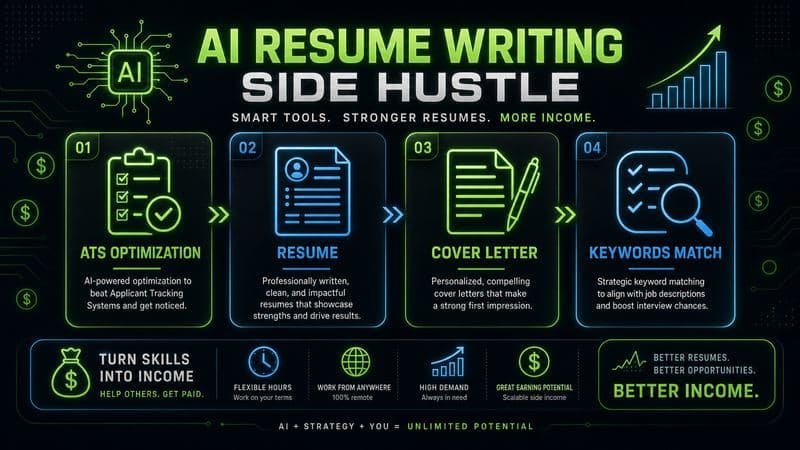
How to Start an AI-Assisted Resume Writing Side Hustle in 2026 (Beginner's Guide)
A step-by-step guide to using AI resume tools to offer a paid resume and cover letter writing service — what to charge, which tools to use, and how to find your first clients.
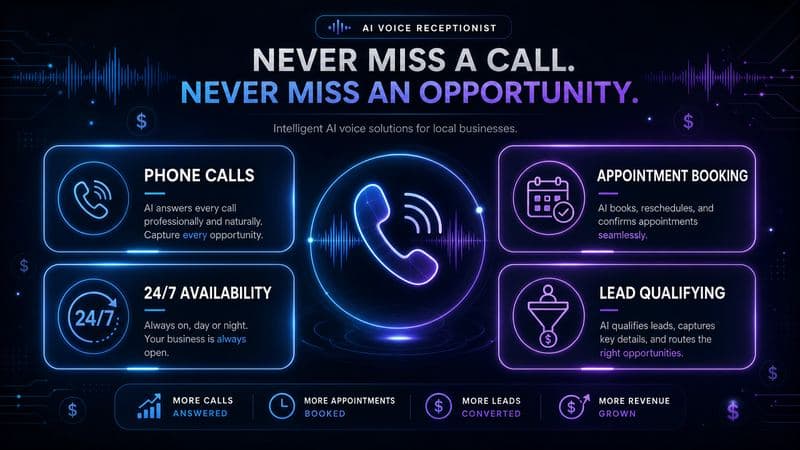
How to Build and Sell AI Voice Receptionists to Local Businesses in 2026
A beginner's guide to building AI voice agents that answer business phone calls — the tools to use, what to charge, and how to find your first client.
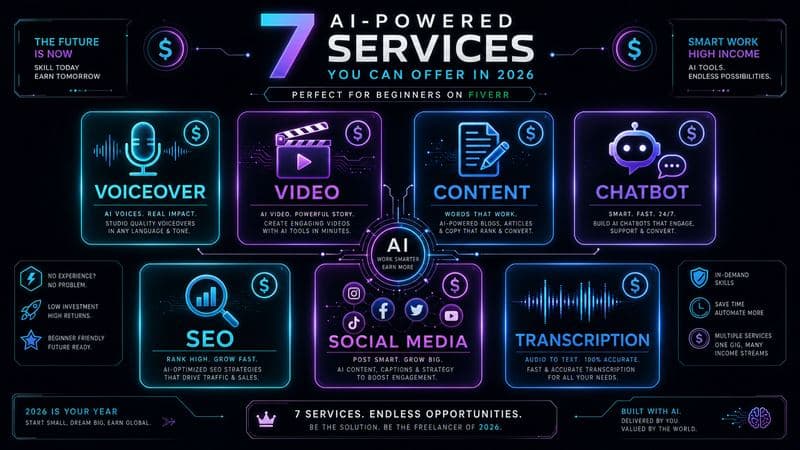
How to Make Money on Fiverr with AI Tools in 2026: 7 Gigs You Can Start This Week
Discover 7 real Fiverr gigs you can launch using free and low-cost AI tools in 2026 — no experience required. Real pricing data, step-by-step setup, and tools that actually work.