
When Will GPT-6 Be Released? Everything We Know (2026 Update)
Track the latest rumors, leaks, and expert predictions about OpenAI's GPT-6 release date. What features will it have? Will it cost more? Complete breakdown.

Everyone's asking: When is GPT-6 coming out?
OpenAI has been on a release cycle that's getting faster every year. GPT-4 landed in March 2023. GPT-5 landed in March 2024. GPT-5.4 (Cyber variant) dropped in April 2026 — just weeks ago.
So where is GPT-6?
This guide breaks down what we know (official statements), what's rumored (credible leaks), and what's pure speculation from industry analysts. By the end, you'll have a realistic timeline and understand what GPT-6 might actually be able to do.
GPT-6 Release Date: Official Timeline
OpenAI's official position: They haven't announced GPT-6 yet.
However, CEO Sam Altman has hinted at the company's cadence. In recent interviews (Mar 2026), he's described OpenAI as moving on "multiple fronts" and suggested that major model releases would continue at "roughly annual intervals, with iterative updates in between."
Translation: If GPT-5 was March 2024 and GPT-5.4-Cyber was April 2026, GPT-6 is probably arriving sometime in Q1–Q2 2027 — but you might see GPT-5.5 or GPT-5.6 before that.
Why the Faster Cadence?
Three reasons:
-
Scaling laws still hold. OpenAI's research shows that larger models with more compute still improve meaningfully on benchmark tasks. No plateau yet.
-
Competitive pressure from Anthropic (Claude), Google (Gemini), and Meta. Claude 4 Advanced is now feature-competitive with GPT-5, forcing OpenAI to innovate or lose users.
-
API revenue accelerating. Every new model version drives developer adoption and API spend. OpenAI now has ~6M developers on the platform. New features = new use cases = higher LTV.
GPT-6: Expected Features (Based on the Trend)
We can infer what GPT-6 might include by looking at the upgrade path from GPT-4 → GPT-5 → GPT-5.4-Cyber:
1. Better Reasoning on Complex Problems
GPT-5 breakthrough: Extended thinking (processing longer, step-by-step logic chains).
GPT-5.4-Cyber added: Domain-specific reasoning for cybersecurity (threat modeling, vulnerability analysis, pentesting strategies).
GPT-6 likely adds: Cross-domain reasoning. Writing code + security analysis + performance optimization in one inference pass. Real-time adaptation to your codebase.
2. Multimodal + Real-World Input
GPT-5: Image understanding + text.
GPT-5.4-Cyber: Added security-specific diagrams (network topology, attack trees).
GPT-6 likely: Full video understanding (watch a recorded meeting, extract action items). Real-time audio transcription + understanding. Maybe even API access to your own documents / databases (RAG at inference time).
3. Longer Context Window
GPT-5: 100K tokens (or 1M in "extended" mode).
GPT-5.5 / Spud rumors: 2M tokens (entire codebases, or books at a time).
GPT-6 possible: 5M–10M tokens. At that scale, you're essentially uploading entire projects or databases.
4. Agents That Run on Their Own (Constrained Autonomy)
GPT-5: You feed it a prompt, it outputs text/code. Done.
GPT-5.4-Cyber: Can analyze your infrastructure, suggest fixes, explain risks.
GPT-6 likely: Restricted agent mode. Runs simple tasks on your behalf (fetch data from your tool, analyze it, report back) but only with explicit permission grants. Think: "Write a SQL query, execute it on my DB, summarize the results" — all in one call.
This is not AGI. But it's closer to "collaborative AI" than pure chat.
5. Cheaper Pricing (Possibly)
Historical trend: GPT-4 API cost $0.03 per 1K tokens (input). GPT-5 costs $0.01. GPT-5.4-Cyber is cheaper still for enterprise contracts.
GPT-6 likely: Smaller, more efficient models for common tasks. A "GPT-6 Lite" for simple tasks (summarization, classification) at 1/10 the cost.
Will GPT-6 Be Available on ChatGPT?
Probably yes, but with restrictions.
Current model: ChatGPT Plus subscribers get access to the latest model first. Enterprise customers get more capacity and earlier access.
For GPT-6: Expect a 1–3 month exclusive window for ChatGPT Plus (US$20/month), then later rollout to web free tier with rate limits.
GPT-6 Price: Will It Cost More?
Unlikely.
OpenAI's pricing for API customers has decreased with each release, despite models getting more capable. The reason: scale. Training a model costs billions, but once trained, inference gets cheaper as OpenAI optimizes the serving infrastructure.
Realistic scenario:
- Enterprise customers: GPT-6 costs maybe 10–20% more for flagship tier, but 50% cheaper for "lite" versions
- ChatGPT Plus: Stays $20/month (they might bundle it with other features like advanced voice)
- API developers: Per-token pricing either flat or slightly down
When to Expect GPT-5.5 or GPT-5.6
Before GPT-6, you'll likely see:
-
GPT-5.5 (Q3–Q4 2026): Iterative improvements to GPT-5. Better vision. Cheaper. Maybe 8K → 16K context. No major architecture change.
-
Spud (internal codename, maybe released as GPT-5.4-Advanced) (Q1 2027): Extended reasoning for enterprise code and research workloads. This was already hinted as in-flight (Apr 2026).
-
GPT-6 (Q2–Q3 2027): Major architecture overhaul. The truly new model.
Should You Wait for GPT-6?
Probably not.
If you're building with GPT-5 today, you'll benefit from GPT-6 instantly when it ships. OpenAI APIs are backwards-compatible — your code points to gpt-6 instead of gpt-5 and it just works, with no rewrite.
However, if you're planning a long-term project:
- Starting now? Use GPT-5. It's proven, fast, and well-documented.
- Planning for 12+ months? Design for flexibility (abstractions around the model name), so swapping to GPT-6 in 2027 is trivial.
GPT-6 Benchmarks: What We Can Guess
Current leaderboards:
- Coding: GPT-5.4-Cyber at 65% on Codeforces (Div 1) ← best in class
- Reasoning: Claude 4 Advanced at ~75% on AIME (high school math)
- Multimodal: GPT-5 at 89% on MMLU
GPT-6 targets (extrapolated):
- Coding: 75%+ on Codeforces Div 1 (near professional engineer level)
- Reasoning: 85%+ on AIME (better than Claude 4 Advanced)
- Multimodal: 95%+ on MMLU + video understanding benchmarks
These are educated guesses. OpenAI doesn't pre-announce benchmarks.
FAQ
Will GPT-6 replace Claude and Gemini? No. Claude has a loyal enterprise base and is genuinely good at reasoning. Gemini is integrated into Google Workspace. GPT-6 will be best-in-class on some tasks, but not all. Competition is healthy.
Is GPT-6 coming to ChatGPT or just API? Both. ChatGPT gets it first (typically 1–3 months early), then API, then web free tier.
What's the difference between GPT-5.5 and GPT-6? GPT-5.5 = iterative improvement to GPT-5. Same architecture, better weights, more training data. GPT-6 = new architecture. Maybe different approach to reasoning, scaling, or learning.
Will GPT-6 be open source? Extremely unlikely. OpenAI's business model is closed-source, proprietary models. They release research papers, but not model weights.
Is it worth upgrading from GPT-4? If you're still on GPT-4, yes. GPT-5 is ~2–3x more capable for reasoning, coding, and long-form writing. GPT-5.4 is even better for specialized tasks.
Should I invest in other AI companies before GPT-6 ships? That's a personal decision. But note: GPT-6 will be strong. If you're betting on AI, diversify. Claude is solid. Anthropic is well-funded. But OpenAI's infrastructure + scale + brand moat is real.
Bottom Line
GPT-6 is probably 12–18 months away (Q2–Q3 2027). Before that, expect GPT-5.5 or a Spud variant. Benchmarks will likely improve on reasoning, multimodal, and agent tasks. Pricing will probably stay flat or decrease.
If you're using GPT-5 today, you're on the right path. The next model will be compatible with your existing code. Just design for flexibility.
Watch this space. We'll update this article as OpenAI makes official announcements.

Alex the Engineer
•Founder & AI ArchitectSenior software engineer turned AI Agency owner. I build massive, scalable AI workflows and share the exact blueprints, financial models, and code I use to generate automated revenue in 2026.
Related Articles
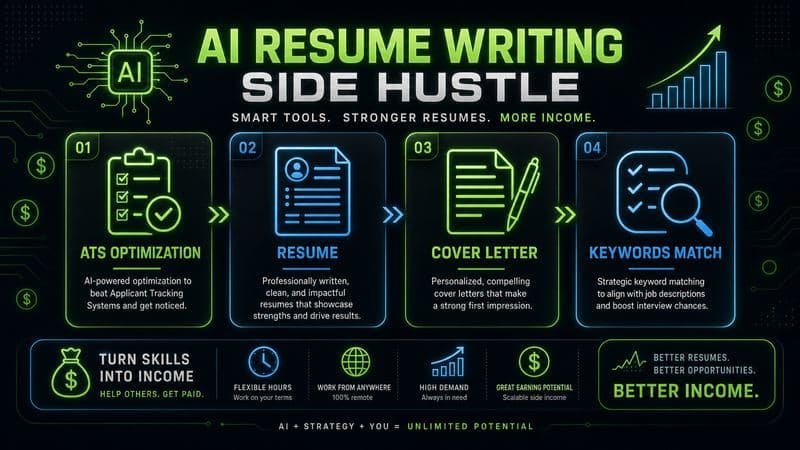
How to Start an AI-Assisted Resume Writing Side Hustle in 2026 (Beginner's Guide)
A step-by-step guide to using AI resume tools to offer a paid resume and cover letter writing service — what to charge, which tools to use, and how to find your first clients.
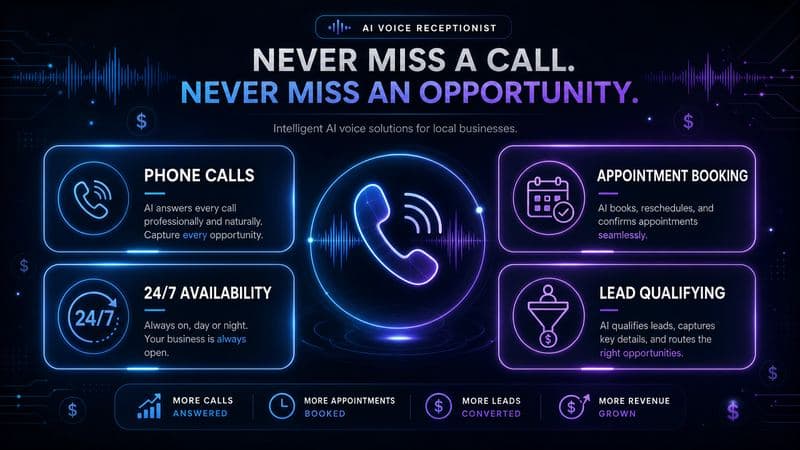
How to Build and Sell AI Voice Receptionists to Local Businesses in 2026
A beginner's guide to building AI voice agents that answer business phone calls — the tools to use, what to charge, and how to find your first client.
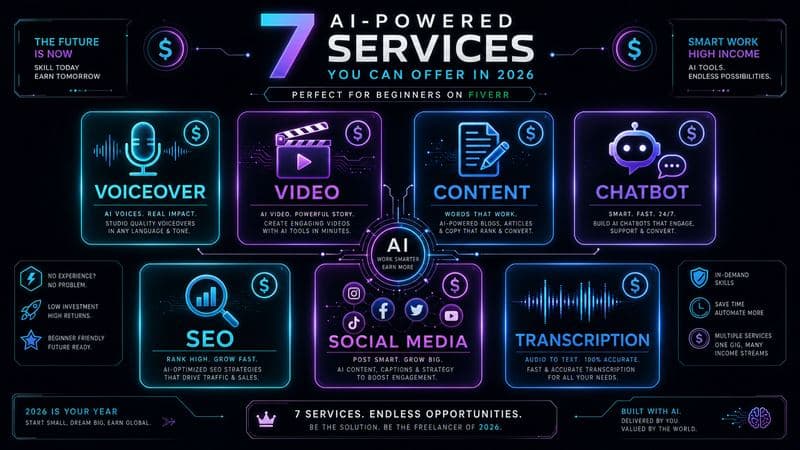
How to Make Money on Fiverr with AI Tools in 2026: 7 Gigs You Can Start This Week
Discover 7 real Fiverr gigs you can launch using free and low-cost AI tools in 2026 — no experience required. Real pricing data, step-by-step setup, and tools that actually work.