
Do You Need a GPU for AI in 2026? (Honest Beginner's Guide)
Wondering if you need to buy an expensive GPU to run AI locally in 2026? Here's the honest answer — and the free cloud alternative most beginners miss.
The most common question people ask before getting into local AI is: Do I actually need to buy a GPU?
It is a fair question. A decent AI-capable GPU costs anywhere from $400 (used RTX 3060) to over $2,000 (RTX 5090). A community member on Hacker News recently posted a breakdown of his $48,000 GPU server setup — and the comments section lit up with people asking whether any of it made sense for normal use cases.
The short answer: you do not need to buy a GPU to start using AI locally in 2026. But if you want to run the best models at full speed, a GPU helps a lot. This guide walks you through exactly what you need, what you can skip, and the cheaper alternatives most beginners overlook.
What Does a GPU Actually Do for AI?
Most AI models — image generators like Stable Diffusion and FLUX, language models like Gemma 4 and Llama 3.3, and coding assistants like Qwen 2.5 Coder — are optimized to run on GPU hardware. A GPU has thousands of small cores designed for the parallel math operations that neural networks require.
Your CPU can run AI models too, but it is much slower. On a modern CPU, generating a single image at 512x512 might take 3–10 minutes. On an RTX 4070, the same image takes 2–8 seconds. For language models, a CPU might generate 2–4 tokens per second — slow enough that reading the output feels like watching paint dry. A GPU pushes that to 30–80 tokens per second, which feels instant.
So: GPU = faster. But faster does not always mean necessary.
The Three Realistic Scenarios
Scenario 1: You Have an Apple Silicon Mac
If you have a MacBook or Mac Mini with an M1, M2, M3, or M4 chip, you are in a surprisingly good position. Apple Silicon uses unified memory, which means the CPU and GPU share the same RAM pool. A MacBook M2 with 16GB RAM can run Gemma 4's 9B model at a usable 15–25 tokens per second using Ollama.
A user on Hacker News recently published a detailed write-up about indexing an entire year of home video locally on a 2021 MacBook Pro using Gemma 4 31B with 50GB swap — not fast, but functional enough to complete the job overnight.
For most beginners on a Mac, you already have everything you need. Install Ollama, pull a model (ollama run gemma4:9b or ollama run llama3.3), and you have a local ChatGPT-equivalent running for free.
Scenario 2: You Have a Windows or Linux PC With No Dedicated GPU (or a Weak One)
This is where the honest answer gets uncomfortable. Running AI models on CPU alone is possible, but it tests your patience. A Llama 3.3 8B model on a modern Intel i7 or AMD Ryzen 9 CPU runs at roughly 3–6 tokens per second. That works for occasional use — generating a report, summarizing a document, answering a question — but it becomes frustrating for anything interactive.
For image generation without a GPU, you are essentially out of luck. FLUX.1-schnell would take 20–40 minutes per image on a CPU. Not practical.
In this scenario, you have three real options:
- Use a cloud AI service (ChatGPT, Claude, Gemini — all free tiers exist)
- Use a cloud GPU (pay by the hour, explained below)
- Buy a GPU if local AI becomes a regular part of your workflow
Scenario 3: You Have an NVIDIA GPU Already
Any NVIDIA GPU from the GTX 1060 (2016) onward can run some form of AI locally. The meaningful threshold is:
- 4GB VRAM: Small language models only (Qwen 1.5 0.5B–1.8B, Phi-3 Mini). No image generation.
- 6GB VRAM: Stable Diffusion XL (slow), LLMs up to 3B at full precision, LLMs up to 7B quantized (Q4).
- 8GB VRAM: SD XL at good speed, LLMs up to 8B at Q4. Functional for most beginner workflows.
- 12GB VRAM: The sweet spot. SDXL fast, FLUX quantized, LLMs up to 13B. Covers 90% of what beginners want.
- 16GB+ VRAM: Full-precision large models, FLUX.1-dev, multi-model pipelines.
If you have a 6GB or better GPU sitting in your current machine, you likely do not need to buy anything.
The Case Against Buying a GPU Right Now
Before spending $500–$2,000 on a GPU, consider these points:
Cloud AI free tiers cover most beginner needs. ChatGPT, Claude, and Gemini all have free tiers that are genuinely useful for writing, coding help, analysis, and research. For most people who are "interested in AI" but not yet building AI workflows, these cover the practical use cases without any hardware investment.
GPU prices are still high in 2026. The RTX 4070 (12GB, the current beginner sweet spot for local AI) costs around $700–$900 new. Used RTX 3060s (12GB) go for $280–$350. These are not trivial purchases.
AI hardware advances quickly. Whatever GPU you buy today will feel underpowered in 18–24 months for the models that will exist then. The RTX 3060 was the gold standard for local AI in 2023; now it struggles with FLUX and the larger LLMs.
Cloud GPU is often cheaper for irregular use. If you want to run heavy AI workloads a few times a week rather than daily, you will spend less on on-demand cloud GPU time than you would on a new card.
The Cloud GPU Alternative: Pay When You Need It
If you want the full local AI experience — ComfyUI, FLUX, custom models — without buying hardware, cloud GPU instances give you access to A100 and H100 cards by the hour.
Ampere is one of the cleanest options for this workflow. You spin up a Linux instance with an NVIDIA A100 or H100, SSH in, install ComfyUI or Ollama, run your session, and shut it down when finished. You pay only for the time the GPU is actually running — rates start around $0.30–$0.80/hour depending on the card.
For someone who wants to experiment with FLUX or run a large language model but does not want to commit to a GPU purchase, this approach makes the economics simple: spend $5–$15 on a Saturday afternoon session, generate what you need, and pay nothing when you are not using it.
What to Buy If You Decide a GPU Is Right for You
If you run local AI regularly (daily or near-daily) and cloud costs would exceed a one-time hardware purchase within 6–12 months, buying a GPU makes sense. Here is the simplified buying guide for 2026:
Best value under $350 (used): RTX 3060 12GB
- 12GB VRAM covers SDXL and most 7B-13B LLMs quantized
- CUDA 8.6 support — works with all current tools
- Widely available used at $280–$350
- Use this if you primarily run language models and want stable image generation
Best for most beginners (new): RTX 4060 Ti 16GB (~$500)
- 16GB VRAM is the new comfortable threshold for LLMs and FLUX
- CUDA 8.9, Ada Lovelace architecture — faster per watt than RTX 3000 series
- Runs FLUX.1-dev and 13B models without quantization compromise
- Best balance of price and capability for 2026 workflows
Best for power users: RTX 4080 Super 16GB (~$900–$1,100)
- Fastest card available under $1,500 for local AI use
- Can run 32B parameter models at usable speeds
- FLUX.1-dev at full precision, stable
- Only consider this if AI is a meaningful part of your daily work or business
Skip: RTX 4090 and above for most beginners — the $1,500–$2,000+ price premium is not justified unless you are running production AI pipelines commercially. The $48K GPU server story that went viral this week makes this point bluntly.
The Quick Answer for Each Situation
| Your situation | Recommendation |
|---|---|
| Apple Silicon Mac (M1–M4, 16GB+) | You are set — install Ollama and start today |
| Windows/Mac with no GPU, occasional use | Use free tiers (ChatGPT/Claude/Gemini) |
| Windows with no GPU, want local AI regularly | Start with Ampere cloud GPU to validate interest |
| Old NVIDIA GPU (6–8GB VRAM) | Run it — covers most beginner workflows |
| New to AI, considering a GPU purchase | Buy RTX 3060 12GB used, or RTX 4060 Ti 16GB new |
| Daily local AI work, want best performance | RTX 4080 Super 16GB |
Getting Started Without Buying Anything
If you want to test local AI before committing to any hardware or cloud spend:
-
On a Mac (M-series): Install Ollama →
ollama run gemma4:9b→ openhttp://localhost:11434in your browser. Done. -
On Windows with NVIDIA GPU: Install LM Studio — it auto-detects your GPU and downloads models with a GUI. No terminal required.
-
On any machine (cloud): Sign up for Ampere, spin up a GPU instance (10 minutes), follow our ComfyUI installation guide to set up the full image generation stack.
For getting comfortable with the terminal (required if you go the manual route): our terminal setup guide for beginners covers everything from scratch. For understanding VRAM limits and how to pick the right model size for your hardware: how to check your VRAM for AI is the fastest reference.
FAQ
Q: Can I run ChatGPT locally for free? A: You cannot run ChatGPT itself locally — it is a proprietary model owned by OpenAI. But you can run open models that match or exceed GPT-3.5 quality for free: Llama 3.3, Gemma 4, and Qwen 2.5 all run locally via Ollama. For a full local ChatGPT-style interface, Open WebUI adds a chat UI on top of any Ollama model.
Q: Does my integrated GPU (Intel UHD, AMD Radeon built into CPU) work for AI? A: Integrated graphics share system RAM and generally have less than 2GB dedicated to GPU tasks. They are not useful for image generation and very slow for language models. You would get better results from CPU inference than trying to use integrated graphics for AI workloads.
Q: Is 8GB RAM enough, or do I need more system RAM? A: For language models in the 7B range running on GPU, 16GB system RAM is comfortable and 8GB is functional. For image generation with ComfyUI, 16GB system RAM is the minimum for a stable experience. If you are running large models that exceed GPU VRAM and overflow to RAM, 32GB starts to matter.
Q: How much does it actually cost to run AI in the cloud for a month? A: If you use Ampere at $0.50/hour for 2 hours per day, that is roughly $30/month. For comparison, a new RTX 4060 Ti 16GB is around $500 — so the break-even is about 16 months of daily use. Irregular users (a few sessions per week) almost always come out ahead with cloud.
Q: My PC has an older AMD GPU. Can I use it for AI? A: AMD support for AI tools has improved significantly with ROCm on Linux. On Windows, the DirectML backend works for ComfyUI and some Ollama configurations. It is less reliable than NVIDIA CUDA and some community tools do not support it. If local AI becomes a serious interest and you have an AMD GPU, Linux + ROCm gives you the best compatibility.
The Bottom Line
You do not need to spend $500–$2,000 on a GPU before exploring local AI. Start with what you have — a Mac, a cloud free tier, or even CPU inference — and upgrade once you understand what you actually want to run.
If local AI becomes a regular part of your workflow, an RTX 3060 12GB used ($300) or RTX 4060 Ti 16GB new ($500) will handle 90% of what beginners need in 2026. Skip the $48,000 GPU server. It makes for a great blog post, but it is not what you need.

Alex the Engineer
•Founder & AI ArchitectSenior software engineer turned AI Agency owner. I build massive, scalable AI workflows and share the exact blueprints, financial models, and code I use to generate automated revenue in 2026.
Related Articles
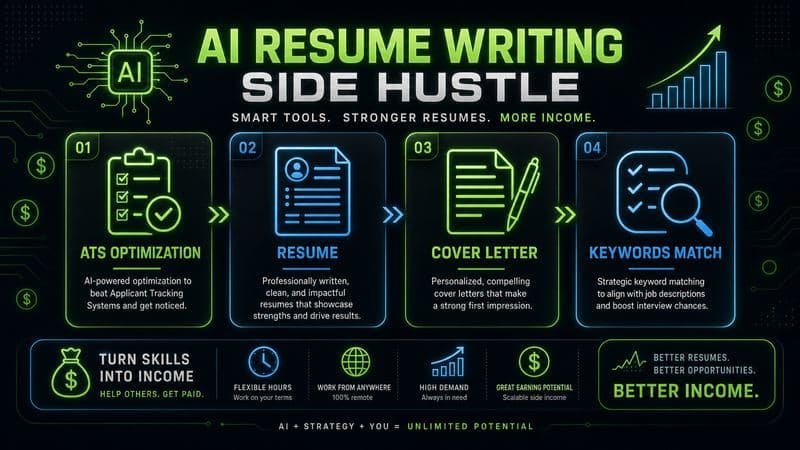
How to Start an AI-Assisted Resume Writing Side Hustle in 2026 (Beginner's Guide)
A step-by-step guide to using AI resume tools to offer a paid resume and cover letter writing service — what to charge, which tools to use, and how to find your first clients.
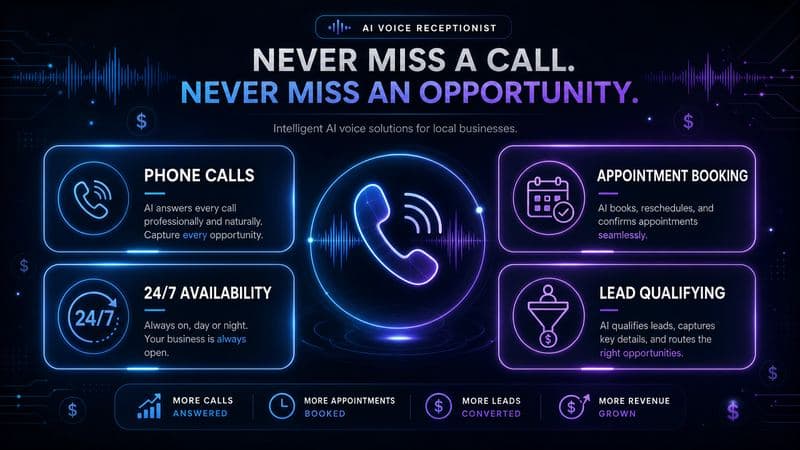
How to Build and Sell AI Voice Receptionists to Local Businesses in 2026
A beginner's guide to building AI voice agents that answer business phone calls — the tools to use, what to charge, and how to find your first client.

How to Make Money on Fiverr with AI Tools in 2026: 7 Gigs You Can Start This Week
Discover 7 real Fiverr gigs you can launch using free and low-cost AI tools in 2026 — no experience required. Real pricing data, step-by-step setup, and tools that actually work.