
How to Use AI for Social Media Marketing in 2026 (Beginner's Guide)
Learn how beginners can use AI tools in 2026 to automate captions, graphics, and scheduling. Scale your social media presence without a marketing team.
Social media marketing used to take hours every day. Writing captions, designing graphics, finding hashtags, scheduling posts, responding to comments — it all adds up fast. If you have a business, side hustle, or brand you're trying to grow, that time adds up to real money.
AI has changed the math. The tools available in 2026 can handle the repetitive parts of social media marketing — draft your captions in seconds, generate on-brand graphics, suggest posting schedules based on your audience data, and even respond to common DMs automatically. You don't need a marketing degree or a team. You need to know which tools to use and how to use them.
This guide covers the exact workflow a beginner can follow to get AI working for their social media today.
What AI Can (and Can't) Do for Social Media
Before diving in, it helps to set realistic expectations. According to HubSpot’s 2025 State of Marketing Report, over 60% of marketing professionals now use AI to generate content or summarize data, signifying that these tools are becoming the standard rather than the exception.
AI is excellent at:
- Generating caption drafts based on your topic and tone
- Suggesting hashtags relevant to your niche
- Creating image concepts and graphics (with your direction)
- Turning long content (blog posts, videos) into short social posts
- Scheduling posts at the best time for your audience
- Drafting reply templates for common questions
AI still needs you for:
- Deciding your overall brand voice and strategy
- Reviewing drafts before they go live
- Building real relationships with your audience
- Responding to nuanced or emotional messages
- Creating the original ideas and personal angle
The best social media strategy in 2026 uses AI to handle the production work so you can focus on the parts only you can do: showing up authentically and building trust.
Step 1: Build Your Content Foundation with ChatGPT
The fastest way to start is using ChatGPT (free at chat.openai.com) as your caption and content idea engine.
Practical workflow:
- Tell ChatGPT your niche, audience, and the platform you're posting on
- Give it a topic and ask for 5 caption options with different tones
- Ask it to add 10–15 relevant hashtags for each post
- Ask for a 30-day content calendar of post ideas in your niche
Example prompt:
"I run a small handmade jewelry business on Instagram. Write 5 caption options for a post about a new silver ring collection. Keep the tone warm and approachable. Add 15 relevant hashtags. Make each caption 2–4 sentences."
You'll have 5 ready-to-use captions in under 30 seconds. Pick the best one, adjust for your voice, and post it.
For video content: Ask ChatGPT to write short scripts for Instagram Reels, TikTok, or YouTube Shorts. Give it the product or topic and ask for a 30-second hook + body + CTA. These scripts take 5 minutes to record.
Step 2: Create Visuals Without a Designer
You don't need Photoshop or a graphic designer. Research from Statista suggests that the global market for AI in social media is expected to grow significantly through 2027, largely driven by the democratization of design tools.
Canva (canva.com) Canva's AI features have improved significantly. The "Magic Design" feature generates full social post layouts from a prompt. Type your topic and platform size, and it creates a formatted starting point you can edit. The free plan covers most basic needs; the paid plan adds AI-generated images and brand kit features.
Most useful for: feed posts, carousels, story graphics, YouTube thumbnails, quote cards.
Adobe Express (adobe.com/express) Similar to Canva but with Adobe Firefly AI image generation built in. Good if you need more custom visuals that go beyond Canva's stock templates. Free plan available.
Quick tip: Create a Canva "Brand Kit" with your colors, fonts, and logo. Every template you generate will automatically use your brand assets, so every post looks consistent with no extra effort.
Step 3: Add Professional Voice to Short-Form Video
Short-form video (Reels, TikToks, YouTube Shorts) is still the highest-reach format on most platforms. The barrier for most beginners is being on camera or having a professional-sounding voice.
Murf AI removes that barrier. You type your script, select from over 120 AI voices across 20+ languages, and get a studio-quality voiceover in seconds. Use it for:
- Faceless Instagram Reels and TikTok videos
- YouTube Shorts narration
- Product explainer clips you can post on any platform
- Podcast-style clips for LinkedIn audio posts
The voices are realistic enough that most viewers don't notice the difference. Murf's free plan gives you limited exports to test; the paid plan starts at $19/month and covers most creators' needs.
Workflow: Write your script in ChatGPT → paste into Murf → export the audio → combine with screen recording or stock footage in a free editor like CapCut → post.

Step 4: Master Social Listening with AI
Effective social media management involves more than just broadcasting; you must also listen. Data from Sprout Social indicates that 76% of consumers expect a response from a brand within 24 hours of reaching out on social media. AI tools for social listening help you meet this expectation without manually searching for mentions.
Practical Workflow for Beginners: Using tools like Brand24 or Mention, you can set up alerts for your brand name, competitors, or specific industry keywords. The AI scans platforms in real-time and categorizes mentions by sentiment (positive, neutral, or negative).
Instead of scrolling through feeds, you receive a daily AI-generated summary. If the AI detects a spike in negative sentiment, it flags the issue immediately so you can intervene. You can also use ChatGPT to analyze these mentions. Copy a batch of recent comments and ask: "Based on these comments, what are the top three frustrations my customers are facing?" This provides instant, actionable feedback to improve your products or your messaging.
Step 5: Schedule Everything in Advance
Consistency is the #1 driver of social media growth, and AI scheduling tools make consistency easy.
Buffer (buffer.com) Buffer has a built-in AI assistant that helps write and rewrite captions directly in the scheduler. Its free plan covers 3 channels and 10 scheduled posts. The paid plans add more channels, best-time-to-post suggestions based on your audience data, and detailed analytics.
Best for: Twitter/X, LinkedIn, Instagram, Facebook, Mastodon.
Later (later.com) Later is stronger for visual platforms (Instagram, Pinterest, TikTok). It has an AI caption writer, visual content calendar, and auto-publish for most post types. Free plan available with limited posts per month.
Practical system:
- Set aside 1–2 hours on Sunday
- Use ChatGPT to generate captions for 7–10 posts
- Design the graphics in Canva
- Upload everything to Buffer or Later and schedule the week
- You're done — posts go live automatically all week
Step 6: Automate Audience Engagement with a Custom Chatbot
This is the part most beginners overlook — and the one that can have the biggest business impact. When someone comments on your post with "Do you ship internationally?" or "What's the price?" you either answer manually or they don't hear back.
CustomGPT lets you build an AI chatbot trained on your specific content — your product pages, FAQ, pricing, and shipping information. You can embed it on your website so visitors who come from your social media posts get instant answers without you being present.
What this looks like in practice:
- Your Instagram post drives traffic to your website
- Visitor lands and has a question about your product
- Your CustomGPT-powered chatbot answers it instantly, 24/7, from your actual content
- Visitor converts without waiting for your reply
CustomGPT starts at $49/month and offers a free trial at customgpt.ai.
Step 7: Use AI to Understand What's Working
Posting without checking performance is like driving without a map. AI helps you interpret the data and act on it.
ChatGPT for analytics interpretation: Export your platform analytics as a CSV and paste the data into ChatGPT with a prompt like: "Here is my Instagram post performance for the last 30 days. What patterns do you see? Which post types got the most engagement? What should I post more of?"
Metricool (metricool.com): All-in-one analytics and scheduling platform that covers Instagram, TikTok, X/Twitter, LinkedIn, YouTube, and more. The AI assistant helps with caption generation and gives performance insights. Free plan covers most beginner needs.
What to track each month:
- Which post formats got the most engagement (carousel, Reel, static, video)
- Which topics your audience responded to most
- Which hashtags drove reach to new audiences
- Best posting times (check your platform's native insights)

Your 5-Step Quick-Start Checklist
- Set up ChatGPT (free) and write your first week of captions in one sitting
- Create a Canva account and build your brand kit (colors, fonts, logo)
- Connect Buffer or Later and schedule your first week of posts in advance
- Try Murf for one Reel or Short to test AI voiceover
- Start a CustomGPT free trial to build a chatbot for your website
You don't need all five at once. Start with ChatGPT + Canva. Once you're posting consistently, add scheduling, then voice, then the chatbot. Each layer takes more work off your plate.
FAQ
Q: Is AI-generated social media content too generic to perform well? A: Only if you use it without editing. Raw AI output needs your voice, your specific examples, and your personal angle before it goes live. Think of AI as a first draft. The best-performing AI-assisted content looks human because the human added what the AI couldn't — real opinions and real context.
Q: Will my audience know my captions were AI-generated? A: Not if you edit them. AI-generated captions are recognizable when posted verbatim because they tend toward generic positive language. Five minutes of editing — adding your actual opinion, a specific detail, or a joke — makes them indistinguishable from content you wrote yourself.
Q: Which platforms should a beginner focus on? A: Pick one and go deep before expanding. Instagram and TikTok have high organic reach for new accounts in 2026. LinkedIn is the strongest for B2B or professional service businesses. Start where your target audience already spends time.
Q: What is the best free AI tool for social media marketing? A: ChatGPT's free tier is the most versatile starting point. For scheduling, Buffer's free plan covers 3 channels. For design, Canva's free tier has most of what beginners need. You can run a complete workflow for $0 before upgrading.
Q: How much time does AI actually save? A: For most creators, AI reduces content production time by 60–80%. A post that used to take 45 minutes takes about 10 minutes with the right AI workflow. At 5 posts per week, that's roughly 2.5 hours saved per week.
Q: Do I need any technical skills to use these tools? A: No. Every tool in this guide has a no-code interface. ChatGPT is a chat window. Canva is drag-and-drop. CustomGPT has a setup wizard that walks you through training your chatbot. If you can use a smartphone, you can use these tools.
The Bottom Line
AI won't grow your social media for you — but it will make growth a lot less exhausting. The best creators in 2026 use AI to eliminate the repetitive production work so they can focus on genuine ideas, real opinions, and consistent presence.
Start with one tool. Get comfortable. Add the next layer when the first one is working. Within a month, you'll have a system that runs mostly on autopilot and a social presence that looks like it has a team behind it.
Ready to build a customer-facing chatbot for your social media traffic? Start a free trial at CustomGPT.
Want AI voiceovers for your Reels and Shorts without recording yourself? Try Murf AI free.

Alex the Engineer
•Founder & AI ArchitectSenior software engineer turned AI Agency owner. I build massive, scalable AI workflows and share the exact blueprints, financial models, and code I use to generate automated revenue in 2026.
Related Articles
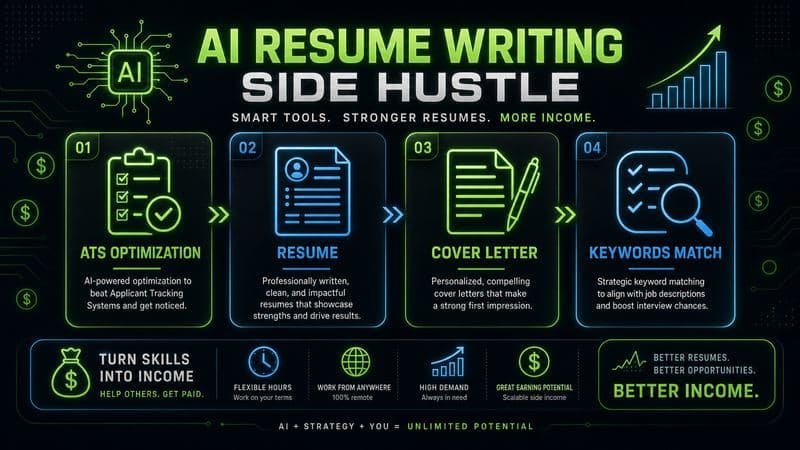
How to Start an AI-Assisted Resume Writing Side Hustle in 2026 (Beginner's Guide)
A step-by-step guide to using AI resume tools to offer a paid resume and cover letter writing service — what to charge, which tools to use, and how to find your first clients.
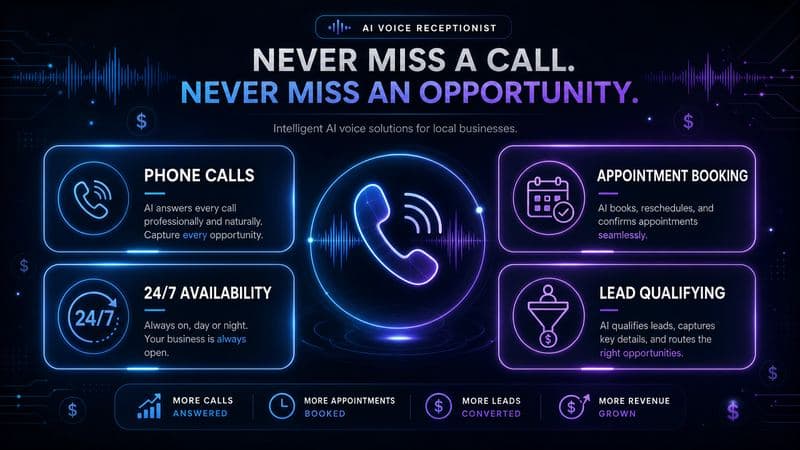
How to Build and Sell AI Voice Receptionists to Local Businesses in 2026
A beginner's guide to building AI voice agents that answer business phone calls — the tools to use, what to charge, and how to find your first client.
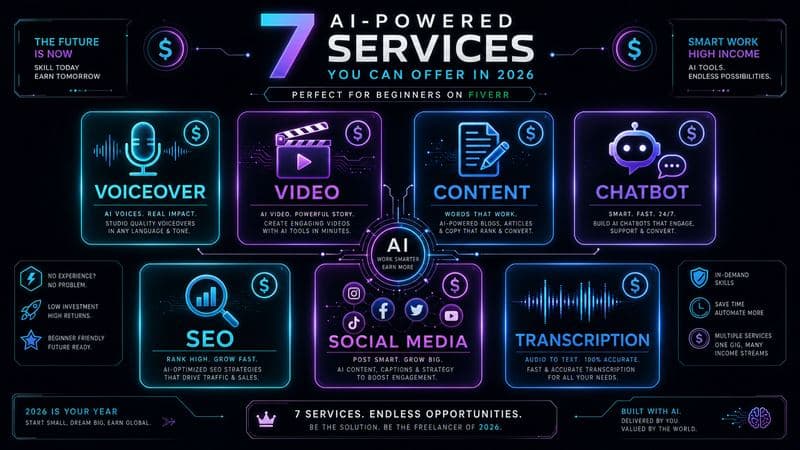
How to Make Money on Fiverr with AI Tools in 2026: 7 Gigs You Can Start This Week
Discover 7 real Fiverr gigs you can launch using free and low-cost AI tools in 2026 — no experience required. Real pricing data, step-by-step setup, and tools that actually work.