
AI Is Replacing Software Developers. Here's What Actually Helps
Junior developers are seeing AI disrupt the job market. Discover which coding skills still matter today and how to pivot your career to earn with AI.

A thread posted to Hacker News this morning hit 300+ comments in a few hours. The title: "LLMs are eroding my software engineering career and I don't know what to do."
The author is a mid-level developer watching their ticket queue shrink as AI tools close more issues than they do. They're not alone. The discussion is full of people saying the same thing — quietly, in fewer words.
This is real. It's also not the whole story.
What's Actually Happening to Developer Jobs
The disruption is uneven, and it's moving faster in some areas than others. According to a 2024 Gartner report, 75% of enterprise software engineers will use AI code assistants by 2028, up from less than 10% in early 2023. This rapid adoption explains why entry-level roles are disappearing first.
Where AI is already doing the work:
- Boilerplate code generation (API wrappers, CRUD endpoints, test scaffolding)
- Code review for common patterns and security anti-patterns
- Documentation writing
- Bug triage on well-defined, reproducible issues
- Junior-level ticket work: CSS fixes, small feature additions, form validation
Where humans still own the outcome:
- Architecture and system design decisions
- Understanding what a business actually needs (vs. what the spec says)
- Debugging novel failures in production
- Stakeholder communication and requirements translation
- Building AI-powered products and workflows themselves
The junior market is taking the hardest hit. Entry-level software positions that used to absorb new graduates are increasingly being handled by AI tools supervised by senior developers. A team of 8 that did 50 tickets a week in 2024 might now handle 200 — with 6 people. The headcount math changed.
The Part Nobody Talks About: The New Demand
Here's what isn't getting 300 HN comments: the people earning well because of this shift. The GitHub Octoverse 2024 report highlights a 59% year-over-year increase in the number of contributions to public AI projects globally, suggesting that while traditional roles are changing, technical activity is hitting record highs.
The same companies cutting junior headcount are paying more for people who can:
- Deploy and configure AI coding tools (GitHub Copilot, Cursor, Windsurf, Claude Code)
- Build internal AI automations that save senior dev time
- Create AI-powered client tools — custom assistants, document processors, workflow bots
- Write prompts and AI agent workflows that replace what a junior used to do manually
This isn't a consolation prize. It's a real market gap. Companies have the budget for AI tooling that used to go to junior salaries, and they need someone who knows how to build and configure those tools. That someone doesn't need to be a senior engineer.

How People Are Pivoting Right Now
1. Build AI Tools for Local Businesses
Small businesses — law offices, real estate agents, dental practices, consultancies — have no technical staff but increasing awareness that AI can automate their intake, answering, and follow-up workflows. They need someone to set it up. They don't need a software engineer.
Platforms like CustomGPT let you build trained AI assistants for a business — one that knows their services, answers customer questions from their documents, and handles basic intake — without writing backend code. You build it once, they pay monthly. A service business owner pays $200–500/month because that's still cheaper than a part-time receptionist.
We covered this workflow in detail in How to Sell AI Chatbots to Local Businesses. It's one of the highest-traction beginner pivots right now.
2. Automate Your Own Freelance Output
The developers who are doing well right now are the ones using AI to do the work of three. Stack Overflow’s 2024 Developer Survey revealed that 76% of developers are already using or plan to use AI tools, moving the needle from "optional" to a baseline requirement for efficiency.
Cursor, Copilot, and Claude Code are doing what Stack Overflow used to do, but faster and inside your editor. The freelancers winning are treating these tools as leverage, not as competition.
3. Become the AI Workflow Person
In almost every company that adopted AI tools in 2024–2025, someone emerged as the internal "AI person" — not because they were the most technical, but because they put in the time to actually learn how to use these tools effectively. That person tends to get promoted or consulted disproportionately.
If you're mid-career, this is one of the fastest paths. You don't need a new degree. You need to be genuinely better at AI-assisted work than your colleagues — and willing to share what you know.
4. Build and Monetize AI Content
Developers explaining AI tools to non-developers have a significant edge right now. The audience for "how to use [AI tool] as a beginner" content is massive — Google Trends shows repeated 1,000–5,000% spikes on beginner AI queries every few weeks.
If you can explain technical things in plain language, you have raw material for a YouTube channel, a blog, or a course. The barrier is lower than ever, and the audience is growing. A developer who writes about how they use AI in their workflow is more credible to that audience than a non-technical blogger guessing.
5. Run AI Compute Workloads
This one is underrated. If you have a machine with a mid-to-high tier GPU, services like Ampere let you rent GPU compute and earn passive income from your hardware. With the explosion in local AI inference demand, this is an emerging income stream that many developers haven't looked at yet.
6. Build and Launch AI Micro-SaaS Products
One of the most practical ways to replace a traditional salary is by building Micro-SaaS products. Right now, the barrier to entry for software products has vanished. Using generative UI tools like v0.dev and backend agents like Replit Agent, a single developer can build and deploy a functional application in a single afternoon.
The strategy here is not to build the next social media giant, but to build highly specific tools: an AI-driven lease analyzer for renters, a custom CSV-to-SQL converter for non-technical data analysts, or a niche SEO metadata generator for Shopify owners. These small tools solve acute problems and can be monetized via low-cost monthly subscriptions.
7. The Human-in-the-Loop Quality Control Service
As companies deploy AI-generated code at scale, a new bottleneck has emerged: verification. While an LLM can generate a thousand lines of code in seconds, it cannot guarantee that those lines are free of subtle logic flaws or security vulnerabilities. This has created a demand for "Human-in-the-Loop" (HITL) specialists.
In this role, you act as the final gatekeeper for AI-produced modules. This involves setting up automated testing suites that specifically target LLM-prone errors and performing manual code audits. If you have a background in security or unit testing, you can market yourself as an AI Auditor. This is a high-trust position that commands a premium rate because it protects companies from the massive reputational and financial damage of an AI hallucination reaching production.
8. Deploying Secure Internal LLMs
Security-conscious companies are increasingly blocking public access to tools like ChatGPT because they fear proprietary code being used for training. This creates an immediate opportunity for developers who can set up local or VPC-hosted models. Using frameworks like vLLM or Ollama paired with a secure UI like LibreChat, you can offer a "Private AI" setup service. This ensures that the company's code stays within their firewall while giving their developers the benefits of LLM assistance. It is a high-value infrastructure play that requires a mix of DevOps and AI knowledge.
Practical Strategy: The AI Integration Framework
To stay ahead of the contraction in traditional roles, you can adopt a service-based model that focuses on "Agentic Workflows." This moves you from being a code-writer to being an automation architect.
Phase 1: Identify the "Manual Bottleneck" Look for business processes where a human is currently copying data from one place to another. This is common in legal, medical billing, and logistics. For example, a property management company might manually extract dates and figures from hundreds of different lease formats to update their database.
Phase 2: Build a Multi-Step AI Pipeline Instead of a simple chatbot, you build a sequence:
- Ingestion: Use a tool like Document AI or a vision-enabled LLM to read the raw file.
- Validation: Use a secondary agent to check the extracted data against business rules (e.g., "Is the end date after the start date?").
- Transformation: Reformat the data into the specific JSON or CSV structure required by their legacy systems.
- Action: Use an API or an automation platform like Make.com to push that validated data directly into the client's CRM or ERP.
Phase 3: The Retainer Model Businesses will pay for the initial setup, but they will pay even more to ensure the system stays online as AI models and APIs update. By positioning yourself as the person who maintains these high-value "agentic" pipelines, you create a recurring revenue stream. This requires human judgment and specific business context—two things AI still lacks. It transforms you from a one-time contractor into a critical infrastructure partner.
The Skills Gap Worth Filling Right Now
Based on job postings and the current landscape, these are the practical skills with the clearest demand and the fastest path to monetization:
1. Prompt engineering and AI workflow design — not as a standalone "prompt engineer" role, but as applied skill inside product, marketing, and ops roles. Companies want people who can make AI work reliably.
2. RAG systems and document-aware AI — building systems that pull from a company's own documents rather than relying on base model knowledge. This is what tools like CustomGPT automate, and knowing how to configure them is valuable.
3. AI agent deployment — tools like n8n, Zapier AI, and similar platforms let you build multi-step automations without deep engineering. People who know these tools are increasingly valuable to operations-heavy businesses.
4. Local model deployment — if you have the hardware, knowing how to run models locally (Ollama, LM Studio, Open WebUI) is a differentiator for privacy-conscious business clients.
What Doesn't Help (Despite What You'll Hear)
Re-skilling to a bootcamp language — the same market shift hitting junior developers is hitting bootcamp graduates. Learning another JavaScript framework at this moment is not a pivot; it's more of the same.
Waiting for the market to stabilize — the people saying "wait and see" in 2024 are the people posting on HN now about eroded careers. The market has already moved.
Panicking and buying a course on AI certification — certifications in AI are outpacing the tools themselves. By the time a course is produced and published, the tool it teaches has shipped major updates. Hands-on use beats certificates.
The Honest Take
The developer job market is genuinely harder right now, especially at the junior level. That's real, and anyone dismissing it hasn't looked at the hiring data.
The people doing well are the ones who stopped treating AI tools as a productivity add-on and started treating them as the new baseline — then built skills and income streams around that baseline, not against it.
If you're a developer reading this looking for a starting point: the fastest pivot is building one client-facing AI tool for one local business in your area, charging a recurring fee. The CustomGPT path requires almost no coding, produces a real result, and generates recurring revenue. It's a better short-term move than another framework tutorial.

Key Takeaways
- Junior contraction is real: Entry-level positions are being consolidated by AI-augmented senior roles.
- Architectural thinking wins: AI writes code, but humans still need to design the systems and understand business logic.
- Pivoting to services: Building AI-driven automations for non-technical businesses is a high-growth income stream.
- Efficiency as a baseline: Using AI tools is no longer a "bonus" skill; it is the minimum requirement for modern development.
- Micro-SaaS opportunities: Low barriers to entry allow developers to launch multiple small, profitable tools quickly.
Frequently Asked Questions
Is AI actually replacing software developers, or is this overblown? It's not overblown at the junior level. Entry-level positions are genuinely contracting in markets that have adopted AI coding tools. Senior and specialized roles are largely stable or growing, because those roles require judgment that AI doesn't replace well yet.
What software jobs are safe from AI right now? Architecture, complex debugging, stakeholder-facing work, novel problem-solving, and building/configuring the AI tools themselves are all areas where human judgment remains the bottleneck. Repetitive execution-layer work (writing boilerplate, small feature tickets, test generation) is most at risk.
How can a software developer make money with AI right now? The fastest paths are: building AI tools for local businesses (recurring client income), using AI to multiply freelance output, creating beginner-focused content about AI tools, and renting GPU compute for local inference.
Do I need to learn machine learning to benefit from the AI shift? No. The most accessible income paths right now are in deployment, configuration, and application of existing AI tools — not in training models. Most of the value is in knowing how to make AI work for a specific use case.
What's the fastest way to get started if I'm a developer worried about this? Pick one path: build a demo AI assistant for a local business using CustomGPT, pitch it to one business owner you know, and charge a monthly retainer. The whole process takes a weekend.
Is this AI disruption temporary or permanent? The capability curve on these tools is going up, not down. The question isn't whether AI will do more of what junior developers do — it will. The question is what you build around that. The developers who adapted early in the last major market shifts ended up doing the most interesting work.

Alex the Engineer
•Founder & AI ArchitectSenior software engineer turned AI Agency owner. I build massive, scalable AI workflows and share the exact blueprints, financial models, and code I use to generate automated revenue in 2026.
Related Articles
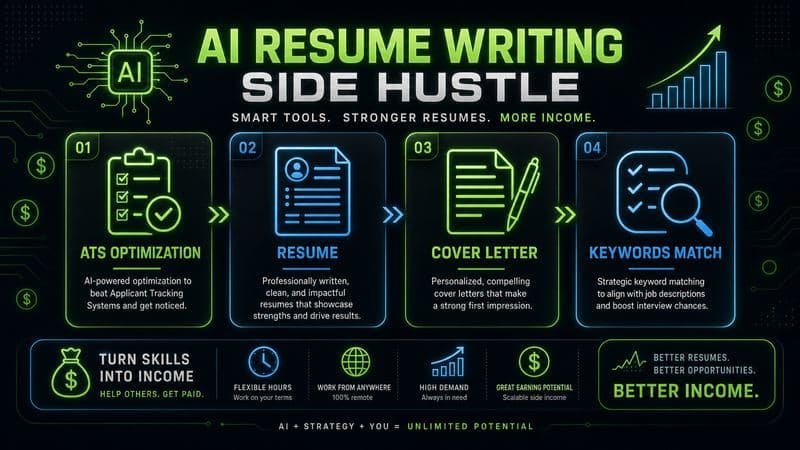
How to Start an AI-Assisted Resume Writing Side Hustle in 2026 (Beginner's Guide)
A step-by-step guide to using AI resume tools to offer a paid resume and cover letter writing service — what to charge, which tools to use, and how to find your first clients.
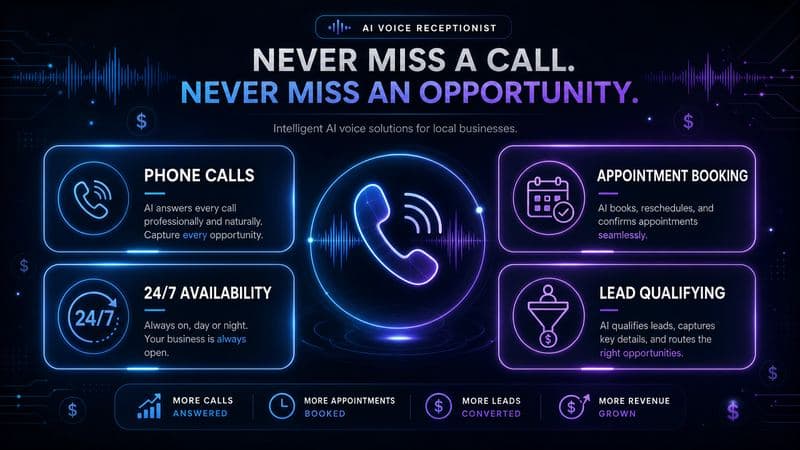
How to Build and Sell AI Voice Receptionists to Local Businesses in 2026
A beginner's guide to building AI voice agents that answer business phone calls — the tools to use, what to charge, and how to find your first client.
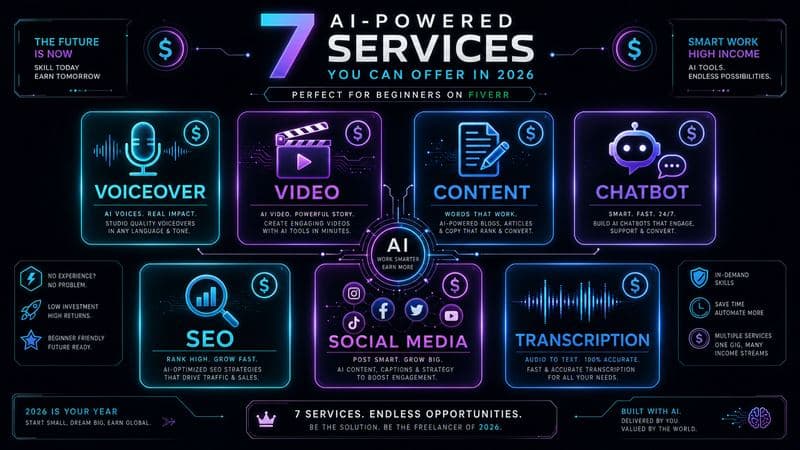
How to Make Money on Fiverr with AI Tools in 2026: 7 Gigs You Can Start This Week
Discover 7 real Fiverr gigs you can launch using free and low-cost AI tools in 2026 — no experience required. Real pricing data, step-by-step setup, and tools that actually work.