
How to Build an AI Tool That Makes Money in 2026
A practical guide to building and monetizing a simple AI-powered tool or micro-SaaS in 2026 — no startup budget, no co-founder, no VC required.
Every week on Indie Hackers and Reddit, someone posts a tool they built in a weekend that's making $300–$3,000/month. The replies are always the same: "How did you find the idea?" and "What's the tech stack?"
This is the guide that answers both. Building an AI-powered micro-SaaS in 2026 is genuinely within reach of one person with a few weekends of focused work.
What "AI Micro-SaaS" Actually Means
A micro-SaaS is a software product built and run by one person (or a tiny team) with no outside funding. "Micro" means narrow scope — one problem, one audience, one outcome.
AI micro-SaaS means the product's core value is delivered by an AI model, and you're the wrapper: the UI, the prompt engineering, the integrations, the positioning.
Examples of real AI micro-SaaS products that are earning:
- A job description analyzer that tells candidates their match score
- A tool that rewrites Amazon product listings for a specific category
- A chatbot trained on a specific company's documentation
- A script generator for a specific YouTube niche
None of these required a team. None required VC. All were built using AI APIs.
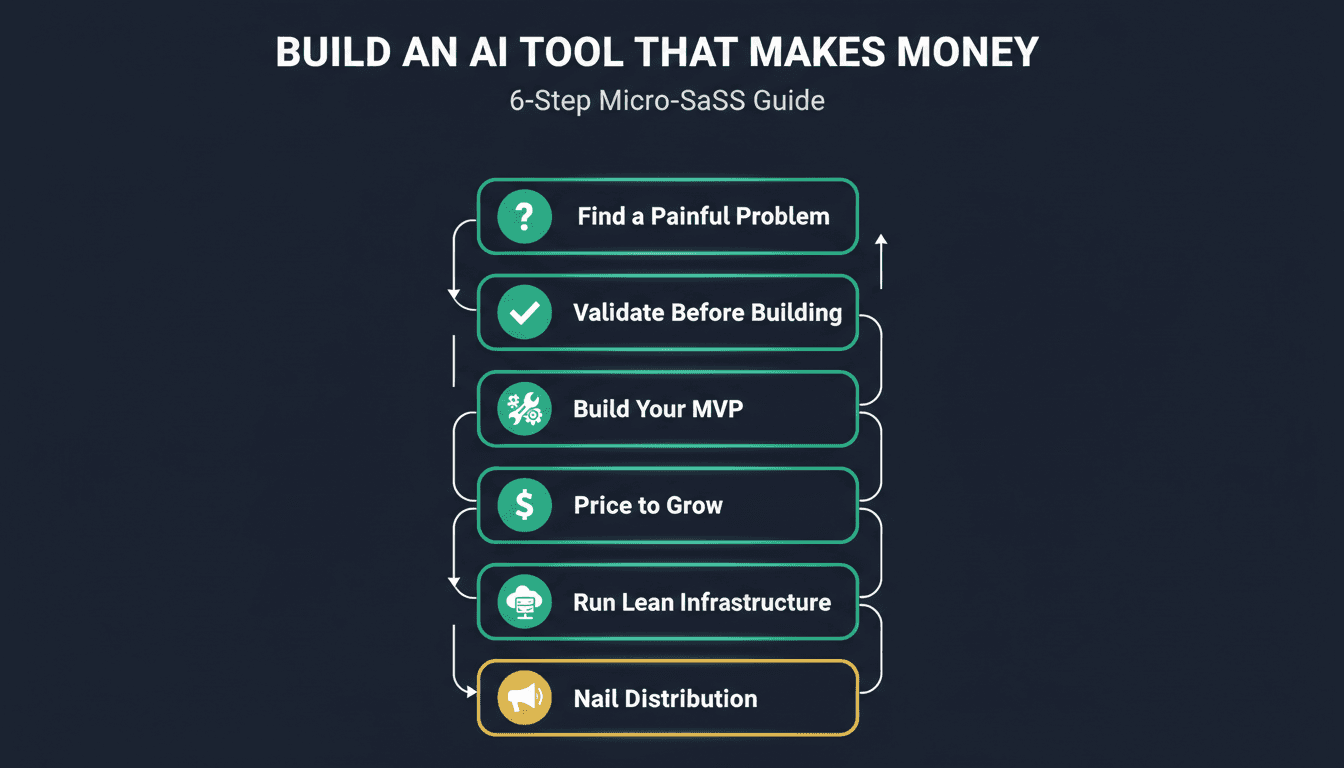
Step 1: Find a Problem Worth Solving
The fastest path to a paying product is a problem you already have. The second fastest is a problem a defined community complains about consistently.
Sources for validated ideas:
- Reddit (search your niche + "anyone built a tool for" or "I wish there was")
- Indie Hackers "ask IH" posts
- G2 or Capterra reviews of existing tools (what do users wish it did?)
- Niche Facebook groups and Slack communities
- Your own professional experience
The filter: Can an AI model solve 80% of this problem? Is someone already paying for a worse version of the solution?
Step 2: Validate Before Building
One paying user beats 100 "I'd use that" comments.
The fastest validation approach:
- Build a Notion page or simple landing page describing the tool
- Add a "Join waitlist" or "Get early access — $X" button (Stripe payment link)
- Post it in 3 relevant communities
- If 5 people pay upfront, build it. If none do, the problem isn't painful enough.
This takes a weekend and costs nothing.
Step 3: Build the Minimum Viable Product
For most AI tools, the MVP is:
- A clean input form
- An AI processing layer
- A formatted output
- A payment gate
No-code / low-code stack options:
| Component | Tool |
|---|---|
| Frontend | Webflow, Framer, or Vercel + Next.js |
| AI backend | OpenAI API, Anthropic API |
| Auth + payments | Stripe + Clerk |
| Custom AI personality | CustomGPT.ai |
For tools where the AI needs to reference specific documents, knowledge bases, or brand guidelines — like a chatbot trained on your client's content — CustomGPT.ai removes the need to build your own RAG pipeline from scratch. You feed it documents and get a deployable, no-hallucination AI widget.
Realistic build time: 2–4 weekends for a functional, payable MVP if you're comfortable with basic web development. Longer if you're learning as you go.
Step 4: Price It to Grow
Most first-time builders underprice. The fear is "nobody will pay for something so simple." But simplicity is the product. People pay for saved time, not for complexity.
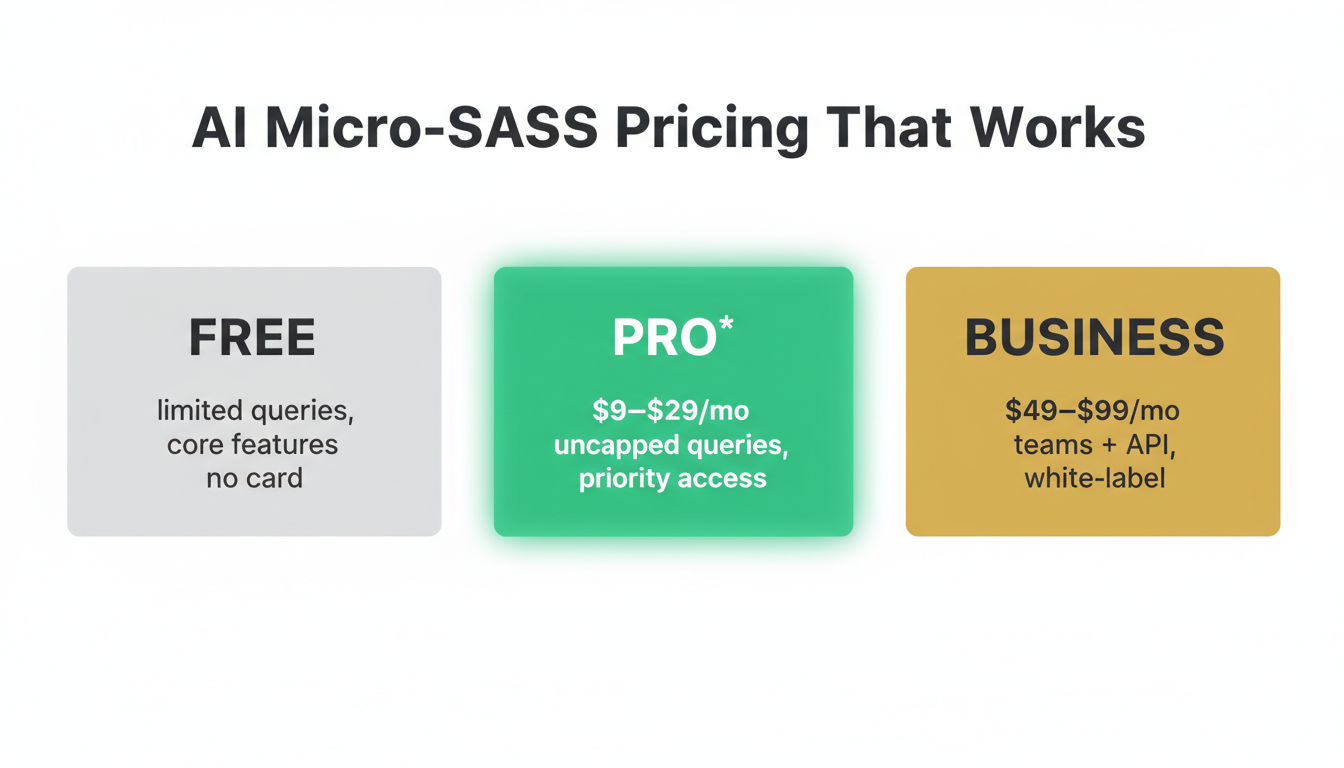
Pricing tiers that work for AI micro-SaaS:
- Free tier: Limited queries/month (drives signups, word of mouth)
- Pro tier: $9–$29/month (core audience, uncaps limits)
- Business tier: $49–$99/month (teams, API access, white-label)
Start with two tiers. Add complexity later when you know who's paying and why.
Step 5: Run It on Lean Infrastructure
AI API costs are the primary variable cost. The second is compute for anything you're running yourself.
At early scale (under 500 active users), your costs should be minimal. But if your tool involves batch processing, image generation, or running local models, Ampere.sh offers pay-as-you-go GPU compute that's significantly cheaper than AWS or GCP at small scale — critical when you're bootstrapped.
Rule of thumb: Keep your AI cost-per-user under 20% of their monthly payment. If a user pays $19/month, your AI cost to serve them should stay under $3.80.
Step 6: Distribution (The Real Work)
Building the tool is the easy part. Getting people to use it is 80% of the effort.
Channels that work for AI micro-SaaS in 2026:
- SEO: Write 5–10 articles targeting the exact problem your tool solves. Organic search is the most scalable free channel.
- Community launch: Product Hunt, Reddit, Hacker News "Show HN" — each can generate an initial spike of hundreds of signups
- Niche newsletters: Find newsletters that serve your target audience. A sponsored mention in a 5,000-subscriber niche newsletter often outperforms a Product Hunt launch
- X/Twitter building in public: Document your build process. The "I launched a tool and made $X in month 1" format consistently gets traction
What Makes AI Tools Sticky
Users churn when the tool stops surprising them. The stickiest AI tools have:
- Personalization: The tool learns or stores user preferences
- Output history: Users can reference past outputs
- Integration: The tool connects to something the user already uses daily (Notion, Slack, email)
Even basic history logging dramatically improves retention. People come back to reference what the AI gave them before.
The Honest Numbers
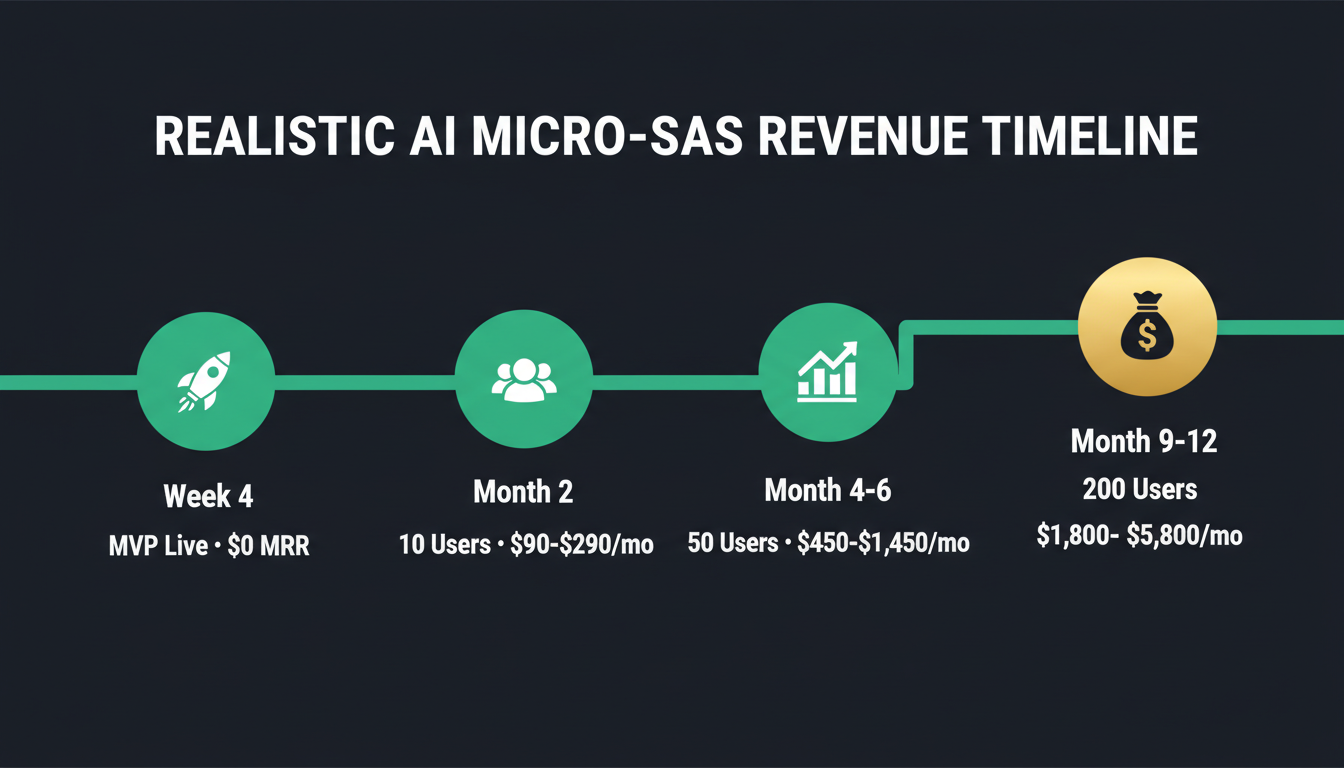
Here's a realistic earnings trajectory for an AI micro-SaaS built solo:
| Milestone | Timeline | Monthly Revenue |
|---|---|---|
| MVP live | Week 4 | $0 |
| First 10 paying users | Month 2 | $90–$290 |
| 50 paying users | Month 4–6 | $450–$1,450 |
| 200 paying users | Month 9–12 | $1,800–$5,800 |
These aren't "what if" numbers. They're consistent with what solo builders report in Indie Hackers monthly revenue updates.
Frequently Asked Questions
What AI tools are easiest to build and monetize in 2026?
Document Q&A chatbots (trained on client content), niche content generators (product descriptions, job postings, scripts), and workflow automation tools for specific industries are consistently the easiest to build and monetize quickly.
Do I need to code to build an AI micro-SaaS?
For the simplest tools, no — platforms like CustomGPT.ai let you deploy an AI product without writing code. For custom UI and integrations, basic JavaScript and API knowledge is enough. Full-stack development is not required at the MVP stage.
How long does it take to build a profitable AI tool solo?
Most solo builders report 4–8 weeks from idea to first paying customer, and 4–6 months to reach $1,000/month MRR. Speed depends heavily on how quickly you validate the idea and start distribution.
What's the biggest mistake first-time AI tool builders make?
Building before validating. The second biggest is not starting distribution until the product feels "finished." Distribution should start on day one — even before the product exists.
How do I handle AI costs as my tool scales?
Price your tiers to keep AI API cost under 20% of revenue per user. Use caching for repeated queries. For compute-heavy workloads, move to dedicated GPU infrastructure (like Ampere.sh) once you hit consistent usage patterns.

Alex the Engineer
•Founder & AI ArchitectSenior software engineer turned AI Agency owner. I build massive, scalable AI workflows and share the exact blueprints, financial models, and code I use to generate automated revenue in 2026.
Related Articles
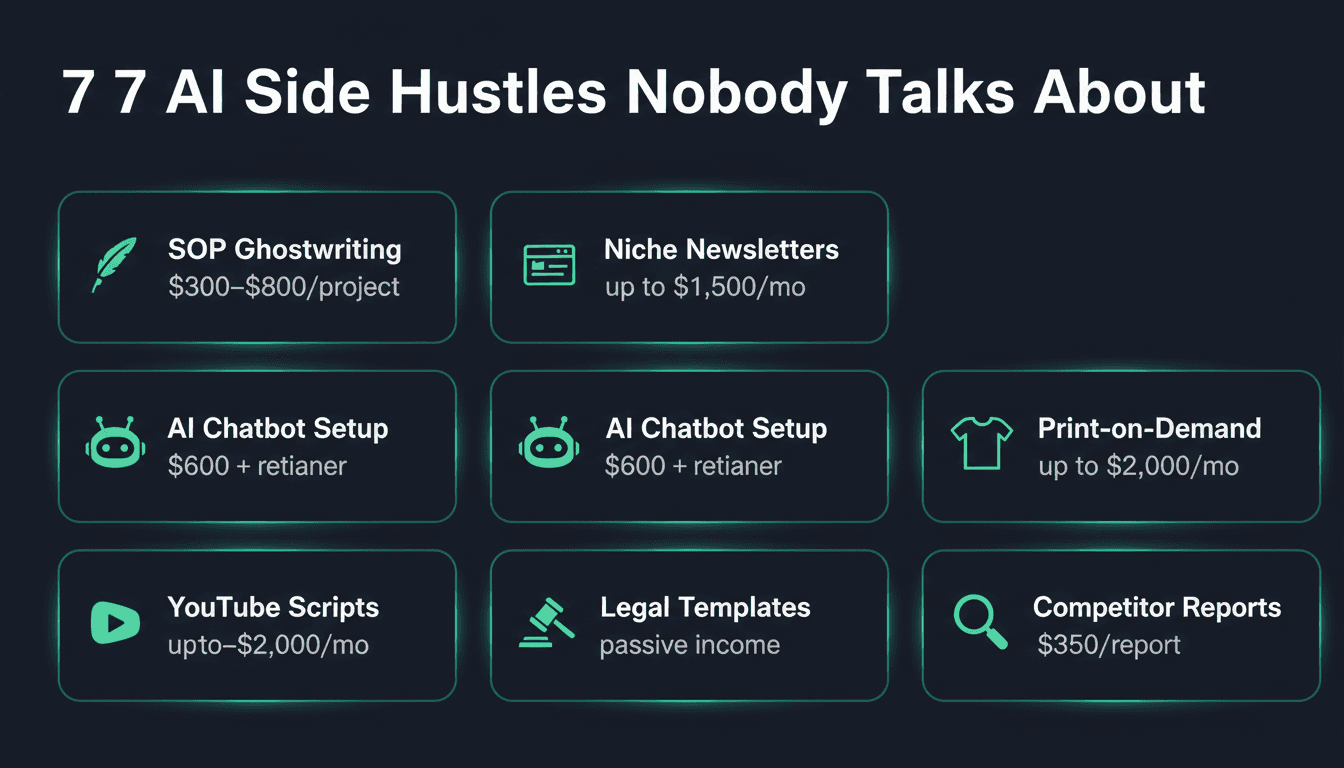
7 AI Side Hustles Nobody Talks About (Hidden Gems for 2026)
Discover 7 overlooked AI side hustles people are quietly using to earn $500–$5,000/month in 2026. No gatekeeping — full breakdowns inside.
AI Automation Agency: Build a $25k MRR AAA
Start an AI Automation Agency and hit $25K MRR with ~10 clients. Real retainer pricing, n8n + CustomGPT stack, and the exact workflows AAA agencies sell in 2026.
7 No-Code AI Side Hustles You Can Start Today (2026 Guide)
7 proven no-code AI side hustles for 2026 — no coding required. Earn $1K–$5K/month building chatbots, automating content, and selling AI services to local businesses.