Blogger for Business Guide: Your 2025 Success Blueprint

Business blogging is experiencing explosive growth in 2025, transforming how brands connect with audiences and drive results. If you want to become a successful blogger for business, this is your year to shine.

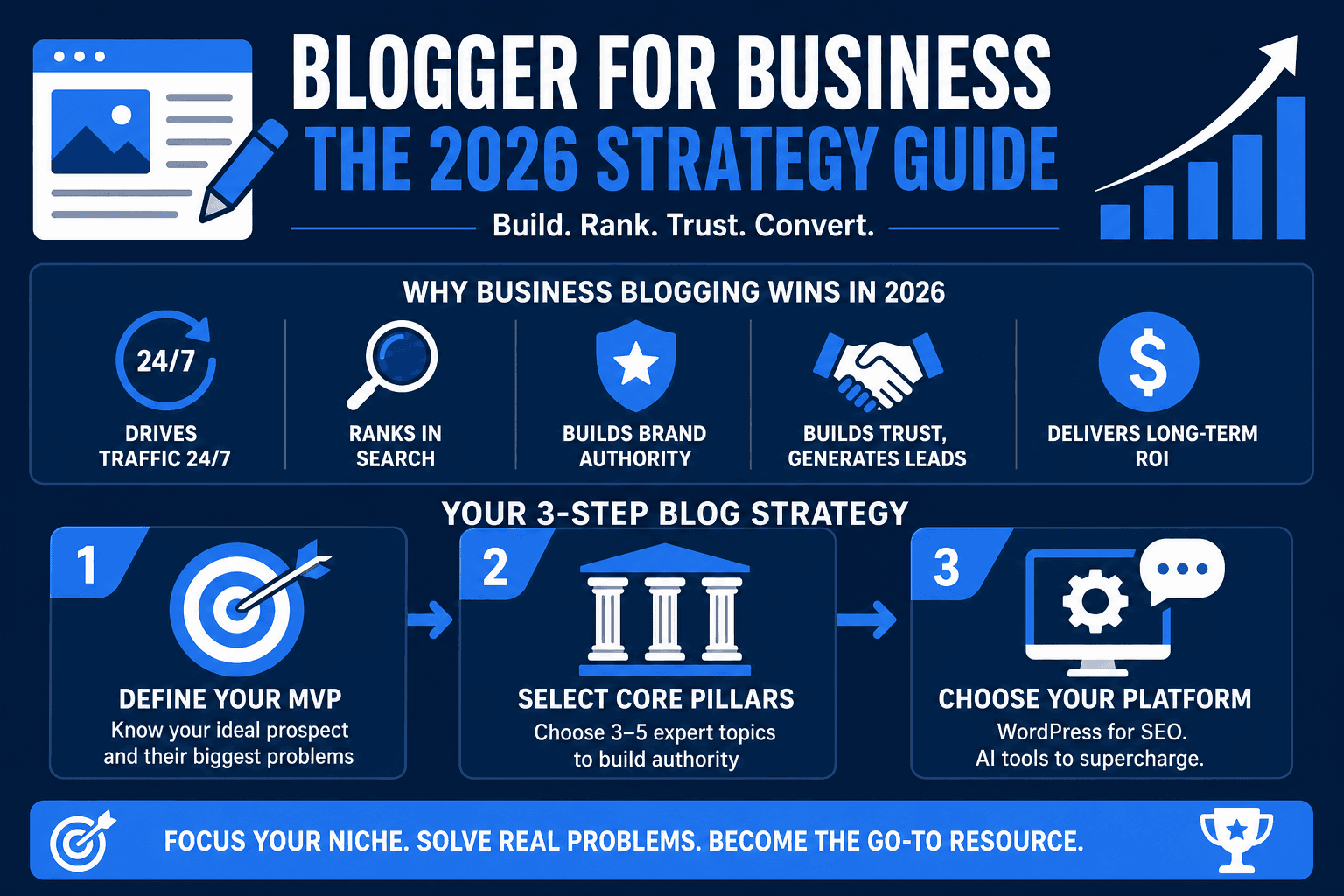
This guide offers a comprehensive, step-by-step blueprint designed to help you leverage blogging for real business success. You'll discover how to plan strategically, create high-performing content, master SEO, promote your blog, monetize effectively, and optimize every step.

Opportunities in business blogging have never been greater. By following this roadmap, you'll gain actionable strategies to stand out, grow your brand authority, and achieve measurable results. Ready to unlock your potential? Let's dive in.

The Foundation: Why Blogging Matters for Business in 2025

Business landscapes are shifting fast, and the blogger for business approach is leading the charge in 2025. Brands no longer rely on static websites. Instead, they use dynamic blogs to deliver value, foster trust, and build real conversations with their audiences. This transformation allows companies to showcase expertise, answer customer questions, and stand out in competitive markets.

The Foundation: Why Blogging Matters for Business in 2025

The Evolving Role of Blogging in Modern Business

The blogger for business strategy has evolved from a basic content add-on to the heart of digital engagement. Today, blogs act as interactive platforms where brands nurture trust, educate audiences, and establish authority. Research shows companies with active blogs generate 67 percent more leads than those without, according to HubSpot's 2025 State of Blogging Report.

With regular updates, thoughtful insights, and two-way conversations, blogs give businesses a human voice. This shift builds long-term relationships and keeps brands top-of-mind in their industries.

Key Benefits: Visibility, Authority, and Lead Generation

Choosing a blogger for business approach unlocks several key benefits. First, blogs increase visibility in search engines, helping brands get discovered by new customers. Second, they build topical authority, showing depth of knowledge in a chosen niche.

Consider these advantages:

  • Improved SEO and organic traffic growth
  • Higher credibility and brand trust
  • Increased lead generation through calls-to-action

For example, B2B companies with blogs see up to 13 times higher ROI compared to those without. This data proves how strategic blogging can fuel business growth.

Trends Shaping Blogging in 2025

The blogger for business world in 2025 is shaped by new trends. AI-generated and AI-assisted content creation is now mainstream, making research and drafting faster. Multimedia—like videos, podcasts, and interactive graphics—are standard parts of blog strategies.

Personalization is another game-changer. Brands use audience data to segment content, providing tailored experiences that boost engagement. Adapting to these trends keeps blogs fresh, relevant, and competitive.

Blogging vs. Other Digital Marketing Channels

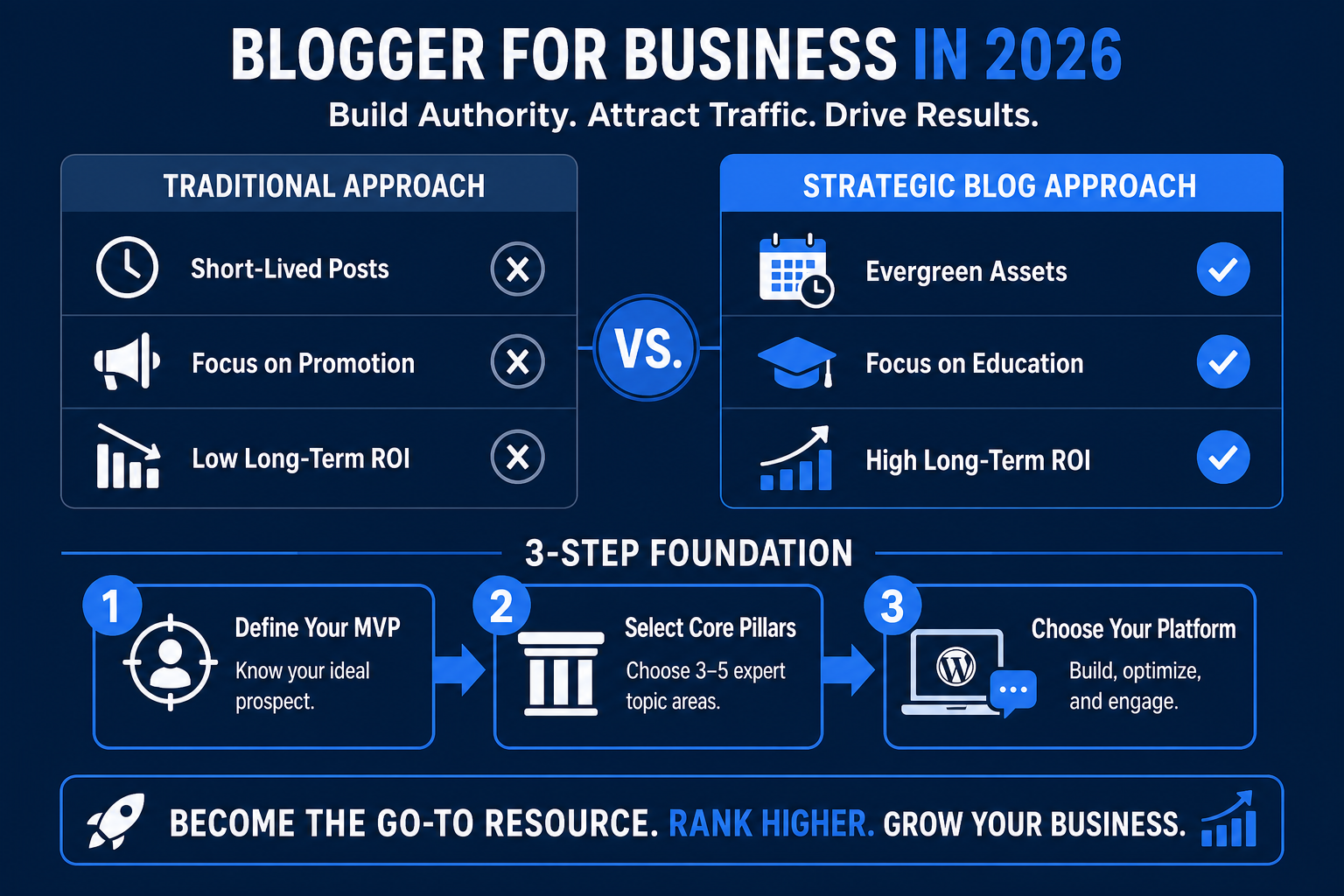
How does the blogger for business method stack up against social media, email, or paid ads? Unlike fleeting social posts or emails quickly buried in inboxes, blog content offers long-term value. Evergreen blog posts can drive traffic for years, compounding their impact over time.

Channel Lifespan Traffic Potential ROI (Long-Term)
Blog Content Years High Excellent
Social Media Days Medium Moderate
Email Marketing Hours-Days Medium Good
Paid Ads As long as paid Variable Costly

This long-lasting nature makes blogging a smart investment for sustainable growth.

Common Misconceptions and Pitfalls

Despite its proven value, some still believe the blogger for business approach is outdated. This myth couldn't be further from the truth. In 2025, content saturation and changing algorithms pose real challenges, but strategic planning and consistent quality keep blogs effective.

Common pitfalls include:

  • Inconsistent posting schedules
  • Ignoring SEO fundamentals
  • Failing to adapt to new formats or trends

By staying focused, regularly updating content, and embracing innovation, businesses can avoid these traps and reap the full rewards of blogging.

Step 1: Strategic Planning for a High-Impact Business Blog

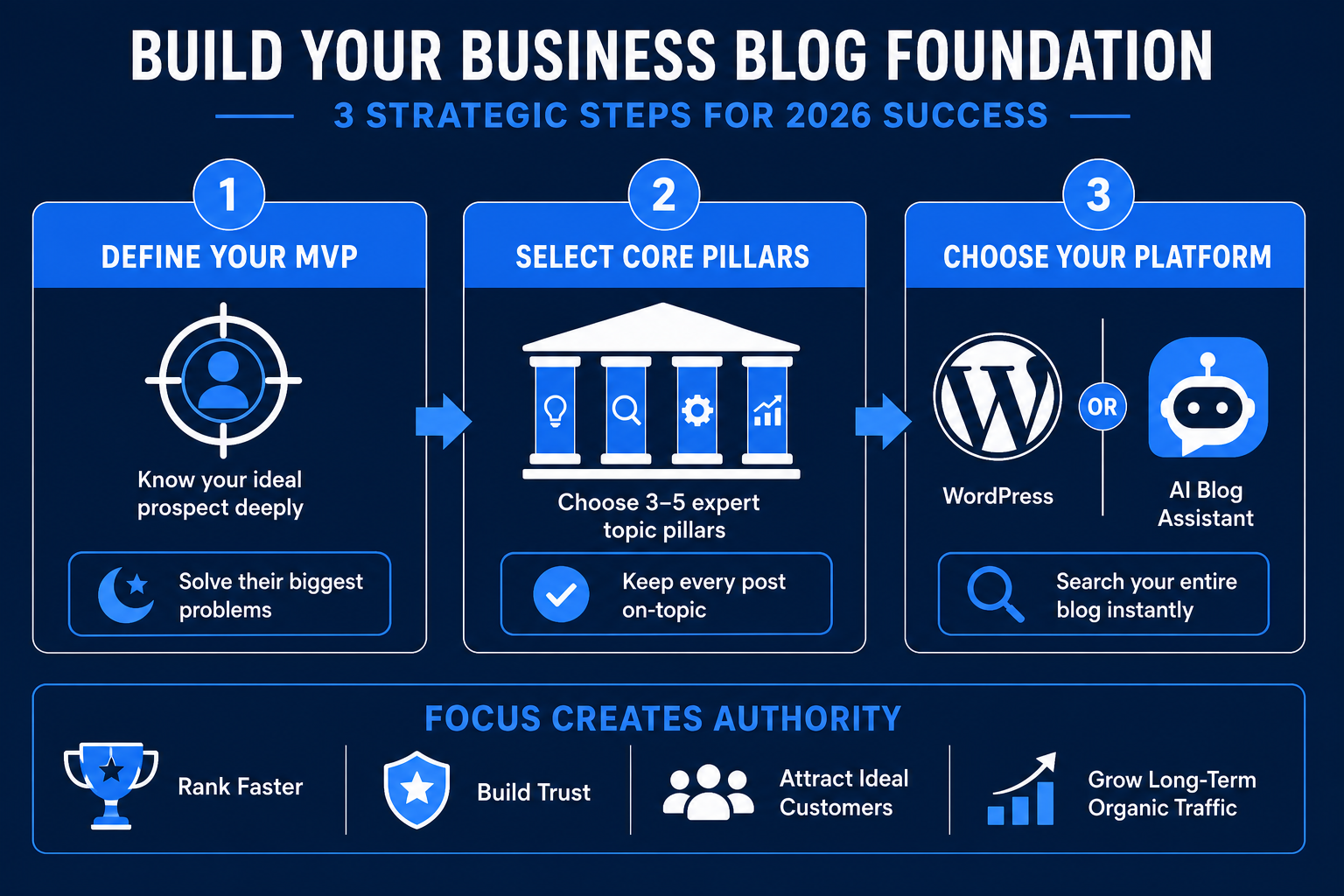
A successful blogger for business journey always starts with a solid strategic plan. Before you ever hit publish, it's crucial to lay the groundwork that ensures every post moves your business closer to its goals. Let's break down the essential steps to build a high-impact blog foundation.

Step 1: Strategic Planning for a High-Impact Business Blog

Defining Clear Business Objectives

Every blogger for business must start by identifying the specific objectives their blog should achieve. Is your main goal to generate leads, boost brand awareness, or educate your customers? Align your blog goals with overall company KPIs like sales growth, conversion rates, or customer retention.

Setting measurable targets will help you track progress and optimize over time. For example, you might aim for a certain percentage increase in qualified leads or website traffic. According to Business Blogging Statistics 2025, businesses with clear blogging objectives see up to 67% more leads and higher ROI.

Make a list of your top three business goals, and connect each one to a specific blog metric. This clarity keeps your blogger for business efforts focused and effective.

Identifying and Understanding Your Target Audience

A blogger for business thrives on knowing exactly who they're speaking to. Start by creating detailed audience personas that capture your ideal customers' demographics, needs, and pain points. Use tools like Google Analytics and customer surveys to gather real data on user interests and behaviors.

Top-performing blogs regularly update their personas based on fresh insights, ensuring content stays relevant. For example, adjusting your strategy when you notice a shift in your audience's preferred content formats can boost engagement.

Ask yourself, what problems is my audience trying to solve? Tailor your blogger for business content to answer those questions, and you'll build stronger relationships and trust.

Selecting a Profitable and Relevant Niche

Choosing the right focus area is essential for any blogger for business. Start by researching market demand and competition using tools like Google Trends, SEMrush, or Ahrefs. Look for a niche where you can offer unique value and where there’s room for growth.

A profitable niche balances audience interest with your expertise and monetization potential. Avoid overly broad topics, as they make it harder to stand out. Instead, narrow your focus to a specific segment that aligns with your business strengths.

By positioning your blogger for business in a niche with clear demand, you lay the groundwork for authority and long-term success.

Crafting a Unique Value Proposition

To succeed as a blogger for business, you need a unique value proposition (UVP) that sets you apart from competitors. What makes your blog different? Maybe it's your insider knowledge, exclusive research, or a fresh perspective on industry trends.

Communicate your UVP clearly on your homepage and in your blog’s about section. This helps visitors instantly understand why they should trust your insights over others.

Niche blogs with a well-defined UVP tend to attract more high-quality backlinks, boosting SEO and authority. Make sure your blogger for business conveys its unique promise in every piece of content.

Setting Up the Right Blogging Platform and Tools

The foundation of a great blogger for business is a robust, scalable platform. Compare options like WordPress, Wix, Squarespace, or industry-specific platforms. Each offers unique features, but prioritize flexibility, ease of use, and integration with essential plugins.

Look for tools that support SEO, analytics, email capture, and security. Ensuring your platform can grow with your business is critical for future-proofing your blog.

A secure and scalable setup allows your blogger for business to handle increased traffic, new features, and evolving content needs, setting you up for lasting impact.

Step 2: Creating Compelling, High-Performing Content

Creating content that cuts through the noise is essential for any blogger for business in 2025. Your blog is not just a publishing platform, but a key driver of brand trust, authority, and sustainable growth.

Step 2: Creating Compelling, High-Performing Content

Developing a Content Strategy for 2025

A strong content strategy is the foundation for every successful blogger for business. Start by mapping out an editorial calendar with clear content pillars. These pillars should align with your brand goals and audience interests.

Balance evergreen topics with trending issues. Evergreen content, like how-to guides or industry explainers, keeps delivering value long after publication. Trending topics, such as new tech or industry news, help you stay relevant and capture timely traffic.

According to recent data, blogs with consistent posting schedules see 30 percent higher traffic. Prioritize planning and consistency. Use analytics to refine your approach, tracking which topics and formats perform best for your blogger for business efforts.

Writing for Engagement and Conversion

Effective writing is at the heart of a successful blogger for business strategy. Start with irresistible headlines that promise value. Your introduction should hook the reader with a compelling story or surprising fact.

Use storytelling to make your content memorable. Break up text with short paragraphs, bullet points, and images. Always include a clear, actionable call-to-action (CTA) that guides readers toward your business goals.

Posts featuring CTAs generate 83 percent more leads. Test different CTA placements and formats to maximize results. Remember, every piece of content from your blogger for business plan should serve both your audience and your objectives.

Leveraging AI and Automation in Content Creation

AI is transforming how every blogger for business creates and scales content. AI tools can assist with research, outlining, drafting, and even editing, saving valuable time while boosting output.

Human creativity still matters. Use AI for efficiency, but always add your unique insights and brand voice. Ethical considerations, such as transparency and originality, are crucial. For a deep dive into how AI impacts content, check the AI in Content Creation 2025 Report.

Automation can also streamline distribution and updates. However, monitor quality to ensure your blogger for business content stands out for accuracy and value.

Optimizing for Readability and Accessibility

Readability and accessibility are non-negotiable for any blogger for business aiming for wide reach. Use headers, bullet points, and visuals to break up text and guide readers.

Ensure your blog is mobile-friendly and loads quickly. Adhering to WCAG (Web Content Accessibility Guidelines) expands your audience. Accessible blogs reach 15 percent more users on average.

Use descriptive alt text for images and maintain high contrast for text. Prioritize clarity and simplicity, making your blogger for business content easy for everyone to consume.

Incorporating Multimedia and Interactive Elements

Today’s audiences expect more than just text from a blogger for business. Enhance engagement by embedding videos, podcasts, infographics, and interactive polls.

Multimedia keeps visitors on your page longer. In fact, posts with rich media see double the dwell time compared to text-only articles. Interactive elements, like quizzes or calculators, can also boost shares and return visits.

Experiment with different formats to discover what resonates most with your audience. A diverse approach strengthens your blogger for business brand and supports your goals.

Content Updating and Repurposing Strategies

A smart blogger for business never lets great content go stale. Regularly update older posts to improve SEO and maintain accuracy. Refreshing stats, links, and visuals can breathe new life into your archives.

Repurpose top-performing articles into guides, eBooks, or webinars. This multiplies your reach without starting from scratch. Updated posts can boost traffic by 106 percent, according to Backlinko.

Create a schedule for reviewing and refreshing content. Repurposing is an efficient way to extend the value of your blogger for business content and keep your blog relevant.

Step 3: SEO Mastery—Driving Sustainable Traffic Growth

SEO is the lifeblood of any successful blogger for business strategy. As search engines evolve in 2025, mastering both the fundamentals and new trends is key to driving lasting, organic traffic. This section will break down the essential steps to ensure your blog not only ranks but thrives.

Step 3: SEO Mastery—Driving Sustainable Traffic Growth

Keyword Research and Topic Clustering for 2025

Effective keyword research is the cornerstone of blogger for business success. In 2025, advanced tools help you discover not just keywords, but user intent behind searches. Tools like SEMrush and Ahrefs reveal hidden opportunities.

Building topic clusters is essential. Instead of isolated posts, group related articles under pillar topics. This structure signals authority to search engines and improves internal linking. Data shows topic clusters can increase organic traffic by 40 percent.

Regularly update your keyword lists and monitor trends. Use intent analysis to align content with what your audience is truly searching for. This approach keeps your blog relevant and competitive.

On-Page SEO Best Practices

On-page SEO is crucial for every blogger for business. Start with compelling title tags and meta descriptions, making sure each accurately reflects the content. Use clear headings (H1, H2, H3) to organize your posts for both readers and search engines.

Internal linking helps spread authority. For example, link related articles to keep visitors engaged longer. Proper internal linking can boost session duration and lower bounce rates.

Incorporate keywords naturally, but avoid stuffing. Use lists, tables, and visuals to enhance readability. Optimizing images with descriptive alt text also supports SEO and accessibility.

Technical SEO Essentials

Technical SEO ensures your blogger for business site is fast, mobile-friendly, and easy for search engines to crawl. Prioritize site speed; tools like Google PageSpeed Insights highlight issues. Responsive design is a must, as over half of users access blogs via mobile devices.

Implement schema markup to help search engines understand your content's context. This can improve visibility in rich results. Stay aware of global digital regulations, like India's AI Content Labeling Regulations, which may impact how AI-generated content is indexed and displayed.

Regularly audit your site for crawl errors and broken links. A technically sound blog lays the groundwork for sustainable growth.

Off-Page SEO and Link Building

Off-page SEO builds your blogger for business reputation beyond your own site. Focus on earning high-quality backlinks through guest posting, digital PR, and partnerships. Backlinks remain a top ranking factor in 2025.

Reach out to industry leaders for collaborations or interviews. Share your expertise on reputable platforms to attract natural links. Guest posting can open doors to new audiences and strengthen your authority.

Track your backlink profile with tools like Moz or Ahrefs. Disavow toxic links that may harm your rankings. Quality matters more than quantity when it comes to building links.

Measuring and Analyzing SEO Performance

Measuring results is non-negotiable for any blogger for business. Use Google Analytics and Search Console to track organic traffic, top-performing pages, and conversion rates. Set up custom dashboards to monitor KPIs that align with your business goals.

UTM parameters help you pinpoint the sources of your traffic. Analyze bounce rates, session durations, and user flow to understand engagement. Use these insights to iterate and improve your strategy.

Data-driven decisions separate successful blogs from the rest. Regular analysis ensures your efforts are delivering real business impact.

Avoiding Common SEO Mistakes

Avoiding pitfalls is vital for every blogger for business. Watch for over-optimization, keyword stuffing, and duplicate content, as these can lead to penalties. Stay updated with Google’s algorithm changes through trusted SEO news sources.

Be mindful of AI-generated content—ensure originality and quality to maintain trust. Global trends in content transparency, such as new labeling requirements, are shaping how search engines evaluate trustworthiness.

Consistency and a strategic approach protect your blog from sudden traffic drops. Focus on providing real value and staying agile as SEO best practices evolve.

Step 4: Promotion, Distribution, and Audience Building

Promotion is where your blogger for business strategy truly gains traction. Creating great content is only step one. To grow your reach, you need a solid plan for amplifying your message, connecting with your audience, and measuring what works.

Multi-Channel Content Promotion Strategies

A successful blogger for business uses multiple channels to spread every post. Start by sharing new articles across all major social media platforms, like LinkedIn, Facebook, Twitter, and Instagram. Email newsletters remain powerful for reaching subscribers directly.

Syndication platforms, such as Medium or industry-specific aggregators, can help extend your reach. Repurpose content into short videos or infographics for visual channels. Remember, 79% of marketers say social media is their top blog traffic source. By leveraging several channels, your blogger for business efforts will maximize visibility and attract diverse audiences.

Building an Engaged Community Around Your Blog

An engaged audience is the backbone of a thriving blogger for business. Encourage readers to leave comments, share posts, and participate in discussions. Prompt feedback through open-ended questions at the end of each post.

Host webinars, live Q&A sessions, or interactive polls to deepen connections. User-generated content, like guest posts or testimonials, gives your blog authenticity and variety. Blogs that nurture active communities see 4x higher retention rates. Ultimately, community building transforms your blogger for business into a trusted hub for your niche.

Influencer Outreach and Collaboration

Connecting with influencers can rapidly expand your blogger for business. Reach out to industry leaders for guest posts, interviews, or joint webinars. Co-creating content allows you to tap into their audiences and boost credibility.

Influencer collaborations can drive up to 200% more shares compared to solo efforts. Identify influencers who align with your brand values and offer genuine value in exchange for their participation. Consistent partnerships help your blogger for business stand out and foster long-term relationships in your industry.

Paid Promotion and Retargeting Tactics

While organic reach is important, paid promotion gives your blogger for business a targeted boost. Use paid ads on platforms like Facebook, Google, and LinkedIn to reach specific demographics. Retargeting ads help you re-engage visitors who previously interacted with your content.

Retargeted users are 70% more likely to convert than new visitors. Set clear goals for each campaign and monitor performance closely. Combining paid tactics with organic strategies ensures your blogger for business achieves sustainable and scalable growth.

Measuring Promotion Effectiveness

Tracking your efforts is essential for any blogger for business. Use UTM parameters to identify which channels drive the most traffic. Tools like Google Analytics and Search Console provide insights into user behavior, conversion rates, and referral sources.

Analyze engagement metrics such as time on page, bounce rates, and social shares. Regularly review your data and adjust your strategies for better results. For a deeper dive, check out Google’s beginner guide to Analytics. This data-driven approach guarantees your blogger for business stays agile and focused on growth.

Step 5: Monetization and Business Growth Strategies

Unlocking the full potential of your blogger for business journey means turning your content into a powerful revenue engine. In this section, you’ll discover proven monetization strategies, practical growth tactics, and the latest tools to help your blog thrive in 2025.

Proven Blog Monetization Models for Businesses

A blogger for business can tap into several monetization models that fit different industries and audiences. The most common options include:

  • Affiliate marketing: Promote relevant products and earn a commission for each sale.
  • Sponsored content: Partner with brands for paid articles or reviews.
  • Digital products: Sell eBooks, templates, or courses directly to your audience.

According to Authority Hacker, 65% of business blogs successfully use affiliate links as a main revenue stream. The key is to align offers with your readers’ needs and maintain transparency. By diversifying your income sources, you can create a stable foundation for long-term blog growth.

Building and Selling Digital Products or Services

Creating and selling your own digital products transforms your blogger for business platform into a scalable asset. Popular digital offerings include eBooks, online courses, consulting packages, and downloadable templates.

Integrating e-commerce tools like Shopify or WooCommerce allows seamless transactions and improved user experience. Many entrepreneurs now use their blogs to launch six-figure digital product businesses. For a step-by-step guide, check out How to Sell Digital Products Online.

By focusing on solving specific problems for your audience, your digital products can become a cornerstone of your business blog’s monetization strategy.

Subscription, Membership, and Community Models

Recurring revenue models are gaining traction in the blogger for business space. Options like paid newsletters, gated premium content, and exclusive member communities offer high-value experiences for your most loyal followers.

Tools like Patreon, MemberPress, or Substack simplify subscription management and content delivery. Membership blogs report a 30% increase in recurring revenue compared to ad-based models. Consider offering tiered memberships or exclusive resources to boost retention and foster a sense of belonging.

Building a strong community transforms your blog from a simple resource into an interactive hub for your niche.

Leveraging AI Tools for Monetization Efficiency

AI-powered solutions are revolutionizing how a blogger for business can scale revenue. Automation tools streamline lead capture, sales funnel management, and customer support.

Personalization engines analyze user behavior to recommend products, upsell services, and increase conversion rates. Businesses using AI for monetization see revenue growth at twice the speed of those that do not.

From chatbots handling FAQs to automated email sequences, AI helps you work smarter and focus on high-impact growth strategies.

Scaling Up: Outsourcing, Team Building, and Process Automation

As your blogger for business grows, scaling requires smart delegation and streamlined workflows. Hiring freelance writers, editors, or virtual assistants enables you to publish more content and focus on strategy.

Workflow automation tools like Trello, Asana, or Zapier improve efficiency across content creation, SEO, and promotion. Outsourced blogs can produce up to four times more content per month, accelerating growth.

Building a reliable team and automating repetitive tasks frees up your energy for innovation and long-term planning.

Ready to take your business blog to the next level in 2025? We’ve covered everything from choosing your niche to leveraging AI for monetization, and now it’s time to put these strategies into action. If you’re excited about using artificial intelligence to streamline your workflow and scale your blogging success, why not try a tool tailored for you? With Start your free customGPT trial, you can experiment risk free and see how AI can boost your productivity, help you create smarter content, and unlock new streams of income. Give it a go and see the results for yourself!